Why Proper Packing Matters
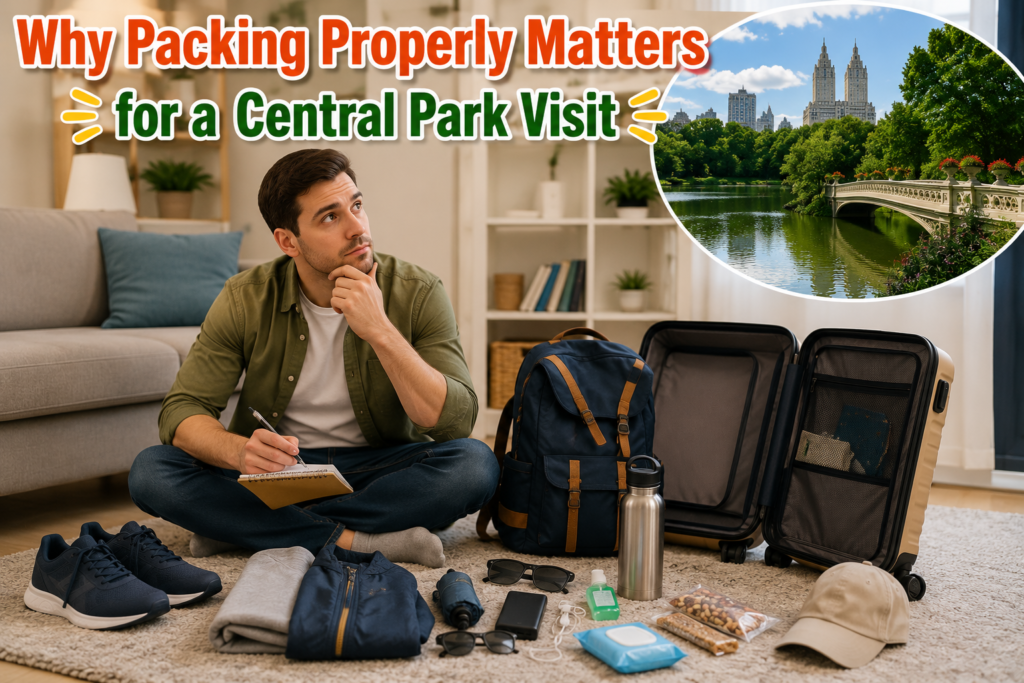
A little preparation before leaving for Central Park can make your visit much more comfortable.
Bringing the right items helps you stay hydrated, prepared for changing conditions, and ready to enjoy your time without unnecessary inconvenience.
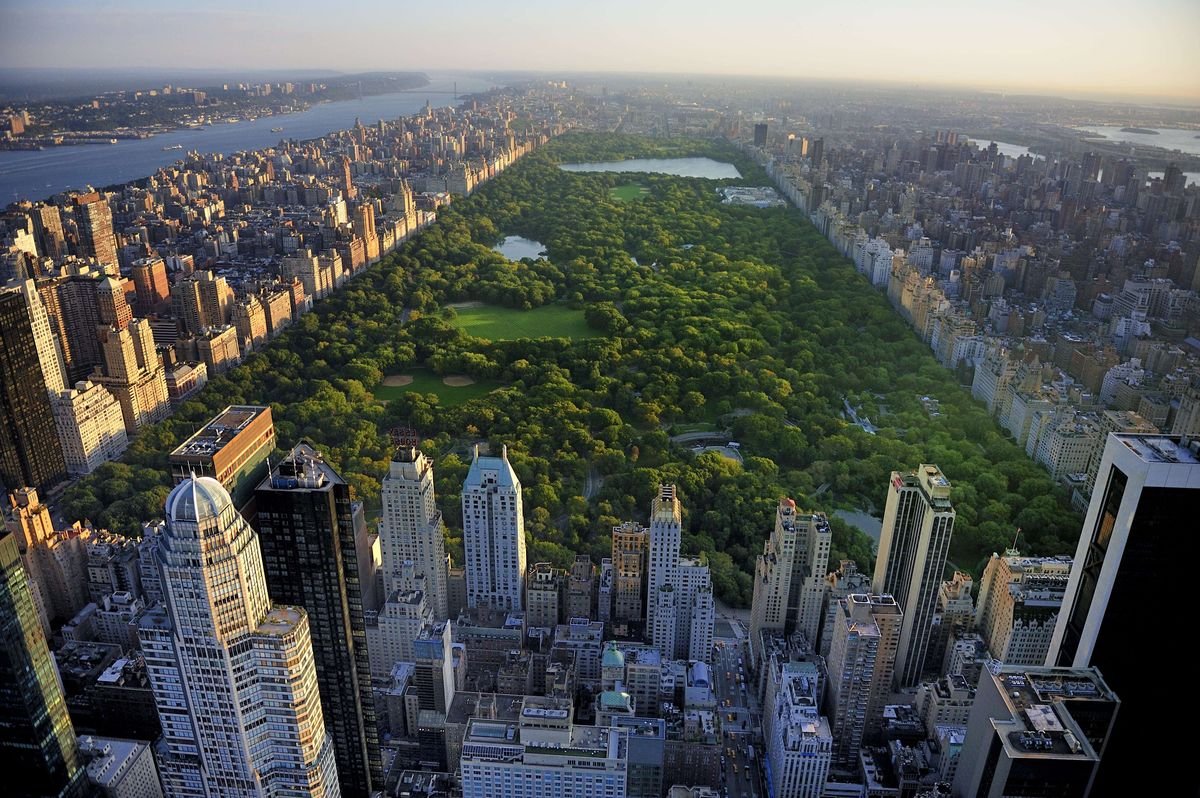
Central Park covers 843 acres and stretches from 59th Street to 110th Street in Manhattan, making it much larger than many visitors expect at first glance.
Central Park Is Larger Than Many First-Time Visitors Expect
At a glance, Central Park may look like a simple city park on a map. In reality, its pathways, woodlands, lakes, gardens, and landmarks spread across 843 acres, creating much longer walking distances than many first-time visitors anticipate.
The scale becomes more noticeable once you move beyond the busy southern end near Grand Army Plaza and Columbus Circle.
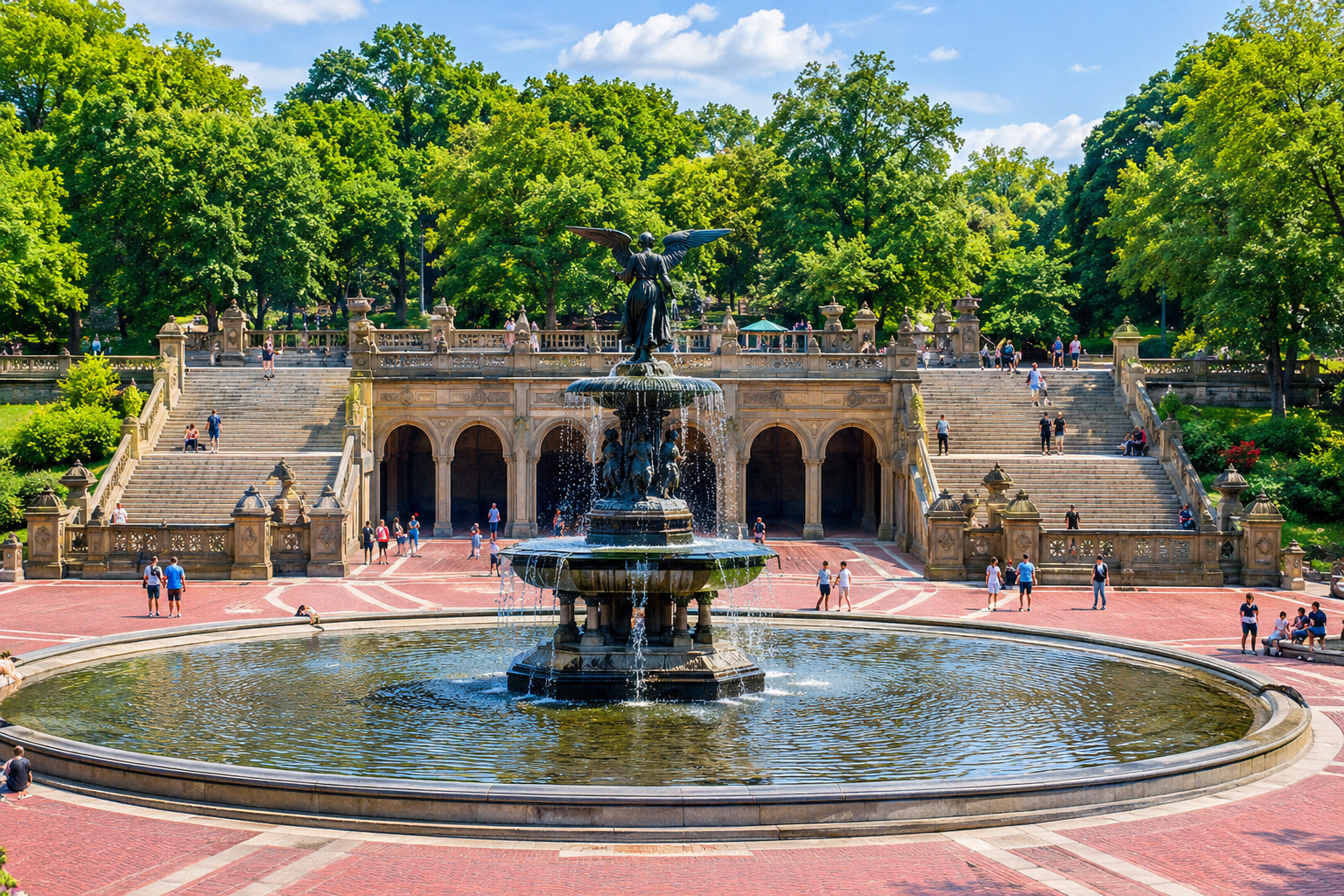
A route that includes Bethesda Terrace, Bow Bridge, Belvedere Castle, and the Reservoir can involve several miles of walking.
During sunny afternoons, patches of shade beneath American elm trees often feel much farther apart than expected.
A practical approach is to think about comfort before leaving your hotel or accommodation.
Packing water, comfortable footwear, and a phone charger can prevent small issues from becoming frustrating later in the day.
This is one reason a Central Park packing list for visitors can be more useful than simply carrying whatever fits into a bag.
The Right Items Can Make Your Visit More Comfortable
Concerned about spending hours outdoors without access to something you need?
That situation is more common than it sounds, especially during warmer months when temperatures rise and walking distances add up.
A reusable water bottle, sunscreen, and a lightweight layer can solve several common problems before they start.
Near open spaces such as Sheep Meadow or the Great Lawn, a gentle breeze may feel refreshing one moment and noticeably cooler the next.
Small items often make the biggest difference. Wet wipes after a snack, lip balm during windy weather, or a portable charger near the end of the day can help keep your visit comfortable without adding much weight to your bag.
Packing Too Much Can Slow You Down
What happens when a day bag becomes heavier with every extra item? Exploring Central Park starts to feel less enjoyable and more tiring.
Unlike a full travel day between cities, a Central Park visit usually rewards lighter packing. Carrying unnecessary electronics, bulky clothing, or oversized bags can become uncomfortable after several hours of walking between attractions.
A lighter bag also makes it easier to move through crowded areas around Bethesda Terrace, The Mall, and Bow Bridge. The goal is simple: bring what you are likely to use and leave the rest behind.
If you are still planning the details of your visit, understanding Central Park travel tips for tourists can help you prepare beyond packing alone. The right expectations before arrival often make the entire day smoother, especially when exploring one of New York City’s largest and most visited public spaces.
Essential Items for Every Visitor
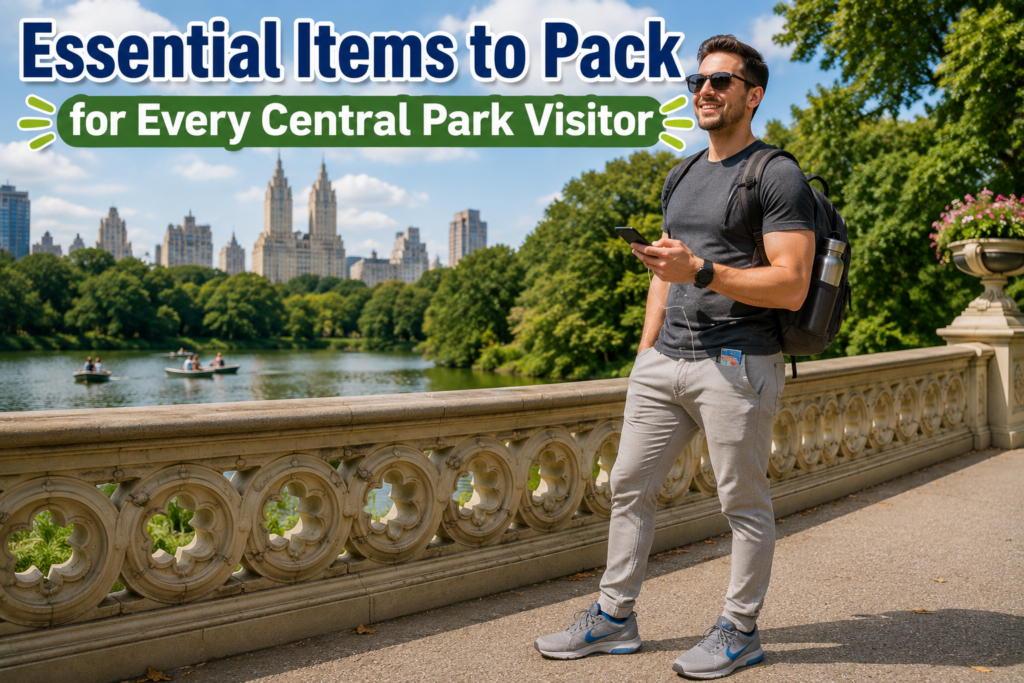
Some items deserve a place in almost every visitor’s bag, regardless of the season or planned route. These essentials help you stay comfortable, connected, and prepared while exploring Central Park’s many landscapes and attractions.
Comfortable Walking Shoes
Unlike a neighborhood park, Central Park often involves longer walks than expected. Routes between Conservatory Water, Bethesda Terrace, and the Jacqueline Kennedy Onassis Reservoir can quickly add up.
Supportive walking shoes reduce fatigue and make uneven paths, stone surfaces, and longer sightseeing routes easier to handle. That is why they belong on every what to pack for walking around Central Park checklist.
Reusable Water Bottle
A warm afternoon near Sheep Meadow can feel very different from a shaded path in The Ramble. Staying hydrated becomes easier when water is already within reach.
Central Park provides drinking fountains in many areas of the park, making a reusable bottle a practical item to carry.
Smartphone and Portable Charger
Need directions, transit information, or attraction details?
A phone battery can disappear quickly during a full day outdoors.
A portable charger provides simple insurance against that problem.
Identification and Payment Methods
Whether stopping at a nearby café outside the park or purchasing something from a visitor facility, having identification and a payment method is useful.
A small wallet with essential cards usually works better than carrying unnecessary extras.
Sunglasses and Sun Protection
By midday, open areas such as the Great Lawn and Sheep Meadow receive extended periods of direct sunlight. Sunlight filtering through tree canopies helps, but it is not always enough.
Sunglasses and sunscreen can make long outdoor visits far more comfortable.
Light Daypack or Backpack
A lightweight bag keeps essentials organized without becoming a burden. The best choice is often one that carries only the what to pack for walking around Central Park essentials and nothing more.
Before deciding what goes inside your bag, it is also worth learning a few Central Park safety tips for tourists. Packing smart and protecting your belongings usually go hand in hand during a day in the park.
Clothing Items to Bring
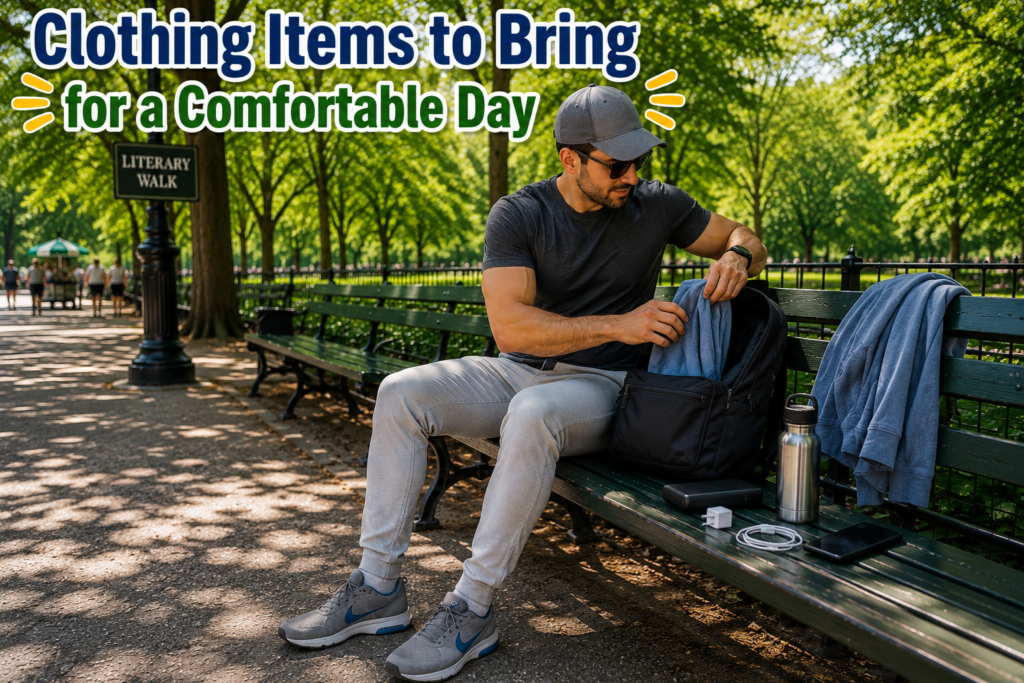
The clothing you choose can affect your comfort as much as the items in your bag. Practical, weather-appropriate clothing helps you stay comfortable while moving between Central Park’s open lawns, shaded paths, and waterfront areas.
Weather-Appropriate Clothing
Conditions can vary across the park during the same day. Open spaces such as Sheep Meadow feel warmer, while wooded sections around The Ramble often feel cooler.
Checking the forecast before departure is one of the most useful steps on a Central Park full day visit packing list.
Light Jacket or Extra Layer
A sunny morning does not always guarantee the same conditions later in the day. Areas near the Jacqueline Kennedy Onassis Reservoir can feel noticeably cooler when breezes move across the water.
A lightweight jacket or extra layer provides flexibility without adding much weight to your bag.
Comfortable Socks for Long Walks
Good socks support long hours of walking. Breathable materials help reduce discomfort while exploring longer routes between Belvedere Castle, Conservatory Garden, and Bethesda Terrace.
Hat or Cap for Sun Protection
Direct sunlight is common in open areas such as the Great Lawn and East Meadow, especially during midday hours.
A hat or cap provides additional protection and helps make outdoor sightseeing more comfortable during warmer weather.
If you plan to explore quieter sections beyond the main landmarks, learning about the least crowded areas of Central Park can help you choose routes that feel more relaxed throughout the day.
Useful Items Many Visitors Forget
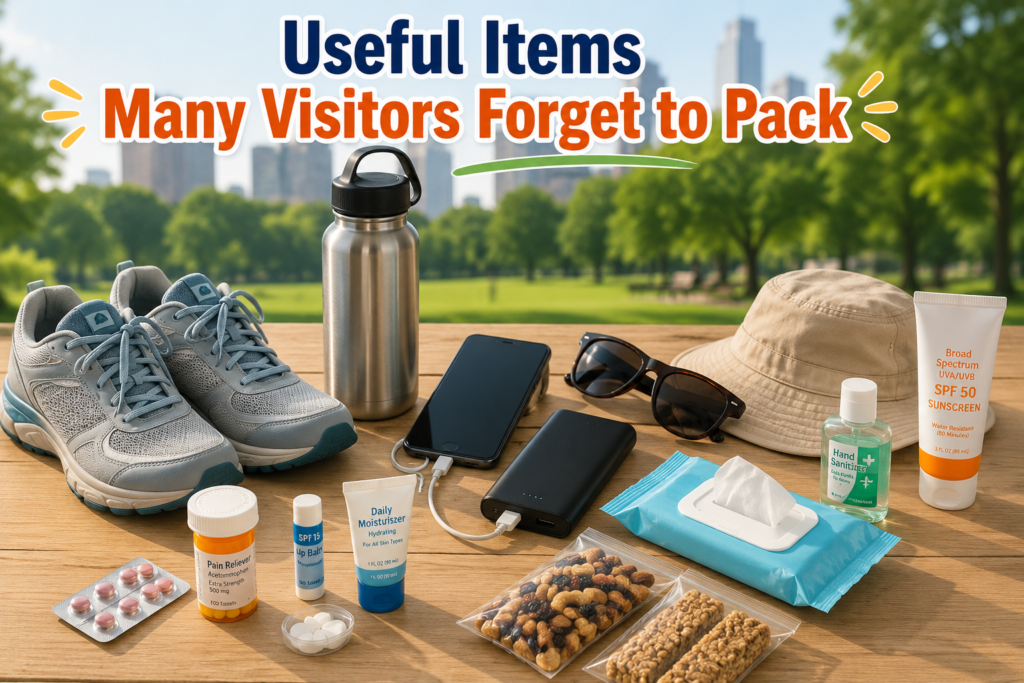
Many visitors remember the obvious essentials but overlook smaller items that can be surprisingly useful during the day.
Packing a few extra necessities can save time and help you handle minor situations more easily.
Small Tissues or Wet Wipes
Near Conservatory Water, families often pause for snacks or quick breaks between attractions. Small spills and sticky hands happen more often than expected.
A pocket-sized pack of tissues or wet wipes takes very little space. Yet it can be one of the most practical things to carry when visiting Central Park during a long day outdoors.
Hand Sanitizer
Forgotten benches, railings, and shared surfaces are part of any busy public park.
A travel-sized sanitizer offers a simple solution and fits easily into even the smallest day bag.
Basic Personal Medications
What if a headache starts halfway between Belvedere Castle and the North Woods?
Carrying essential personal medications helps avoid unnecessary interruptions and keeps your day focused on exploring rather than searching for supplies.
Lip Balm and Moisturizer
Unlike city streets lined with tall buildings, open areas around the Great Lawn can feel noticeably drier on breezy days.
Lip balm and moisturizer help prevent minor discomfort.
Snacks for Long Walks
The smell of food carts near Central Park South can be tempting, but they may not always be nearby when hunger appears.
A small snack provides quick energy and belongs on many visitors’ Central Park travel packing tips list for longer walking routes.
If your visit includes children, packing needs can change considerably. Exploring tips for visiting Central Park with kids can help you prepare for extra supplies, rest breaks, and family-friendly areas before arriving at the park.
What to Pack for Different Visits
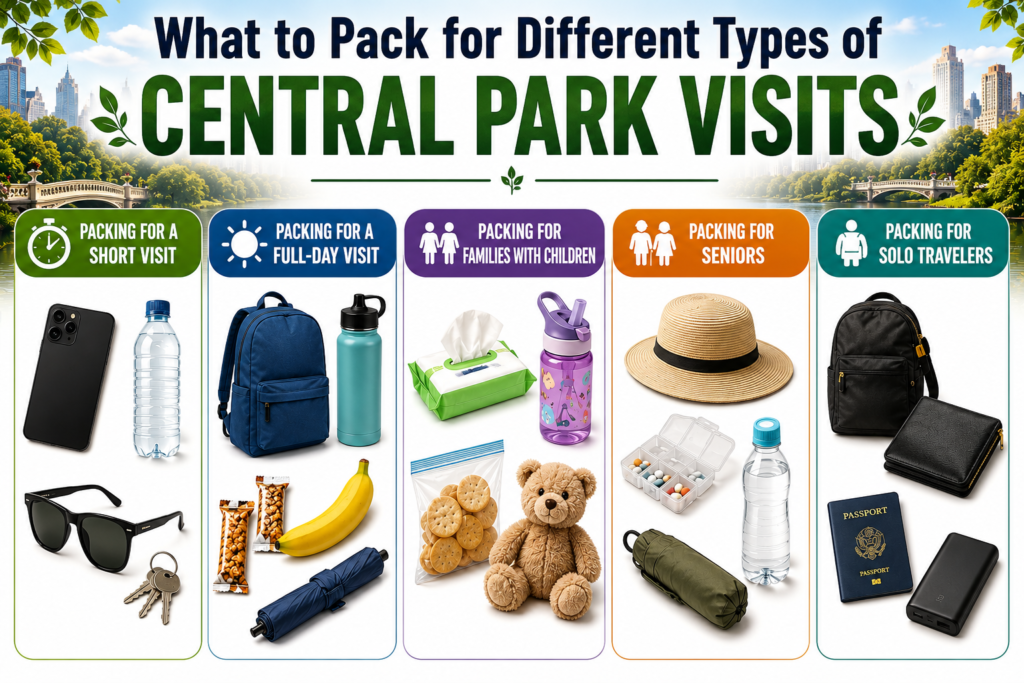
Not every Central Park visit looks the same.
The items you bring may vary depending on how long you plan to stay and who is joining you during the visit.
Packing for a Short Visit
Only planning to spend two or three hours in the park? A lighter approach usually works best.
For a route focused on Bethesda Terrace, Bow Bridge, and The Mall, a phone, water bottle, and a few personal essentials are often enough. The goal is convenience rather than carrying extra items you may never use.
Packing for a Full-Day Visit
A short visit and a full-day visit feel very different by late afternoon.
If you expect to explore areas from Conservatory Garden to Strawberry Fields, add extra water, snacks, and weather-related items. A Central Park day trip packing checklist becomes much more useful when several hours of walking are involved.
Packing for Families With Children
Need frequent stops throughout the day? Families often benefit from carrying wipes, snacks, refillable water bottles, and a few small comfort items.
Preparation helps keep the day moving smoothly.
Packing for Seniors
Near the flatter pathways surrounding the Jacqueline Kennedy Onassis Reservoir, comfort often matters more than carrying numerous items.
A lightweight bag, medications, water, and weather protection are usually more practical than a heavily packed backpack. The soft sound of horse carriages along Central Park South can occasionally drift into nearby sections of the park, creating a slower pace that many visitors appreciate.
Packing for Solo Travelers
Exploring alone offers flexibility, but carrying too much can limit it.
Keep valuables secure and focus on essential items for a Central Park visit rather than filling your bag with unnecessary extras.
Before deciding how much time to spend in the park, it helps to explore some of the best free activities in Central Park NYC. Knowing which attractions interest you most can make packing decisions much easier.
Skip These Items
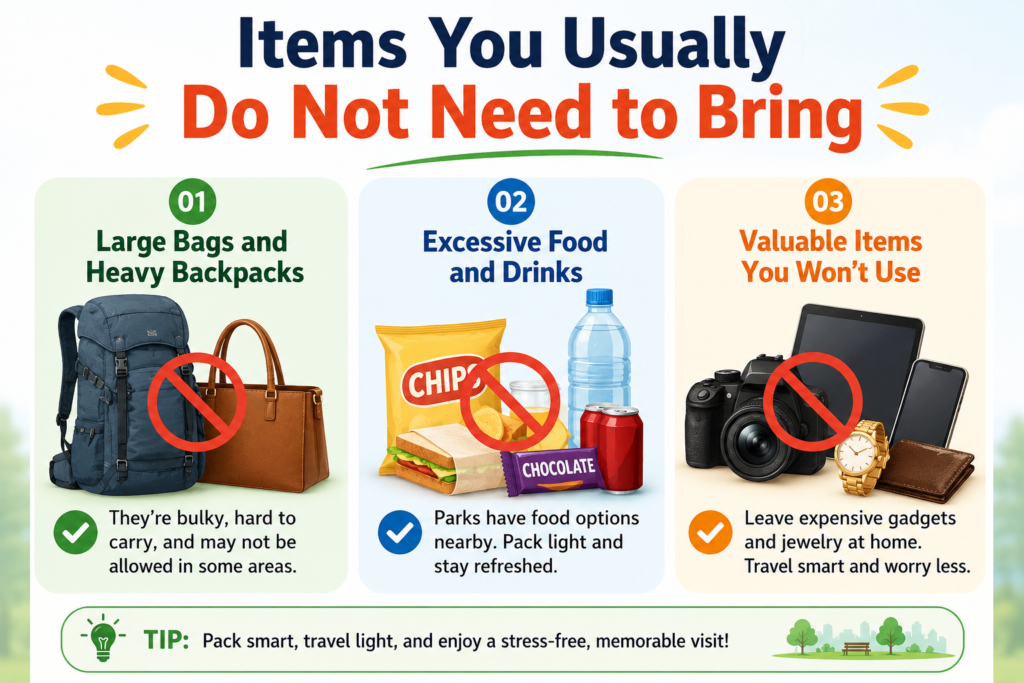
Packing smart is not only about remembering essentials but also about avoiding unnecessary items.
Leaving certain things behind can make your bag lighter and your visit more enjoyable.
Large Bags and Heavy Backpacks
Warning first: a backpack that feels manageable at the West 72nd Street entrance can feel very different after crossing Bow Bridge, climbing to Belvedere Castle, and continuing north toward Conservatory Garden.
Central Park is larger than it appears from most entrances. A bag packed with extra clothing, bulky electronics, or unnecessary supplies can become tiring by mid-afternoon. Instead of carrying everything “just in case,” focus on the best backpack items for Central Park and leave non-essential items behind.
Excessive Food and Drinks
Compared with remote hiking areas, Central Park sits within one of the world’s most connected urban environments.
Carrying excessive food and multiple large drink containers often adds weight without providing much benefit. The gentle movement of water near The Lake may invite a longer break, but a few snacks and a refillable bottle are usually enough for most visits.
Valuable Items You Won’t Use
Do you really need expensive accessories for a casual day in the park?
If an item will stay inside your bag all day, it is usually better left at your accommodation.
Unnecessary Electronics
Near Bethesda Terrace and the Mall, many visitors spend more time taking photos and enjoying the scenery than using extra devices.
A smartphone, camera, or single power bank is usually enough for a day in the park. When deciding what should I bring to Central Park, prioritize items you expect to use between morning and evening rather than carrying gadgets that remain untouched in your backpack.
Before finalizing your packing list, it can help to identify the best Central Park photography locations you plan to visit. Knowing where you will spend most of your time often makes it easier to decide what equipment is genuinely worth carrying.
Quick Packing Checklist
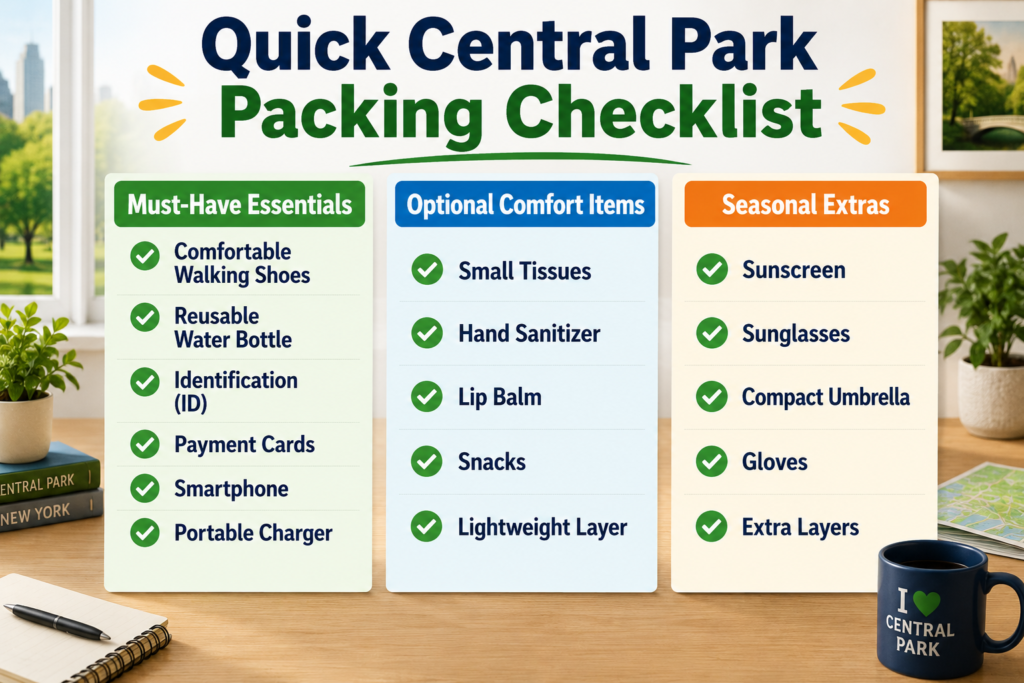
Before heading out, it helps to review a simple checklist to make sure you have packed everything you need.
This quick summary can serve as a last-minute reminder before your Central Park visit.
Must-Have Essentials
Standing near the 72nd Street entrance with a forgotten item is frustrating. A quick check before leaving can prevent that.
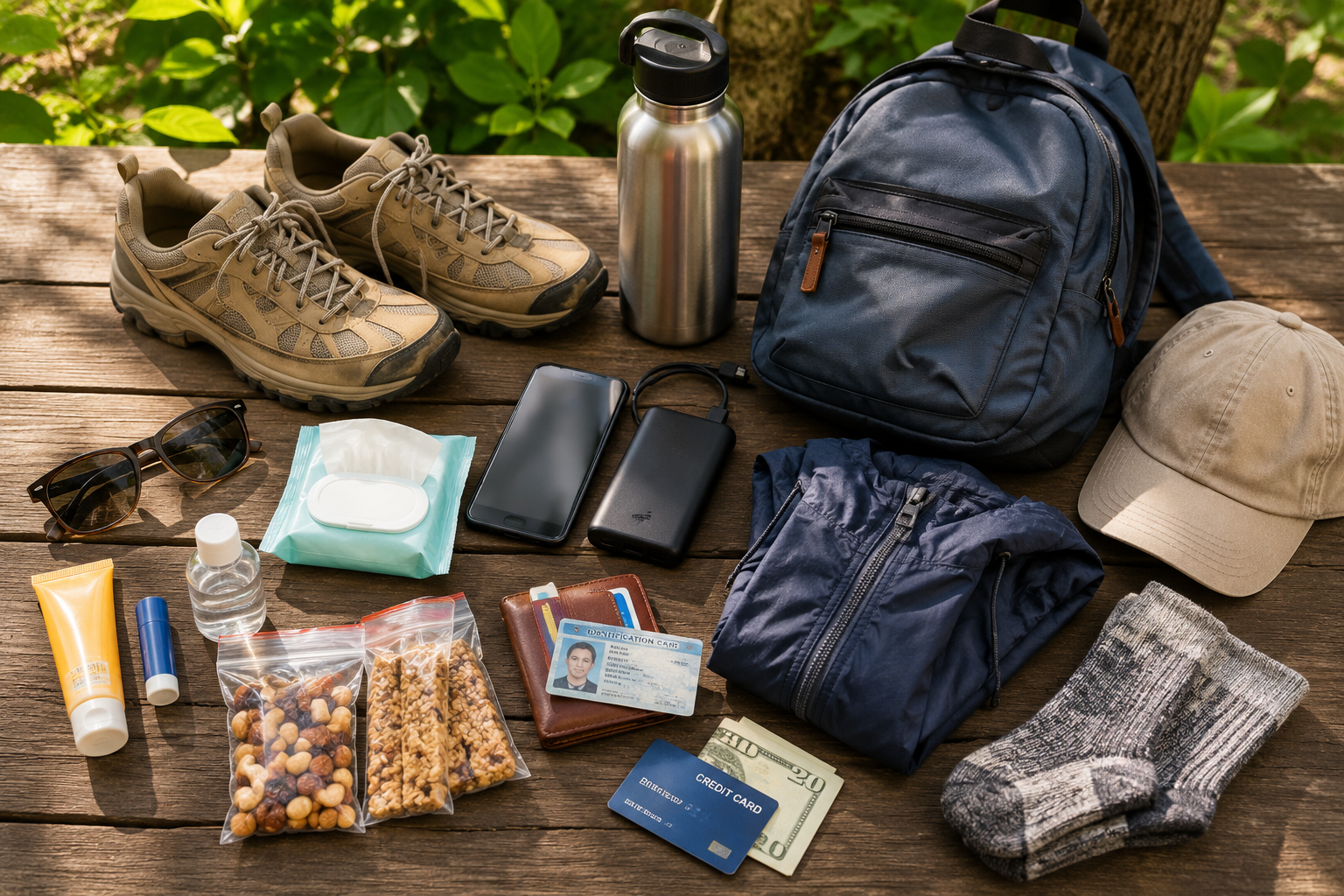
Pack comfortable walking shoes, a reusable water bottle, identification, payment cards, a phone, and a portable charger. These remain the core of what to pack for a day in Central Park items whether you plan to visit Bow Bridge, Bethesda Terrace, or Conservatory Garden.
Optional Comfort Items
Need a little extra comfort during a longer visit?
Small tissues, hand sanitizer, lip balm, snacks, and a lightweight layer can make a noticeable difference. The soft shade beneath the elm trees along The Mall often feels pleasant, but changing conditions throughout the day make a few optional items worth considering.
Seasonal Extras
Unlike spring mornings, summer afternoons near Sheep Meadow may require stronger sun protection.
A compact umbrella, gloves, or extra layers can also become useful depending on the season and forecast. These are practical things to carry when visiting Central Park when weather conditions are less predictable.
Before finalizing your itinerary, consider exploring some affordable things to do in Central Park to help plan your budget. If you prefer exploring independently, a guide focused on Central Park for solo travelers can help you choose routes, attractions, and experiences that match your travel style.
FAQs About What to Pack
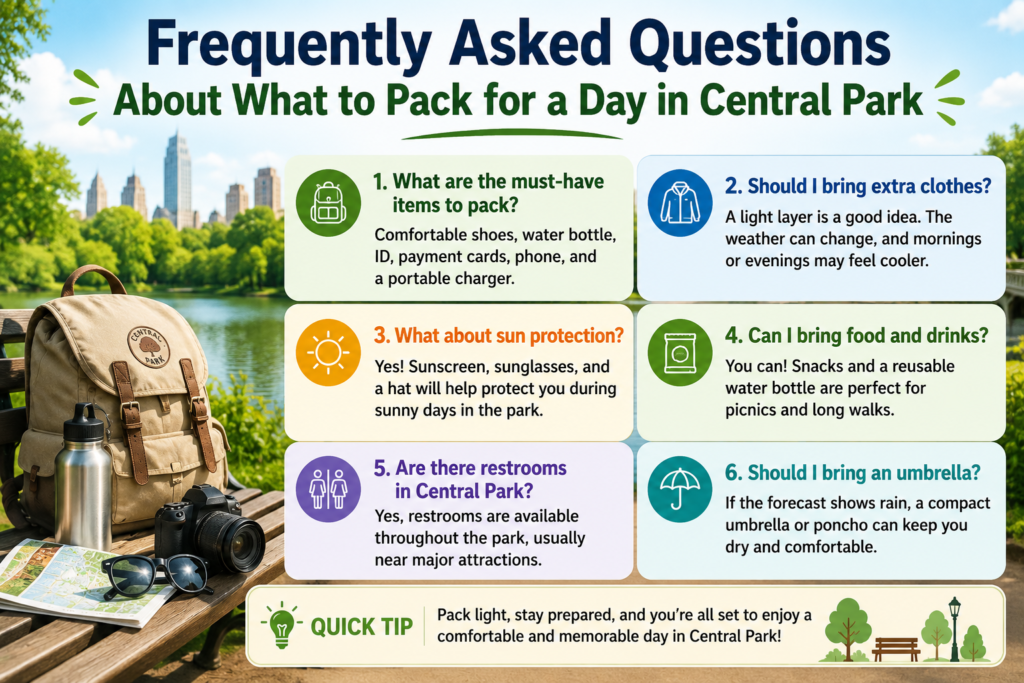
What should I bring for a full day in Central Park?
For a full-day visit, pack comfortable walking shoes, a reusable water bottle, a phone charger, identification, payment cards, weather-appropriate clothing, and a few light snacks. If you are unsure what to bring to Central Park for the day, focus on items that support comfort, hydration, navigation, and changing weather conditions.
Do I need to carry water in Central Park?
Yes. Central Park covers 843 acres, and walking distances can be longer than expected. Carrying a reusable water bottle helps you stay hydrated throughout the day, especially during warmer months. Drinking fountains are available in various locations across the park.
What shoes are best for walking in Central Park?
Supportive walking shoes or comfortable athletic shoes are usually the best choice. Many popular routes include paved paths, stone walkways, gentle slopes, and longer walking distances between attractions such as Bethesda Terrace, Belvedere Castle, and Conservatory Garden.
Should I bring a backpack to Central Park?
A lightweight backpack is often the most practical option. It provides enough space for essentials without becoming uncomfortable during long walks. A small daypack generally works better than a large travel backpack.
What should families pack for a Central Park visit?
Families often benefit from carrying wipes, snacks, refillable water bottles, sunscreen, extra clothing for children, and a small first-aid kit. These items can make breaks at playgrounds and family-friendly attractions much easier to manage.
What extra items should I bring during summer?
Summer visits usually require additional sun protection. Consider packing sunscreen, sunglasses, a hat, and extra water. Open areas such as Sheep Meadow and the Great Lawn receive significant sunlight during midday hours.
What should I pack for Central Park in winter?
Winter visitors should bring warm layers, gloves, a hat, and weather-resistant footwear when snow or icy conditions are possible. Wind can make temperatures feel colder around open areas such as the Jacqueline Kennedy Onassis Reservoir.
Are there items I should avoid bringing into Central Park?
Avoid carrying unnecessary valuables, bulky electronics, excessive food, or oversized bags that may become uncomfortable during a long visit. Following a simple Central Park visitor essentials guide often results in a lighter, more practical packing list and a more enjoyable day in the park.
If your visit includes special interests, you may also enjoy exploring guides to romantic spots in Central Park for couples or discovering popular Central Park attractions for teens before planning your route through the park.