Overview
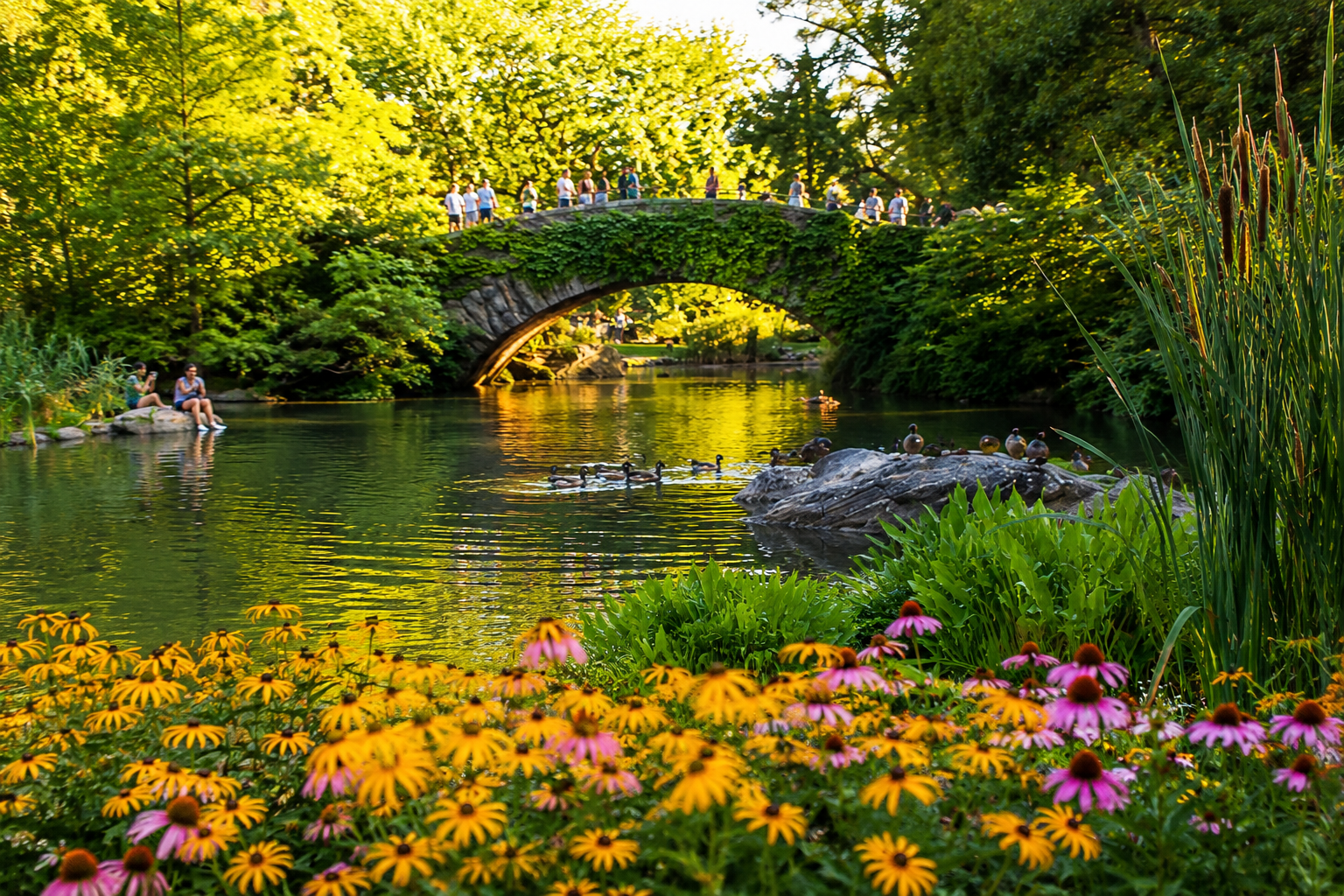
A first walk through Central Park can feel surprisingly familiar—tree-lined paths, open lawns, and lakes framed by Manhattan’s skyline. Yet beneath those postcard views are forgotten reservoirs, historic monuments, hidden passageways, and design choices that most people pass without noticing.
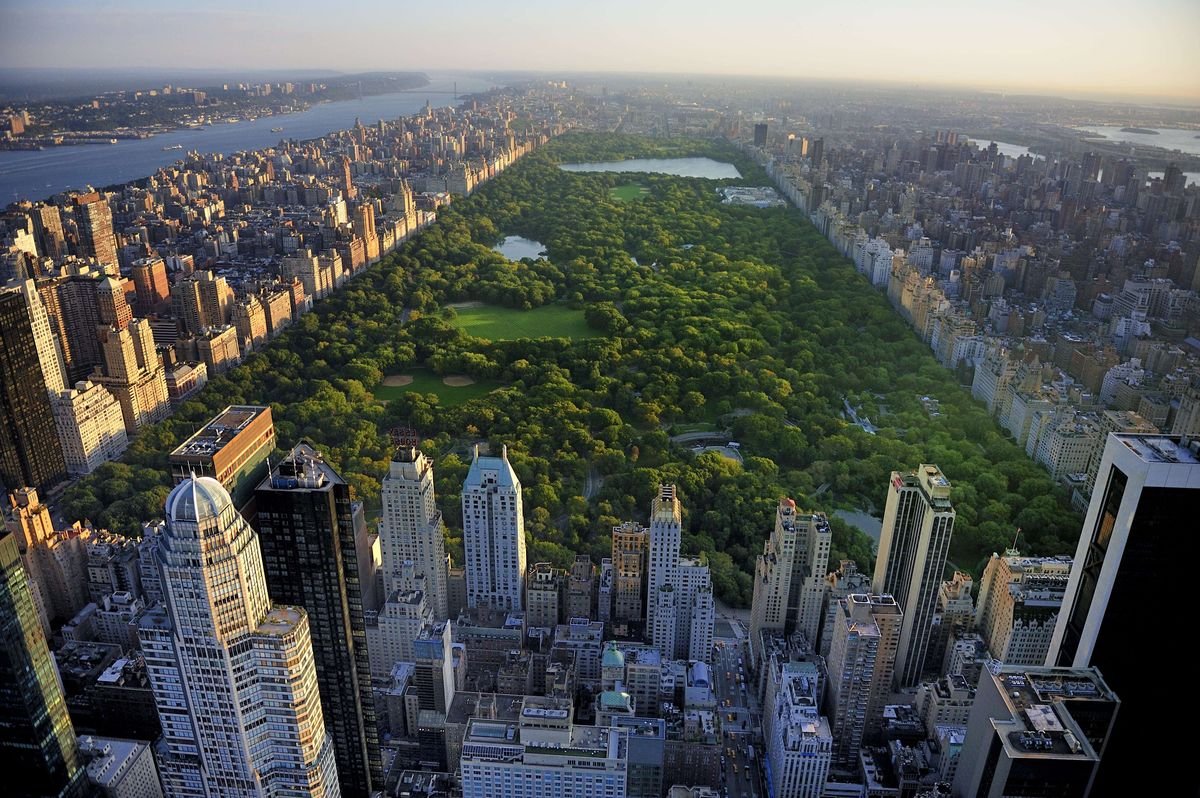
From carefully engineered landscapes that look completely natural to Cleopatra’s Needle, a monument that predates New York City by thousands of years, 25 Surprising Facts About Central Park Most Visitors Never Know explores the stories hidden behind the park’s most familiar scenery. According to the Central Park Conservancy, more than 42 million people enter the park each year, but relatively few stop to consider why roads disappear beneath the landscape or how a former reservoir became today’s Great Lawn.
The facts in 25 Interesting Facts About Central Park That May Surprise You range from billion-year-old bedrock and grazing sheep to secret infrastructure hidden below walking paths. Together, they reveal how a park that appears effortless was actually shaped through decades of planning, construction, and preservation. The rustle of leaves beneath towering trees is only the beginning of the story.
Central Park Conservancy and National Park Service provide historical and visitor information about Central Park’s development and significance.
Facts Almost Nobody Guesses Correctly
Central Park looks as though its lawns, lakes, rocky outcrops, and winding paths simply belong there. The reality is far more deliberate. Some of the park’s most surprising details are connected to enormous construction projects, major landscape changes, and decisions that are difficult to recognize while walking through it today.
That makes these surprising facts about Central Park especially interesting: the landscape itself can hide the story. A broad lawn may occupy the site of something completely different, while a quiet path can conceal engineering that transformed the original terrain.
The following little known facts about Central Park begin with the changes that shaped the park itself. As the list progresses, we’ll move from its construction and landscape to wildlife, forgotten history, hidden features, and details you might otherwise walk straight past.
❖ Fact #1: Central Park Is Almost Entirely Man-Made
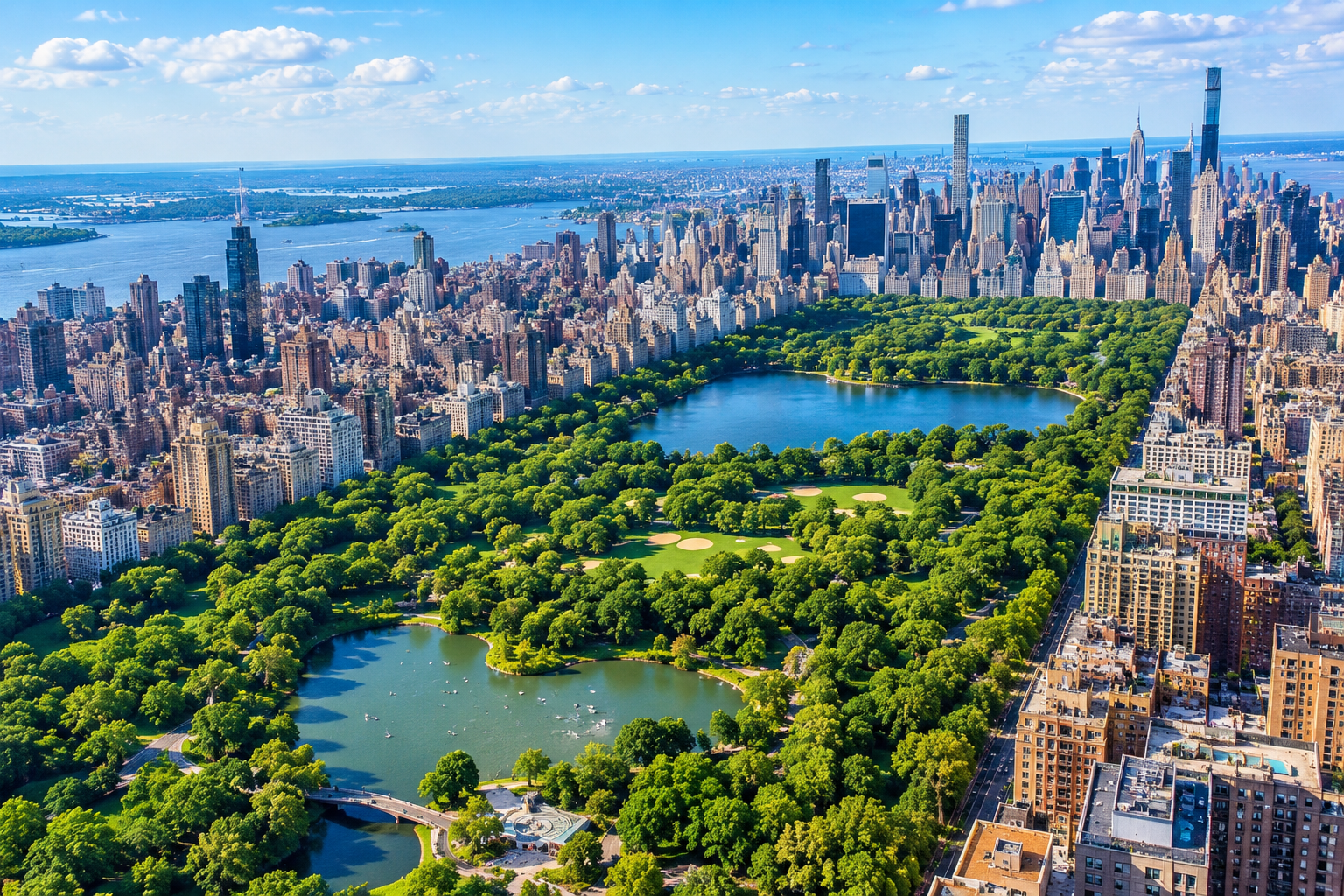
The green landscape can make Central Park feel like a piece of untouched countryside dropped into Manhattan. In reality, its designers had to reshape the land on a remarkable scale, creating lakes, planting thousands of trees, blasting and moving rock, and carefully arranging paths, bridges, lawns, and viewpoints.
The surprise becomes clearer when you look across the park rather than at a single landmark. A natural-looking scene such as a winding shoreline or wooded slope is often the result of deliberate landscape design rather than an untouched feature of the original terrain.
❖ Fact #2: Central Park Is Bigger Than You Might Imagine
An easy way to underestimate Central Park is to look at a map and focus on its width. The park stretches across 843 acres, covering enough ground that a walk from one end to another can feel like leaving one neighborhood and entering another. Its changing scenery makes the distance even harder to judge.
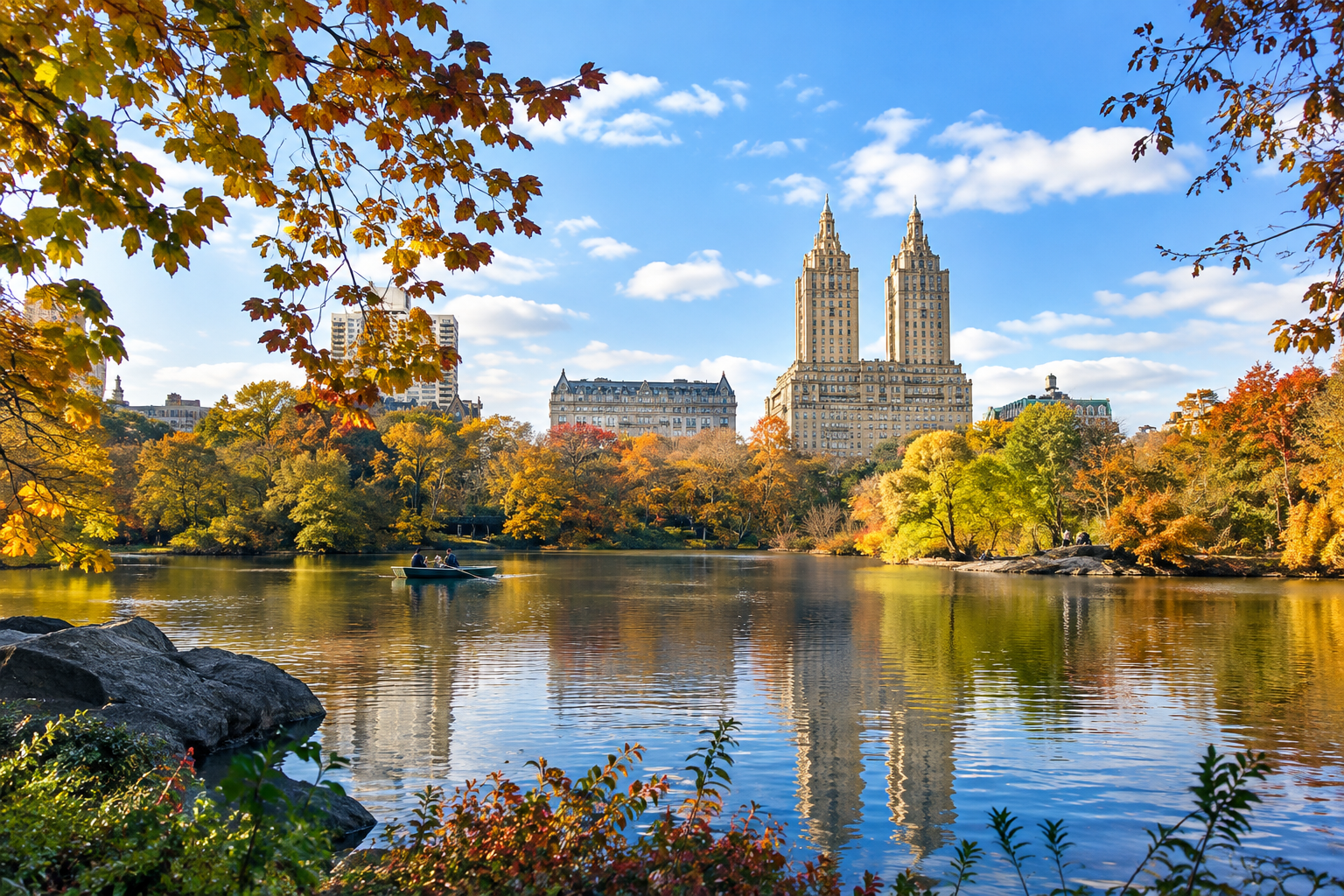
The scale becomes clearer when you compare it with Central Park trivia and facts that rarely make it into a first-time itinerary. The park is larger than the entire country of Monaco, yet its winding paths, wooded areas, lakes, lawns, and rock formations break that enormous footprint into smaller landscapes. A visitor can spend time around The Lake, cross through The Ramble, and reach the open expanse of Sheep Meadow while still feeling as though each area belongs to a different park.
That size also explains why a short visit can leave major portions unexplored. Someone spending an hour near the southern end may see only a fraction of what lies farther north. These unique facts about Central Park make its layout easier to appreciate: the park was not designed as one enormous open lawn, but as a sequence of contrasting landscapes connected across a remarkably large area.
The surprising part: Central Park is large enough to contain dramatically different environments within a single Manhattan park—yet its landscape design makes that scale feel much less obvious than it really is.
Unexpected Stories Hidden in Central Park’s Landscape
A closer look at Central Park reveals that several of its most recognizable landscapes have changed dramatically over time. Some areas once served entirely different purposes, while others contain features that are far older than the park itself. These discoveries help explain why the landscape often feels richer and more complex than it first appears.
★ Fact #3: Cleopatra’s Needle Is Older Than New York City
Standing beside the Metropolitan Museum of Art, Cleopatra’s Needle looks like another historic monument. Its story is far older than the city surrounding it. The ancient Egyptian obelisk dates back more than 3,000 years and was brought to New York in 1881. Among the facts about Central Park history, few reveal such a dramatic connection to the ancient world.
★ Fact #4: Sheep Once Grazed in Central Park
Sheep Meadow has a name that sounds symbolic today, but sheep actually grazed here. Flocks were kept in the park during the late 19th and early 20th centuries, creating an unusual pastoral scene against Manhattan’s growing skyline. This piece of Central Park hidden history is easy to miss when the meadow is filled with picnickers and sunbathers.
★ Fact #5: The Great Lawn Was Once a Reservoir
The wide, open landscape of the Great Lawn hides a completely different past. Before today’s sports fields and gathering spaces existed, this area was occupied by the former Croton Reservoir. Among the hidden facts about Central Park, this transformation is particularly striking because nothing about the present-day lawn suggests that a huge water-storage facility once stood here.
★ Fact #6: Central Park Has Ancient Bedrock
The exposed rocks around Central Park are not simply decorative landscape features. Much of the park rests on bedrock that formed more than a billion years ago, long before dinosaurs appeared. Touching the cold, weathered surface of a Manhattan outcrop can therefore connect an ordinary park walk with an astonishing chapter of Earth’s geological past.
★ Fact #7: The Ramble Was Designed to Feel Untamed
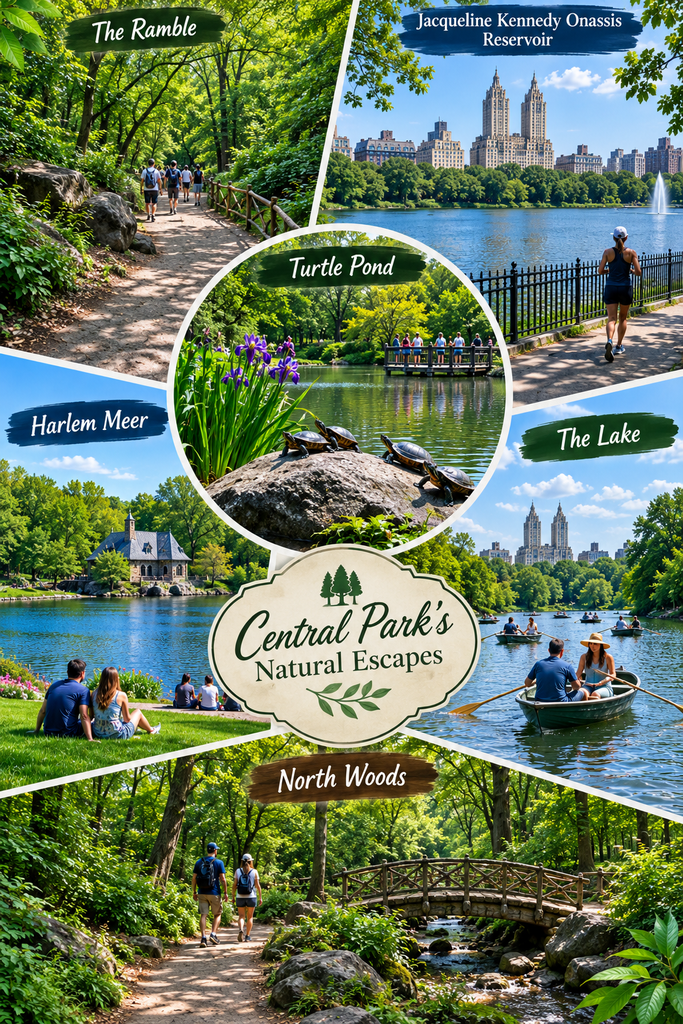
Follow the winding paths into The Ramble and the city begins to disappear behind dense vegetation, uneven ground, and rocky passages. That sense of getting away from Manhattan is intentional. The landscape was designed to create a woodland experience rather than a formal garden, making it one of the Central Park historical facts that visitors can actually experience while walking.
Quick Central Park Facts You Might Not Know
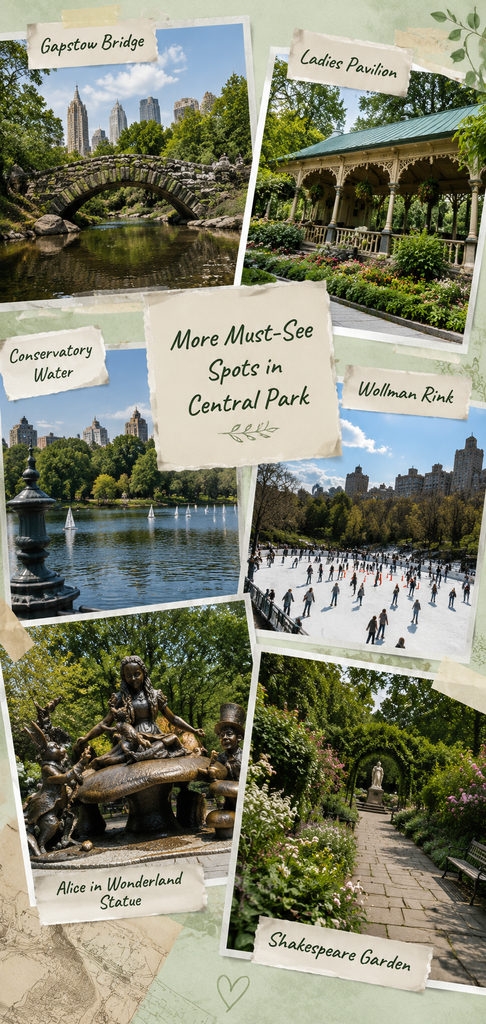
- Central Park has more than 30 bridges and arches, many designed to separate pedestrian paths from roads and create smoother movement through the landscape.
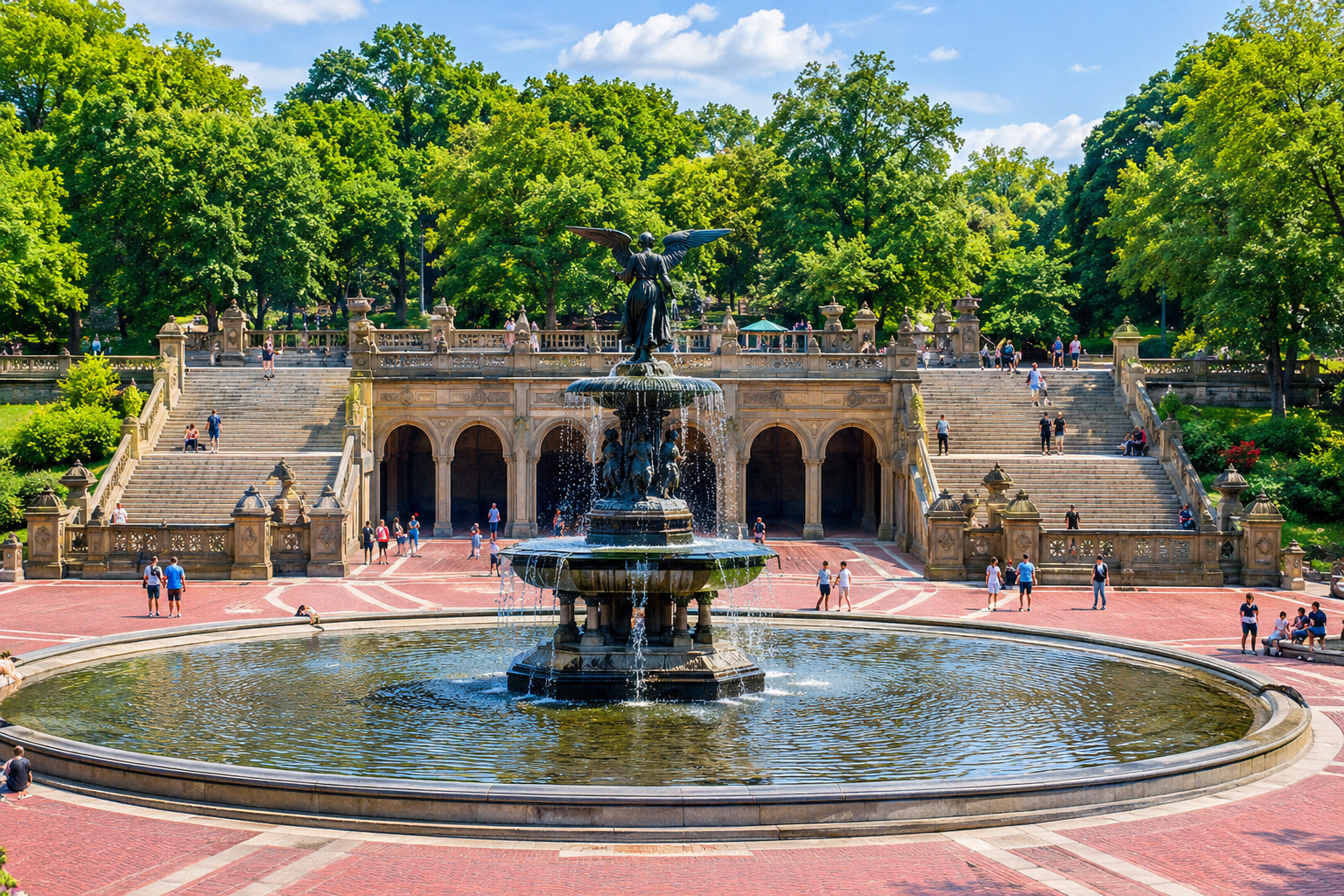
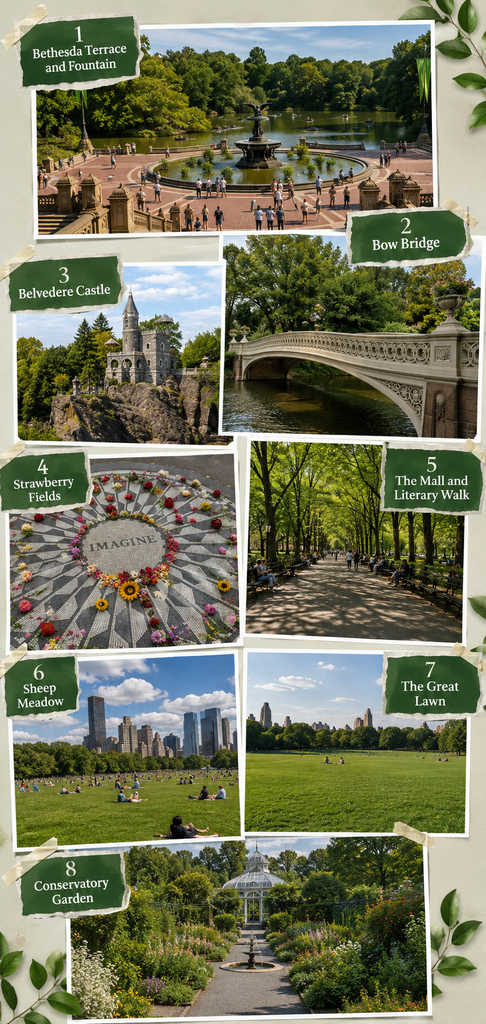
- The park’s Mall is lined with American elm trees, creating one of its most recognizable tree-covered promenades and a popular route toward Bethesda Terrace.
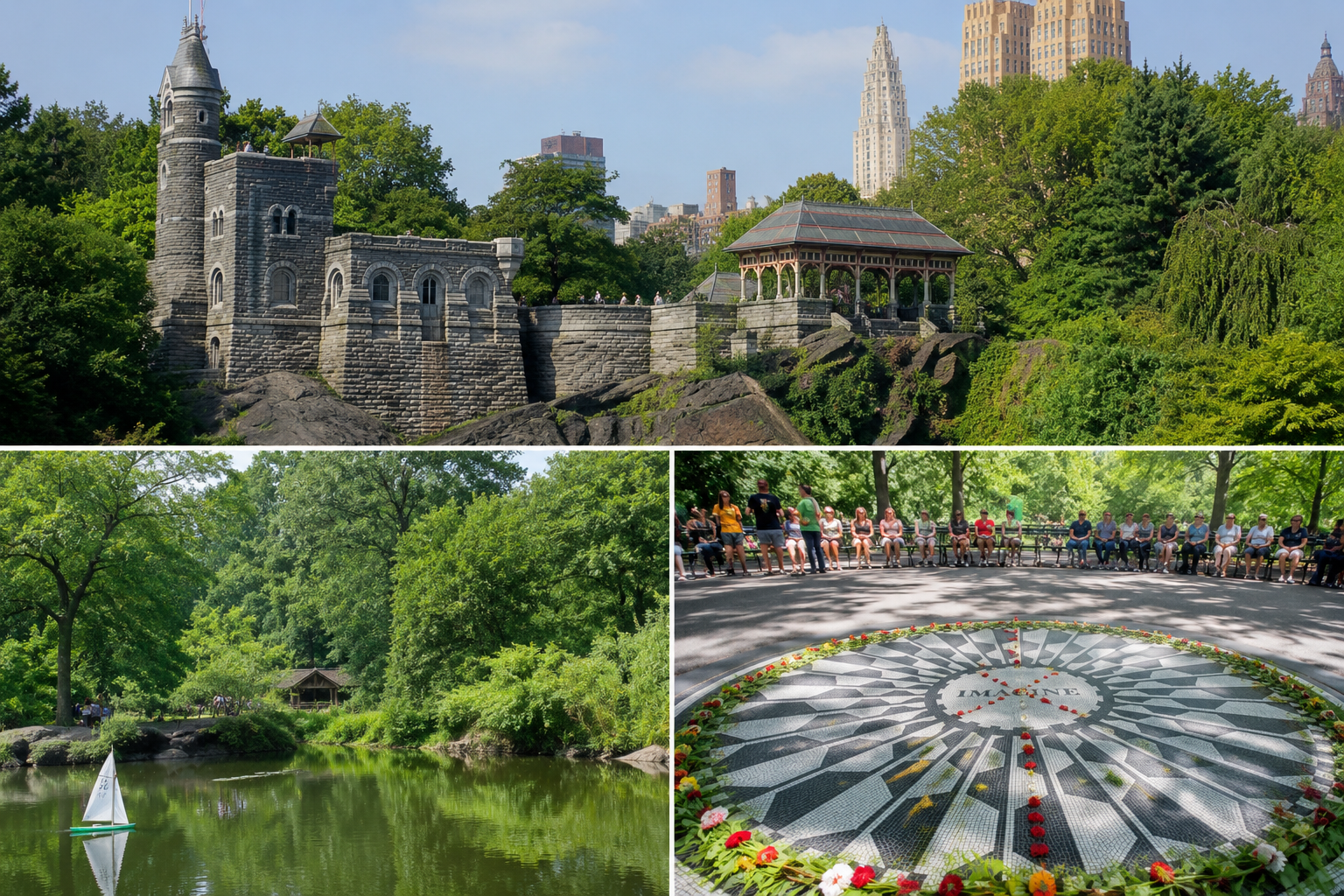
- Strawberry Fields covers 2.5 acres and was created as a living memorial to John Lennon near the Dakota.
- Belvedere Castle sits atop Vista Rock and originally served as a scenic lookout rather than a traditional residential castle.
- The Conservatory Garden occupies six acres and contains three distinct garden styles, creating a formal landscape unlike the park’s wilder areas.
- Central Park was officially designated a National Historic Landmark in 1965, recognizing its importance as a major work of landscape architecture.
- The park contains four major lakes and ponds, each with a distinctly different setting and character.
- Shakespeare Garden contains plants mentioned in the playwright’s works, adding a literary layer to an otherwise natural-looking corner of the park.
Surprising Stories Hidden Around the Park
🏰 Fact #16: Belvedere Castle Was Built for the View
The Spot: Belvedere Castle, Vista Rock
The Surprise: The castle was designed as a picturesque lookout rather than a royal residence. Its elevated position gives visitors sweeping views across Central Park, making the building itself part of the landscape design.
Why It Matters: This is among the Central Park design facts that explains why the park contains structures that feel theatrical yet fit naturally into their surroundings. The castle was created to make the landscape more dramatic, not simply to decorate it.
🌳 Fact #17: The Ramble Was Designed to Feel Like a Wild Woodland
The Spot: The Ramble, near The Lake
The Surprise: Its winding paths, dense vegetation, rocky terrain, and irregular layout were carefully planned to create the impression of an untamed woodland.
Look Closer: The experience changes dramatically from the formal paths and open lawns elsewhere in the park. These unexpected facts about Central Park reveal how deliberately its designers used contrast to make different areas feel like separate worlds.
🌸 Fact #18: Conservatory Garden Has Three Different Garden Styles
The Spot: Conservatory Garden, Fifth Avenue and 105th Street
The Surprise: This six-acre garden is divided into three distinct sections, each influenced by a different European garden tradition.
Why Visit: The formal flowerbeds, fountains, sculptures, and carefully arranged paths create a very different atmosphere from Central Park’s wooded trails. It is one of the interesting facts about Central Park that becomes much easier to appreciate once you know the garden was designed as three distinct experiences.
🌉 Fact #19: Bow Bridge Was Designed to Look More Romantic Than Practical
The Spot: Bow Bridge, crossing The Lake
The Surprise: Its graceful cast-iron design was intended to contribute to the scenery as much as to provide a crossing. The curved structure, water below, and surrounding trees create one of Central Park’s most recognizable views.
The Bigger Story: Among the facts about Central Park history, Bow Bridge shows how the park’s bridges were treated as visual elements within the landscape rather than merely functional pieces of infrastructure.
Fact #20: Bethesda Terrace Has a Ceiling Covered in Thousands of Tiles
The Spot: Bethesda Terrace Arcade, beside The Lake
Look Up: The arcade’s ceiling is covered with nearly 16,000 encaustic tiles arranged in elaborate patterns. Unlike the open landscapes above, this sheltered passage feels cool and shaded, with the detailed ceiling drawing attention upward.
Why It Stands Out: The terrace is famous for its fountain and lake views, but the arcade itself is a remarkable architectural detail. It is one of the Central Park fun facts for visitors that can easily be missed when everyone is focused on Bethesda Fountain.
Fact #21: The Park Has a Bridge Made Entirely of Stone
The Spot: Huddlestone Arch, near The Loch
The Detail: Huddlestone Arch was built from massive Manhattan schist blocks and spans 22 feet across the roadway. Its rough stone construction gives it the appearance of a natural rock formation rather than a carefully engineered bridge.
The Bigger Story: The arch was built in 1866 as part of Central Park’s transportation system, allowing the roadway to pass beneath the landscape without disrupting the scenery above. It is one of the “how Central Park was built” details that shows how engineering was deliberately hidden inside the landscape.
The Stories and Secrets That Define Central Park
After exploring castles, bridges, gardens, hidden architecture, and surprising pieces of park history, a larger picture begins to emerge. Some of Central Park’s most meaningful discoveries are not tied to a single attraction but to the stories, landscapes, and ideas woven into the park itself.
The final four facts look beyond postcard views and famous landmarks to reveal forgotten communities, quiet corners, symbolic places, and design decisions that continue to shape how people experience Central Park today.
⦿ Fact #22: Central Park Was Not Built on Empty Land
Myth: The park was simply created on an undeveloped stretch of Manhattan.
Reality: Before Central Park took shape, the land included homes, farms, quarries, and communities, including Seneca Village, a predominantly African American community that existed near what is now the park’s west side. The community was displaced in the 1850s as the city acquired the land for the park.
That history adds an important layer to the landscape. A peaceful walk near the former Seneca Village site passes through ground that once had streets, houses, churches, and everyday neighborhood life. It is among the Central Park historical facts that changes how the park’s creation is understood.
⦿ Fact #23: Central Park Has a Place Where the City Almost Disappears
Walk into The Ramble and the Manhattan skyline can become surprisingly difficult to see. Dense vegetation, winding paths, rocky passages, and changes in elevation interrupt the straight lines associated with the surrounding city.
This was not accidental. The landscape was deliberately arranged to create a sense of seclusion and discovery within Manhattan. Among the hidden facts about Central Park, this may be one of the easiest to experience for yourself: the farther you follow the winding paths, the less the city seems to dictate what you see.
⦿ Fact #24: Central Park Contains a Memorial That Became an International Symbol of Peace
Near Central Park West, a simple circular landscape known as Strawberry Fields commemorates John Lennon and his connection to New York. Its centerpiece, the Imagine mosaic, attracts people from around the world who come to pause, leave flowers, or simply sit nearby.
The setting feels deliberately quiet compared with the traffic beyond the park. This is one of the Central Park facts most visitors don’t know: Strawberry Fields is not simply a memorial within the park—it was dedicated as a living memorial to promote peace.
⦿ Fact #25: Central Park Was Designed to Make You Forget You Are in Manhattan
The final surprise is not a single monument or historical object. It is the park itself.
Look at the winding paths, carefully framed views, lakes, bridges, wooded slopes, and open meadows together, and a larger idea emerges: Central Park was designed to create a deliberate escape from the rigid street grid surrounding it.
That is perhaps the most important of the things you didn’t know about Central Park. Its natural appearance is part of the illusion. The feeling of leaving Manhattan without actually leaving it is not an accident—it is one of the central ideas behind the park’s design.