

Before You Go

Visiting Central Park for the first time can feel exciting and a little overwhelming at the same time.
As one of New York City’s most famous attractions, Central Park spans 843 acres (341 hectares), stretches approximately 2.5 miles from north to south, and covers about 1.3 square miles in the heart of Manhattan.
According to the Central Park Conservancy, this vast urban park welcomes millions of visitors each year and remains one of the world’s most recognized public green spaces.
Within the park, visitors will find scenic landscapes, iconic landmarks, peaceful walking paths, open green spaces, and countless places to relax.
Many first-time visitors arrive without realizing just how much there is to see beyond the most popular spots.
If you are wondering How to Visit Central Park for the First Time: Essential Tips and Experiences, a little preparation can help you enjoy the park without feeling rushed or missing its highlights.
Knowing what to expect before you arrive makes it easier to explore with confidence and focus on the experiences that matter most to you.
Information provided by the Central Park Conservancy and NYC Parks can also help visitors better understand the park’s layout, facilities, and visitor guidelines before arriving.
Whether you have a few hours or most of the day available, the key is to approach your visit with realistic expectations and a flexible mindset.
From famous landmarks and open green spaces to quiet corners that many tourists overlook,
Central Park offers a memorable introduction to the heart of Manhattan for every type of traveler.
The park’s rich history and lasting significance, recognized by organizations such as the National Park Service, make a first visit even more rewarding.
What to Know Before Entering Central Park for the First Time

A first visit tends to go more smoothly when a few practical details are understood before arriving.
Central Park is open daily from 6:00 a.m. to 1:00 a.m., and its size can make simple decisions surprisingly important.
Knowing where to enter, how much time to allow, and what essentials to carry helps avoid unnecessary detours.
Small choices matter here. A well-chosen entrance can place major landmarks within minutes, while realistic timing helps create a relaxed visit instead of a rushed walk between attractions.
Understanding the Park’s Basic Layout
Central Park stretches from 59th Street to 110th Street and is often divided into south, mid-park, and north sections. The southern end contains several famous landmarks clustered relatively close together.
Learning the basics is part of what to know before visiting central park. A simple understanding of the park’s sections makes navigation easier and helps set realistic expectations for walking distances.
Choosing the Most Convenient Entrance
Not all entrances provide the same starting experience. The entrance near Grand Army Plaza at 59th Street places visitors close to The Pond, The Mall, and Bethesda Terrace within a manageable walking distance.
An entrance near West 72nd Street offers quicker access to Strawberry Fields. Selecting an entry point based on priorities can save both time and energy during the visit.
Deciding How Much Time to Spend in the Park
A quick introduction to Central Park generally requires at least two to three hours.
This allows enough time to explore several major landmarks without feeling constantly pressed for time.
A half-day visit provides greater flexibility. There is room to pause at scenic viewpoints, explore quieter paths, and enjoy the atmosphere without watching the clock every few minutes.
What to Bring for a Comfortable Visit
Comfort becomes increasingly important once walking distances add up.
Supportive footwear is often more useful than visitors initially expect, especially when exploring beyond the busiest pathways.
A refillable water bottle, weather-appropriate clothing, and a fully charged phone are practical additions.
During warmer months, sunscreen can make a noticeable difference after several hours outdoors.
Once the basics are covered, the focus shifts from planning to enjoyment. Some experiences stand out immediately, while others reveal themselves gradually during the walk. If photography is part of your visit, our guide to Central Park photo spots for visitors highlights locations worth keeping on your route.
Why First-Time Visitors Often Underestimate Central Park

A quick glance at a map rarely tells the full story. Central Park looks straightforward from above, yet the scale, variety of landscapes, and number of attractions often surprise newcomers once they begin exploring.
That is why a central park first time visitor guide can be useful before arriving. Understanding the park’s size and layout helps set realistic expectations and allows visitors to enjoy the experience without feeling rushed from one landmark to the next.
Central Park Is Much Larger Than Most Visitors Expect
Covering 843 acres, Central Park occupies far more space than many first-time visitors imagine. Distances that appear short on a phone screen can involve twenty or thirty minutes of walking, especially when scenic routes replace direct paths.
The size becomes more noticeable near mid-park. A planned visit to Belvedere Castle can easily expand into additional stops at nearby viewpoints, gardens, or lakeside areas along the way.
There Is More Than One “Main” Area to Explore
Some parks revolve around a single landmark. Central Park works differently.
Bethesda Terrace, Strawberry Fields, Sheep Meadow, Conservatory Water, and Belvedere Castle each offer distinct surroundings.
A visitor expecting one central attraction often discovers several separate areas worth exploring, each with its own character and atmosphere.
A Little Preparation Can Improve the Experience Significantly
Even a basic plan helps. Knowing which entrance is closest to your priorities reduces unnecessary walking and keeps the visit more enjoyable.
A few minutes of preparation before arrival can save a surprising amount of time inside the park.
Families often have different priorities than solo visitors or couples. If your itinerary includes children, our guide to Best Family Attractions in Central Park highlights locations that combine open space, interesting sights, and family-friendly experiences throughout the park.
Essential Experiences Every First-Time Visitor Should Have

The first visit is usually most enjoyable when it includes a mix of famous landmarks and relaxing spaces.
Central Park rewards curiosity, but a few locations consistently stand out because they showcase different sides of the park.
These stops are among the must see places in central park for first time visitors.
Together, they provide a balanced introduction without requiring a full-day commitment or an exhausting amount of walking.
➤ Walk Along The Mall and Literary Walk
Not every path in Central Park feels the same. The Mall stands out immediately with its broad walkway and arching canopy of American elm trees, one of the largest remaining collections of mature elms in North America.
The atmosphere shifts as you continue south toward Literary Walk.
Statues of William Shakespeare, Sir Walter Scott, and Robert Burns line the promenade.
Musicians often perform nearby, while artists and visitors gather beneath the shade. It feels lively yet surprisingly relaxed.
➤ Spend Time at Bethesda Terrace and Fountain
A short walk from The Mall leads to one of the park’s most recognizable gathering places.
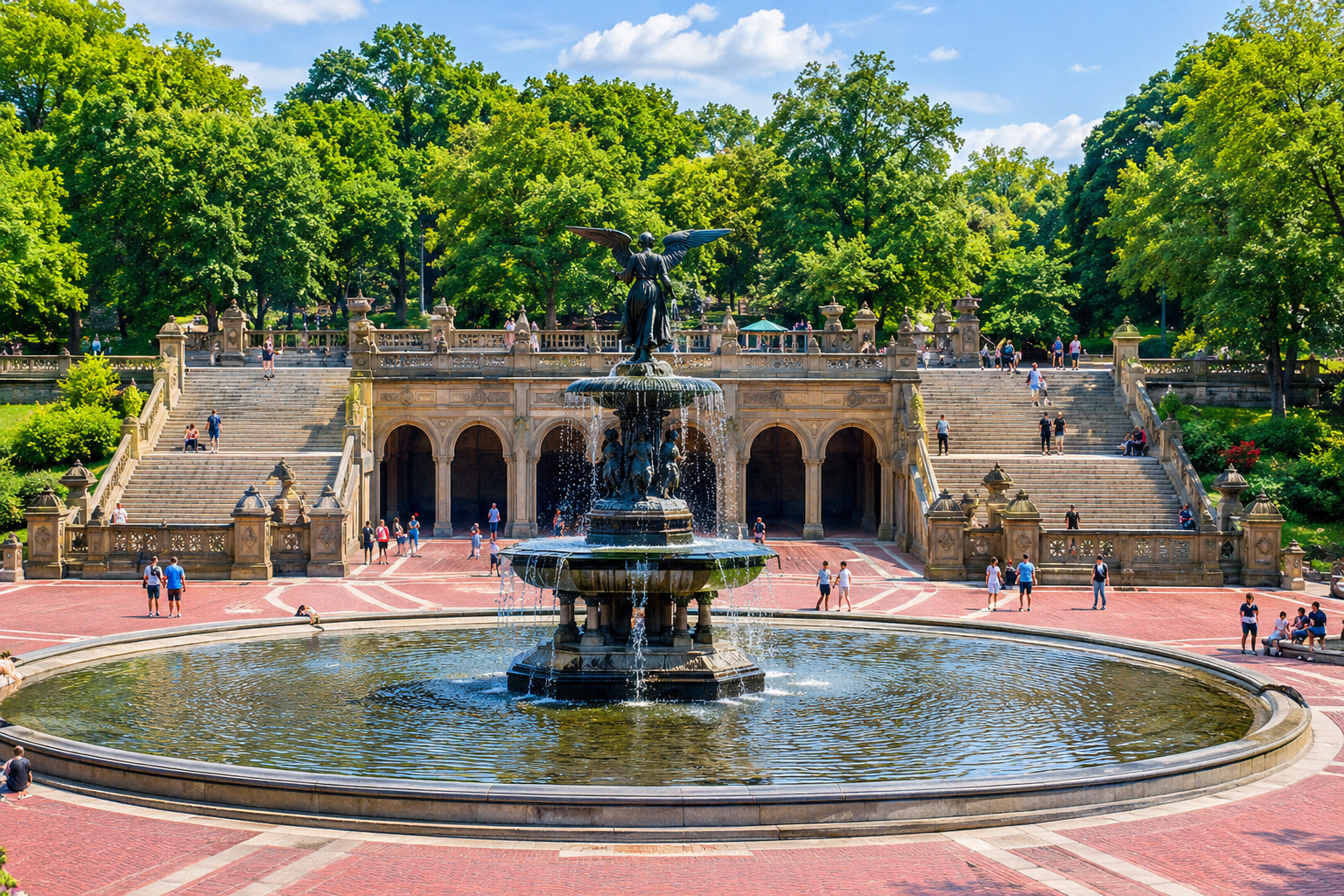
Bethesda Terrace combines impressive architecture with lake views and a steady flow of activity throughout the day.
Under the terrace, the tiled ceiling often catches attention first.
Outside, the Angel of the Waters fountain creates a classic Central Park scene that rarely feels rushed.
➤ See the Famous Bow Bridge
Some landmarks reveal themselves gradually.
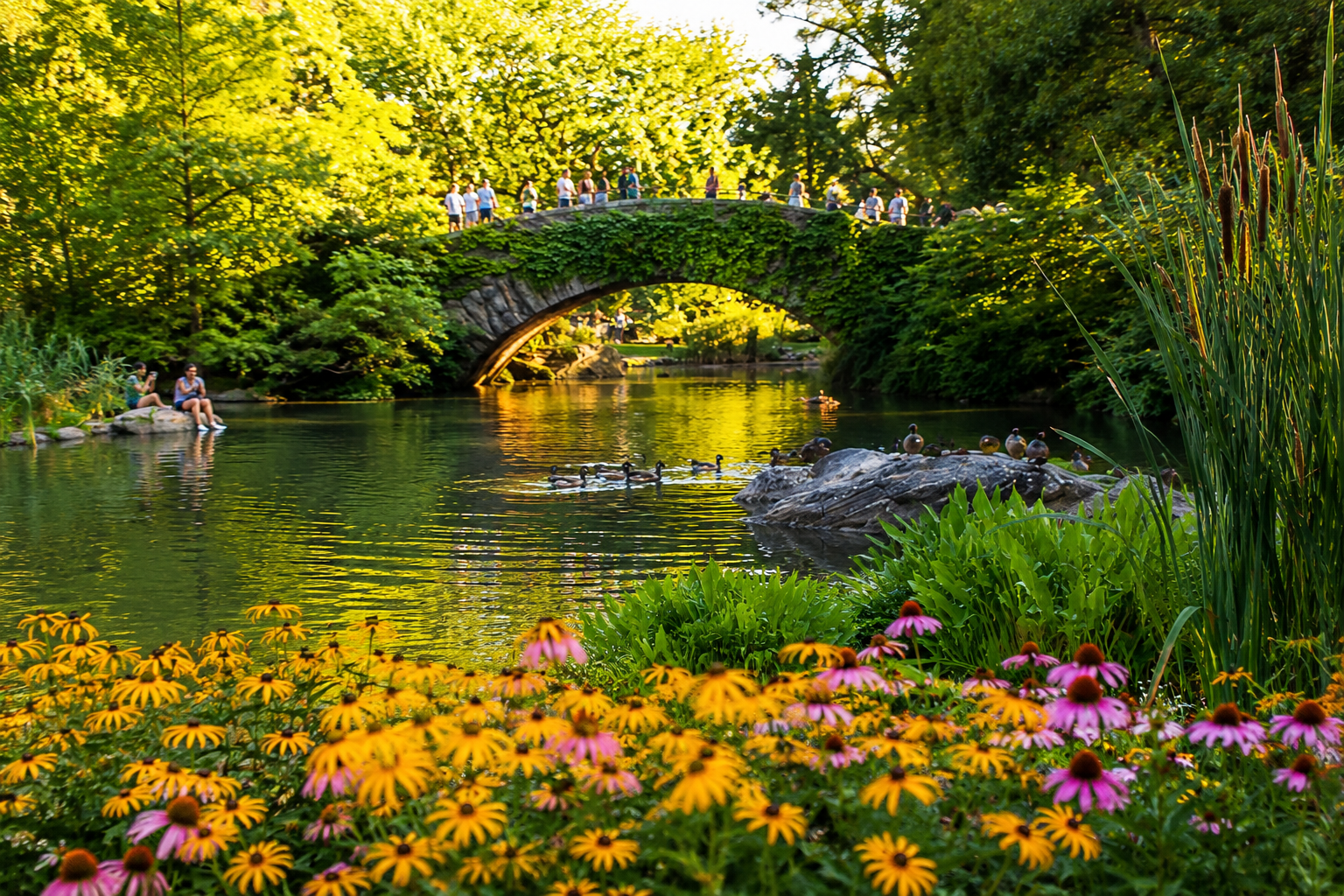
Bow Bridge appears through gaps in the trees before its graceful curve comes fully into view above the water.
The bridge offers excellent photo opportunities, but the surrounding scenery is equally rewarding.
Reflections on the lake, passing rowboats, and glimpses of nearby shorelines create one of the park’s most memorable viewpoints.
➤ Relax on Sheep Meadow
After exploring several attractions, a slower pace can feel welcome.
Sheep Meadow provides a large open lawn where visitors can rest without feeling confined to a bench or pathway.
The setting creates an unusual contrast. Glass towers rise beyond the trees, yet the meadow itself feels far removed from city traffic.
On pleasant days, it becomes one of the park’s most inviting places to pause.
➤ Visit Belvedere Castle
Perched on Vista Rock, Belvedere Castle sits at one of the highest natural points in Central Park.
The climb is relatively short, but the reward comes quickly.
From the viewing terraces, Turtle Pond and the Great Lawn spread out below.
The elevated perspective helps visitors appreciate the scale of the park.
➤ Experience Strawberry Fields
Near West 72nd Street, Strawberry Fields offers a quieter atmosphere than many nearby attractions.
Dedicated as a memorial to John Lennon, the area encourages visitors to slow down and absorb the surroundings.
The famous Imagine mosaic draws attention, yet the peaceful gardens nearby are equally worthwhile.
Early morning visits often provide the calmest setting and the clearest views.
The locations above introduce Central Park’s most recognizable highlights, but timing can greatly influence the experience. Our guide to Best Time to Visit Central Park to Avoid Crowds explains when popular areas feel most comfortable and when quieter conditions are easier to find.
How to Explore Central Park Without Feeling Overwhelmed
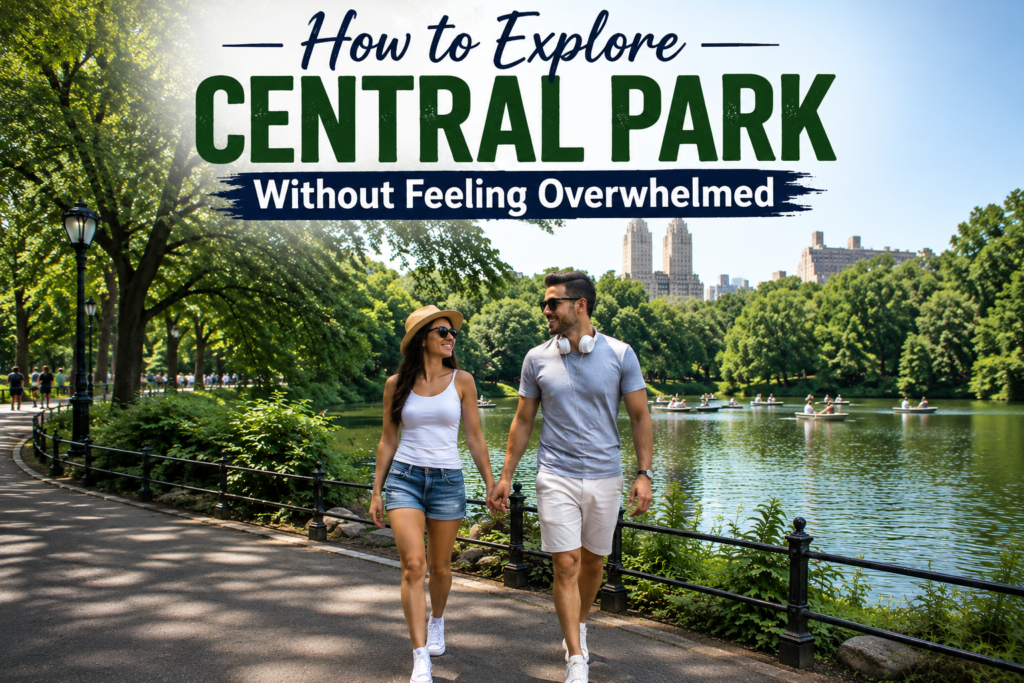
A common mistake is trying to see everything in a single visit. Central Park looks manageable on a map, yet the combination of winding paths, scenic detours, and major landmarks can quickly turn a simple walk into several hours of exploration.
The best way to visit central park for beginners is to slow down and focus on a few meaningful experiences rather than treating the park like a checklist. A relaxed pace often leads to a more enjoyable day and fewer missed details.
✔ Focus on Experiences Rather Than Seeing Everything
The goal is not to collect landmarks. It is to enjoy the park itself.
A few memorable stops, a peaceful walk, and time spent appreciating the surroundings often create a better first visit than rushing between every attraction marked on a map.
✔ Combine Scenic Areas With Famous Landmarks
Well-known attractions deserve attention, but they are only part of the experience. Pairing a landmark with a nearby scenic area creates a more balanced visit.
For example, after visiting Bethesda Terrace, spending time along the lakeside paths nearby often feels more rewarding than immediately moving to the next attraction.
✔ Allow Time for Unexpected Discoveries
Some of the park’s most enjoyable moments are not listed on itineraries. A quiet pathway, an overlooked viewpoint, or a musician performing beneath the trees can become a highlight of the day.
Leaving small gaps in your schedule makes room for these discoveries. They rarely happen when every minute is planned.
✔ Take Breaks Instead of Constantly Moving
Central Park is designed for lingering, not just walking. Benches, lawns, waterfront areas, and shaded spots appear throughout the park for a reason.
A short pause can be surprisingly useful. It helps break up longer walks and allows visitors to appreciate details that are easy to miss while moving from place to place.
Exploring at a comfortable pace often prevents unnecessary frustration later. For practical advice on avoiding common planning mistakes, continue with our guide to Mistakes Tourists Make in Central Park (And How to Avoid Them), which highlights several issues that can affect a first visit.
Small Experiences That Make a First Visit More Memorable

The famous landmarks often receive most of the attention, yet some of the most enjoyable moments in Central Park happen between the major attractions. A short pause, an unexpected performance, or a quiet view across the water can leave a lasting impression.
These smaller moments help answer how to make the most of a central park visit. They require no ticket, no schedule, and often become the details visitors remember long after the trip ends.
⚫ Watching Street Performers and Musicians
Central Park’s atmosphere changes throughout the day, and street performers contribute to that character. Around The Mall, Bethesda Terrace, and nearby pathways, musicians, singers, and instrumentalists frequently perform for passing visitors.
The experience feels spontaneous. A violin echoing beneath the terrace arches or a jazz performer along a shaded walkway can briefly transform an ordinary walk into something far more memorable.
⚫ Sitting Beside the Water for a Few Minutes
Not every worthwhile stop needs a famous landmark attached to it. A quiet bench beside The Lake or Conservatory Water often provides a welcome break from busy sightseeing.
The still water, passing birds, and gentle movement of rowboats create a calmer side of the park that many visitors appreciate.
⚫ Enjoying Seasonal Changes Throughout the Park
Central Park rarely looks the same twice. Spring brings flowering trees, summer fills the lawns with activity, autumn covers pathways in shades of gold and orange, and winter occasionally transforms the landscape with snow.
Each season creates a slightly different experience, even when visiting the same locations.
⚫ Simply Observing Everyday Life in Central Park
Sometimes the park itself becomes the attraction. Runners pass through tree-lined paths, artists sketch beneath the shade, and families gather on open lawns throughout the day.
These ordinary scenes help explain why Central Park feels different from many tourist attractions. It functions as both a destination and a living part of New York City, creating an atmosphere that feels authentic rather than staged.
The famous landmarks often shape first impressions, but practical planning matters too. Knowing where to stay alert, which areas are busiest at different times of day, and how to navigate the park confidently, read Central Park Travel Safety Guide, which covers the key precautions worth knowing before and during your visit.
Common Expectations vs Reality for First-Time Visitors

Central Park often looks simpler on a map than it feels in person. First-time visitors usually arrive with a rough idea of what they will see, only to discover that the park is larger, more varied, and more time-consuming than expected.
That is not a drawback. In many ways, it is part of the experience. Understanding a few realities beforehand helps set realistic expectations and supports several things first time visitors should know about central park before stepping through the gates.
You Will Not See Everything in One Visit
Even with a full day available, covering every major landmark is difficult. Central Park stretches from 59th Street to 110th Street, and exploring both popular attractions and quieter corners takes considerable time.
A first visit works best when priorities are clear. Trying to fit every bridge, monument, garden, and scenic viewpoint into one outing often leads to more walking and less enjoyment.
Walking Distances Can Be Longer Than Expected
A destination that appears nearby on a map may require a longer walk than anticipated. Curving pathways, elevation changes, and frequent stops naturally add time.
Comfortable shoes quickly become more important than many visitors expect.
Some of the Best Moments Are Unplanned
Not every memorable moment appears in a guidebook. A saxophone performance near Bethesda Terrace, sunlight filtering through elm trees, or a quiet pathway away from busy routes can unexpectedly become a highlight.
These moments often happen when there is room in the schedule for wandering rather than rushing.
The Park Feels Different From One Area to Another
The atmosphere changes noticeably across Central Park. The southern section near Columbus Circle and Fifth Avenue tends to feel energetic and active, while areas farther north often feel quieter and less crowded.
A walk of twenty minutes can bring a completely different setting. Busy plazas give way to wooded paths, open lawns, and sections that feel surprisingly removed from Manhattan’s surrounding streets.
The realities above help set expectations, but every visitor approaches the park differently. If keeping costs low is part of your planning, our guide to Budget-Friendly Activities in Central Park highlights several worthwhile experiences that do not require spending much beyond basic travel expenses.
Frequently Asked Questions About Visiting Central Park for the First Time
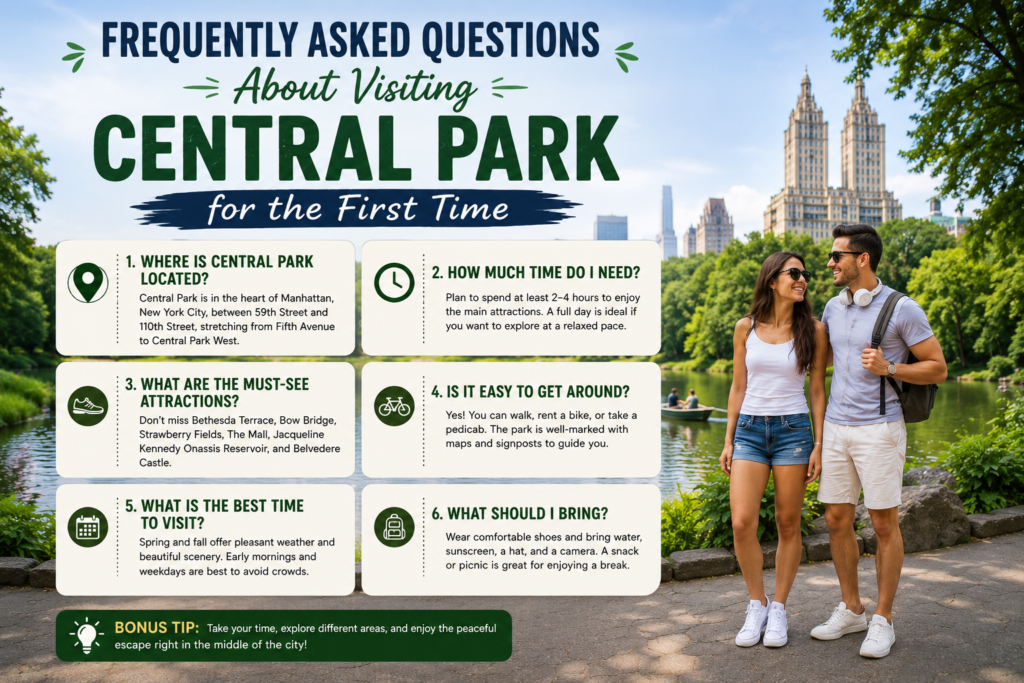
🔵 What should first-time visitors do in Central Park?
A first visit should focus on a few iconic locations rather than trying to see everything. Walking through The Mall, visiting Bethesda Terrace, crossing Bow Bridge, relaxing on Sheep Meadow, and exploring Strawberry Fields provide a well-rounded introduction to the park. One of the most useful tips for visiting central park for the first time is to leave room for spontaneous discoveries between major attractions.
🔵 How many hours do you need for a first visit to Central Park?
The answer depends on your pace and interests. Two to three hours is usually enough to see several major landmarks, while a half-day visit allows more time for walking, relaxing, and exploring quieter areas. When asking how much time do you need in central park, most first-time visitors find that four to five hours offers a comfortable balance.
🔵 What are the must-see places for first-time visitors?
Several locations consistently stand out for newcomers. Bethesda Terrace and Fountain, Bow Bridge, The Mall, Sheep Meadow, Belvedere Castle, and Strawberry Fields provide a good mix of scenery, architecture, and history. These attractions showcase different sides of Central Park without requiring visitors to cover the entire park.
🔵 Is Central Park easy to explore without a guide?
Yes. Well-maintained pathways, directional signs, and digital maps make independent exploration relatively straightforward. A guide can add historical context, but it is not necessary for a rewarding first visit. A basic understanding of the park’s layout is usually enough to navigate comfortably.
🔵 Where should first-time visitors start in Central Park?
The southern section is often the most practical starting point because several famous landmarks are located within a reasonable walking distance of one another. Entrances near 59th Street provide convenient access to The Pond, The Mall, Bethesda Terrace, and other popular attractions early in the visit.
🔵 Can you enjoy Central Park without seeing every major attraction?
Absolutely. Central Park is not a destination that needs to be completed in a single visit. Some of the most memorable moments come from relaxing on a bench, watching performers, or simply exploring a quiet path. Among the most valuable Central Park travel tips for tourists is to focus on quality experiences rather than trying to check every landmark off a list.






One Response