Is Central Park Safe for Tourists?
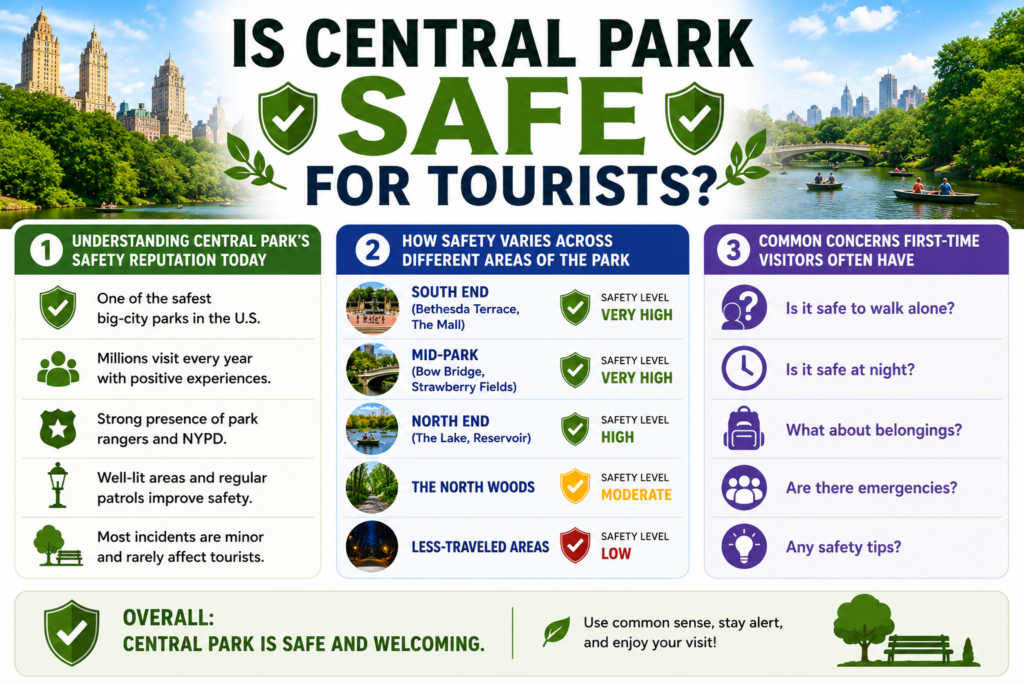
Millions of people visit Central Park every year, and for most travelers, the experience is safe, enjoyable, and free of major problems. Well-used paths, regular park activity, and available assistance help make visits comfortable throughout much of the day.
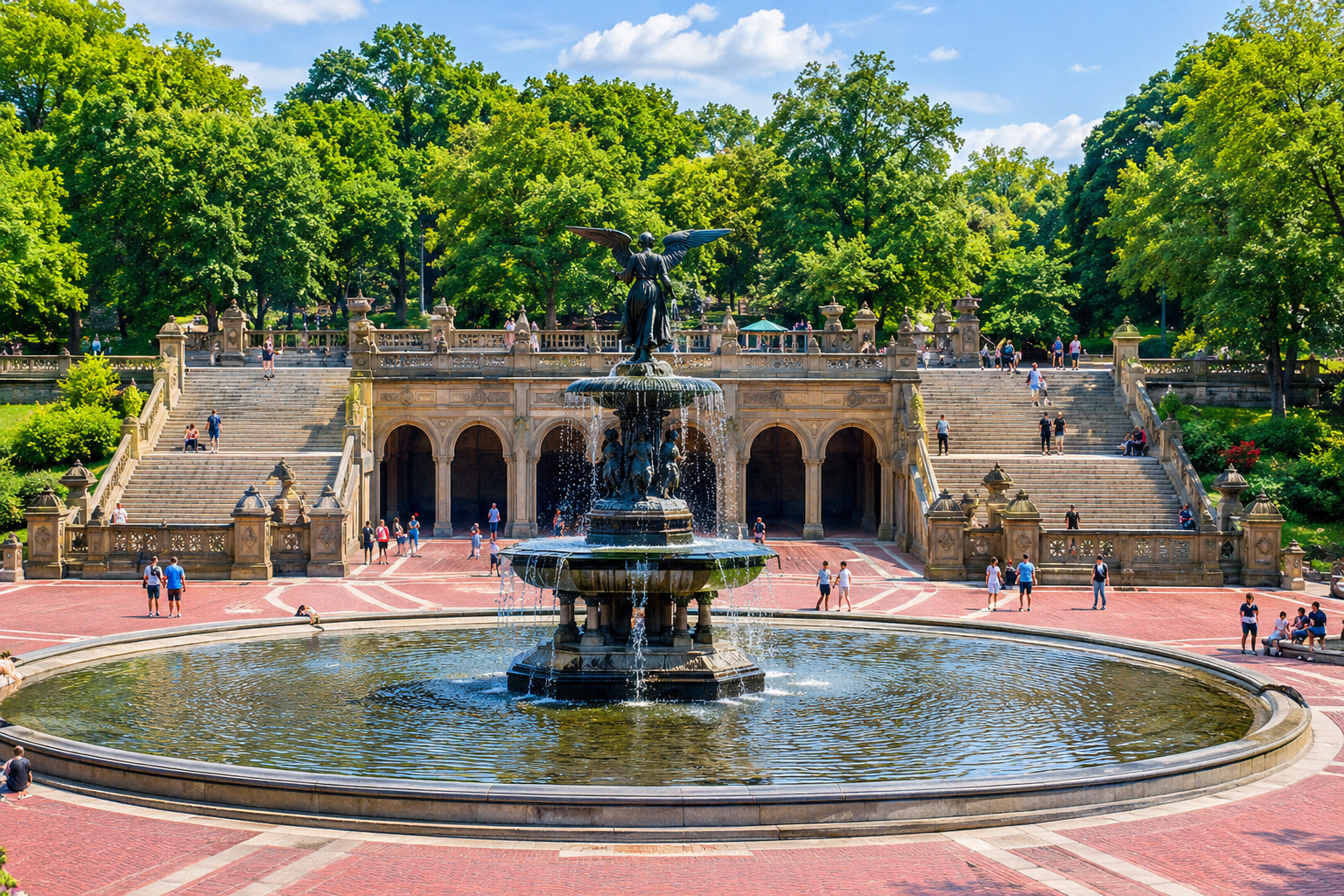
As this Central Park Travel Safety Guide explains, the park today operates as one of New York City’s most visited public spaces. Areas around Bethesda Terrace, Sheep Meadow, and The Mall usually see a steady flow of walkers, runners, families, and sightseeing visitors from late morning through the afternoon, helping answer the question of how safe is Central Park for visitors. Information and visitor assistance are also available through the Central Park Conservancy Help Center.
Safety can vary slightly from one section to another. Open spaces near Bethesda Fountain often feel busier, while wooded sections such as The Ramble become noticeably quieter, especially when the sound of distant traffic begins to fade.
First-time visitors often worry about getting lost, carrying valuables, or choosing the right routes. A downloaded park map, a charged phone, and sticking to marked pathways usually solve most of these concerns before they become problems.
If safety is only one part of your planning, understanding How to Visit Central Park for the First Time can make the overall experience much smoother. It helps connect practical preparation with realistic expectations before entering the park.
Common Safety Risks
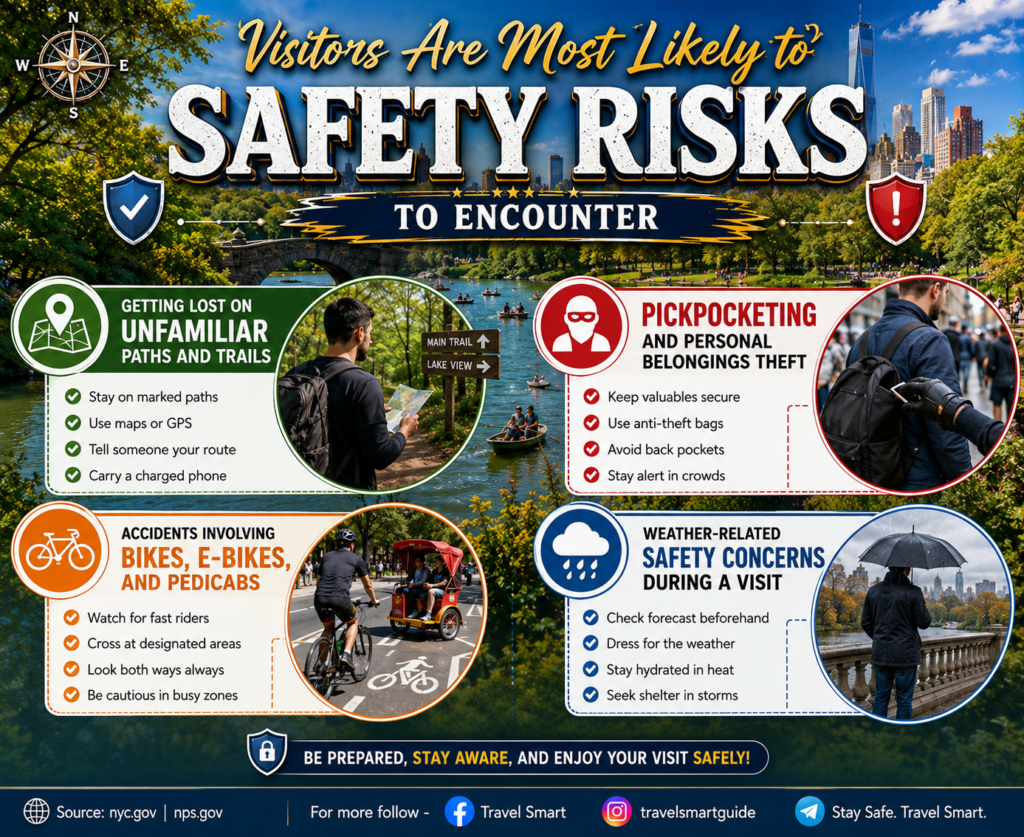
While serious incidents are uncommon, a few practical issues appear more often than others. Missing a turn inside wooded sections, leaving valuables unattended, stepping into bike lanes, or getting caught in sudden weather changes are far more common than major safety problems.
The winding trails inside The Ramble create the most common navigation challenge. Several paths look similar, and tree cover can partially block nearby landmarks. When leaves rustle overhead and surrounding sounds become softer, it is easy to lose a sense of direction without a map or phone.
Personal belongings usually attract more attention than visitors expect. Phones left on benches near Bethesda Fountain, unattended bags beside Sheep Meadow, or wallets stored in open jacket pockets create avoidable Central Park tourist safety concerns during busy afternoon hours.
Not every moving vehicle inside the park is a car. Cyclists, e-bikes, and pedicabs regularly travel along the Central Park Loop, particularly between Columbus Circle and East Drive. A quick step into a bike lane while focusing on scenery can lead to sudden close calls.
Weather conditions can shift quickly in an open park setting. During summer afternoons, exposed paths around Great Lawn and Belvedere Castle can feel noticeably warmer than shaded sections, while a brief rain shower can leave nearby rocks and stone steps slick for walking.
Understanding risks is useful, but avoiding common planning errors can make a visit even smoother. Our guide to Mistakes Tourists Make in Central Park (And How to Avoid Them) explores small decisions that often create bigger problems later in the day.
How to Stay Safe
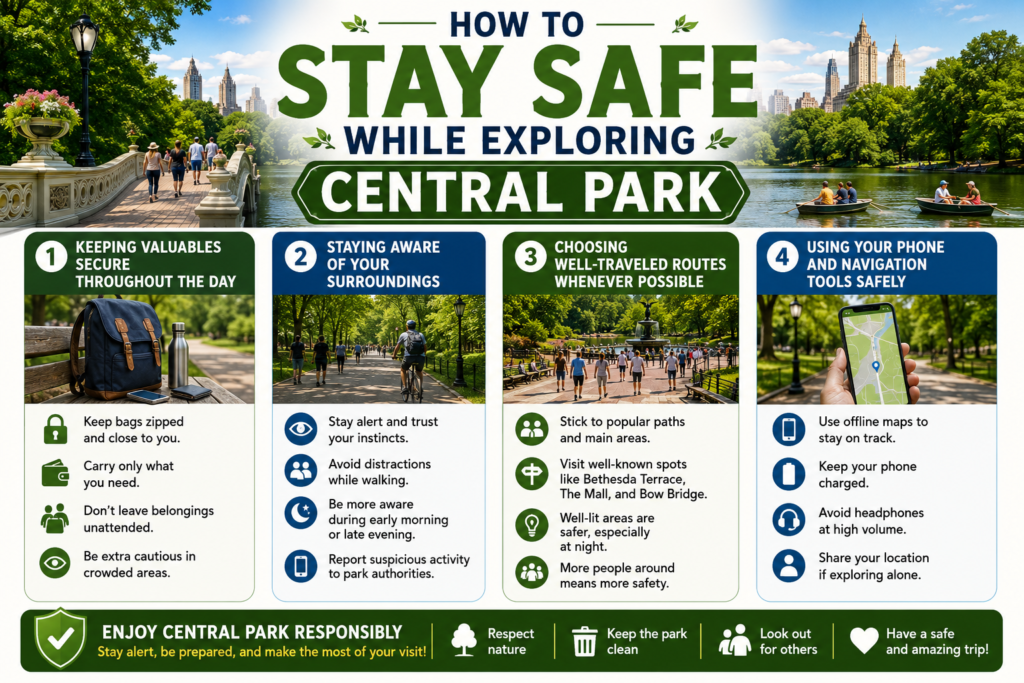
A few simple habits can significantly reduce risks and help you move through the park with greater confidence. Choosing a busy pathway, securing a phone before taking a photo, or checking directions before entering a wooded trail often makes the day smoother.
Small items are easiest to misplace when stopping frequently. Around Bethesda Terrace and the Grand Army Plaza entrance, where photo stops are common, a zipped cross-body bag offers more protection than an open tote. Between 11:00 AM and 3:00 PM, it is usually best to put phones and wallets away immediately after use.
The park feels different when attention stays on the surroundings instead of a screen. Footsteps, bicycle bells, and distant carriage sounds often provide useful clues about nearby activity. This simple habit remains one of the most practical Central Park safety tips for tourists.
Popular routes usually offer an extra layer of comfort. The Mall, Literary Walk, and pathways around Bethesda Fountain generally maintain steady pedestrian activity throughout daylight hours.
Navigation tools are useful, but stopping near a bench or open area is safer than walking while looking down at a map. Checking directions before entering The Ramble or the North Woods can save time and reduce confusion later.
Good route choices become even more valuable during photography stops. Readers interested in Central Park photo spots for visitors can combine scenic viewpoints with practical route planning throughout the park.
Daytime Safety Tips for Visitors
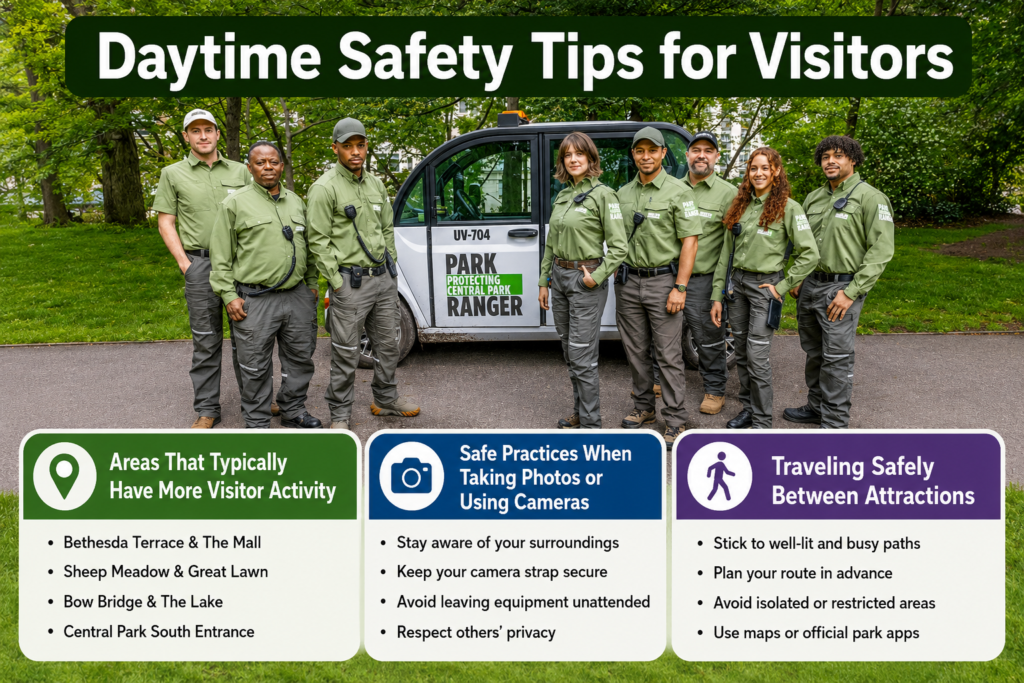
Daylight hours bring the highest level of activity across Central Park. From about 10:00 AM until 4:00 PM, popular routes fill with walkers, runners, guided groups, and families, making it easier to find directions and stay connected to the flow of park activity.
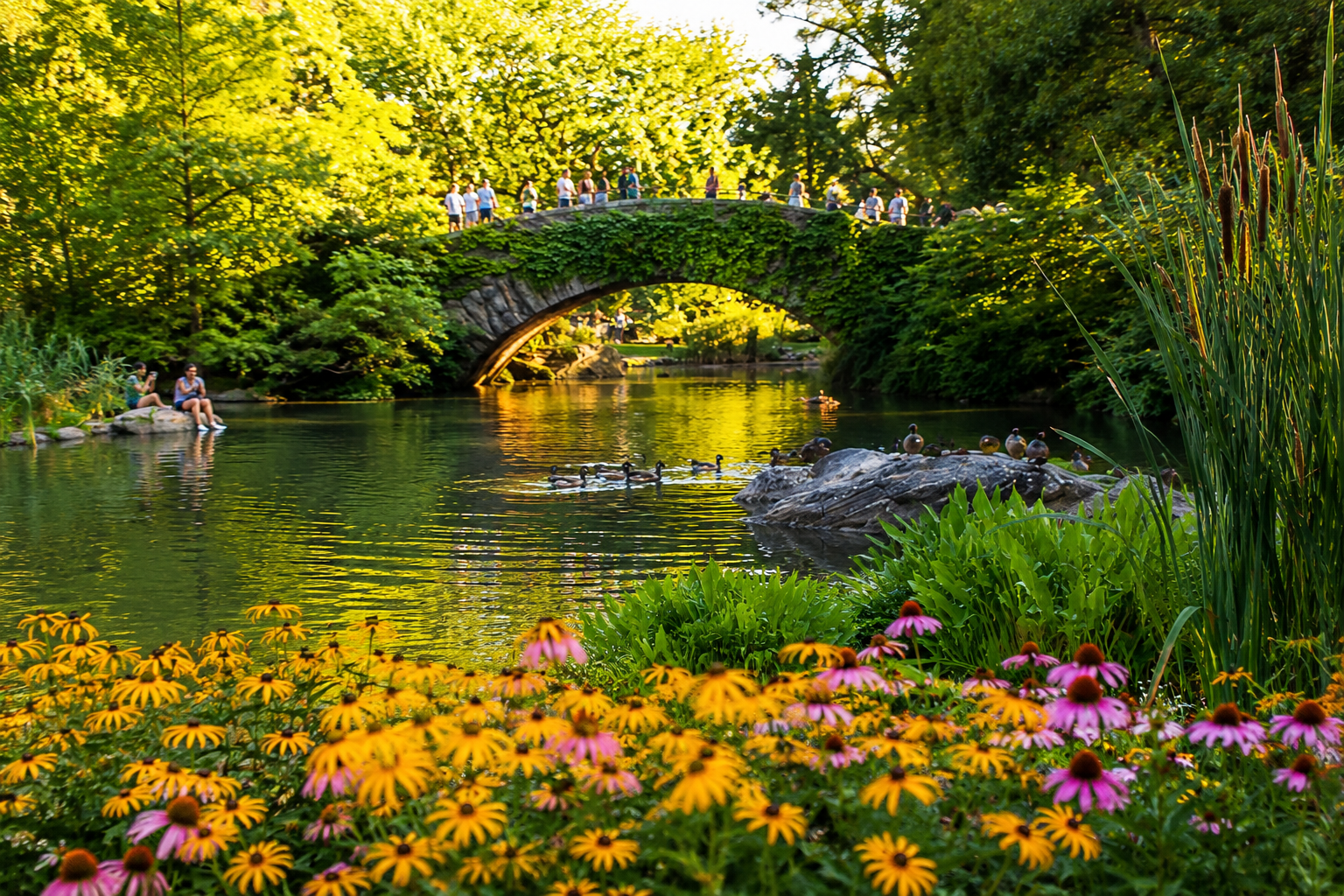
Bethesda Terrace, The Mall, and Bow Bridge rarely feel empty between late morning and mid-afternoon. Conversations echo beneath the terrace arches, camera shutters click near the fountain, and a steady stream of pedestrians moves through the area. As highlighted throughout this Central Park Travel Safety Guide, these locations are often among the safe areas to visit in Central Park during daylight hours.
A photo opportunity can appear suddenly. Rather than placing a camera bag on a nearby bench, keep equipment secured and step slightly away from busy walkways before adjusting lenses or reviewing images.
Not every route inside Central Park feels the same. The walkway linking Bethesda Terrace, Cherry Hill, and Bow Bridge remains one of the more straightforward daytime connections, with open views ahead and regular foot traffic for much of the day.
Crowd levels can also shape the overall experience. Readers interested in the Best Time to Visit Central Park to Avoid Crowds can compare quieter periods with the busier daytime hours discussed above to find the right balance for their visit.
Visiting Central Park After Dark
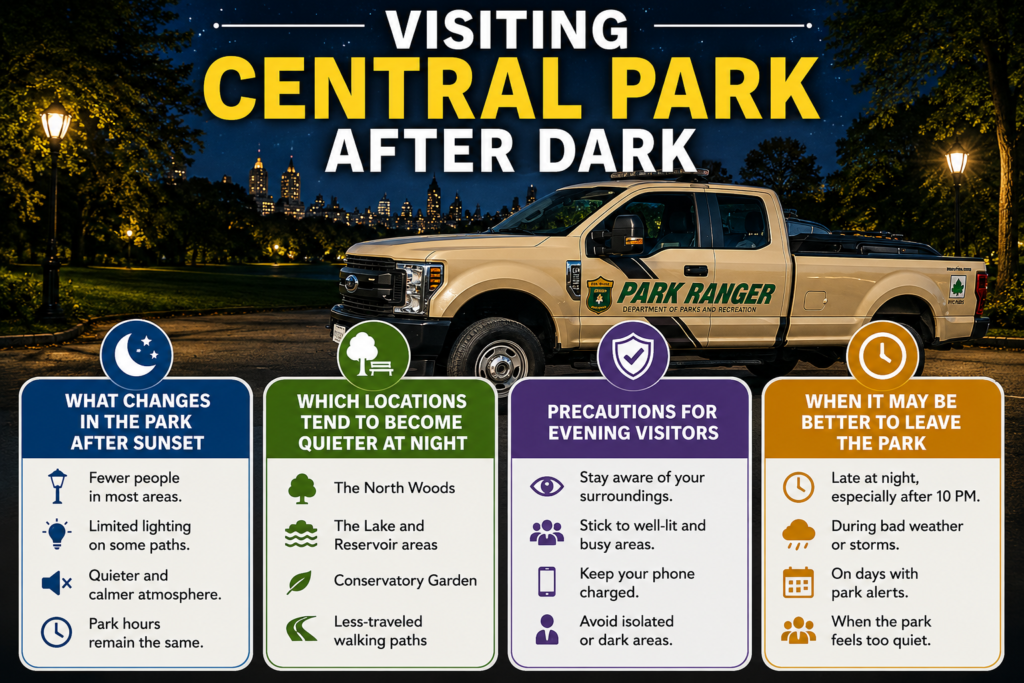
The atmosphere changes noticeably once daylight fades. Bethesda Terrace, Bow Bridge, and other familiar landmarks remain in place, but the steady movement seen during the afternoon gradually gives way to longer stretches of quieter pathways.
By around 8:30 PM to 9:00 PM during warmer months, the sounds around Bethesda Fountain begin to thin out. Conversations become less frequent, pathways feel less busy, and the contrast with midday activity becomes noticeable.
The Ramble, North Woods, and several wooded interior paths typically become much quieter after dark. Trail intersections that feel obvious during the day can look surprisingly similar at night, especially beneath dense tree cover where fewer landmarks stand out.
A common question is Is Central Park safe at night. Sticking to well-lit perimeter areas near Central Park South, Columbus Circle, or Fifth Avenue entrances is generally a more practical choice than exploring deeper interior sections late in the evening.
Sometimes the park gives subtle signals. If pathways become noticeably empty, signs are harder to spot, or checking directions turns into a repeated task, heading toward a nearby exit is usually the simpler option.
Safety considerations can vary depending on who is exploring the park. Readers planning a solo visit may also find useful guidance in our Solo Traveler’s Guide to Central Park, which covers additional planning considerations for independent exploration.
Safety Tips for Every Visitor
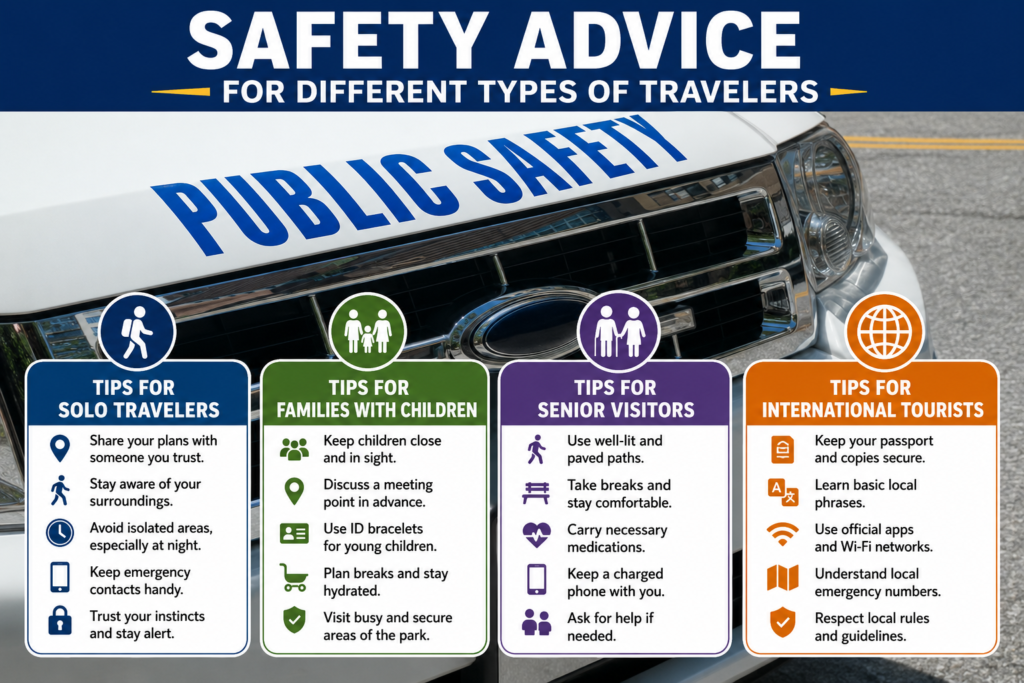
Not every visit to Central Park unfolds the same way. Someone walking alone through the park faces different decisions than a family heading to a playground or a visitor navigating New York City for the first time.
A solo walk through Central Park can feel very different from exploring with a group. A common question is is Central Park safe for solo travelers. Between roughly 10:00 AM and 4:00 PM, routes around Bethesda Terrace, Conservatory Water, and The Mall usually remain active, while quieter interior paths inside The Ramble offer fewer visual reference points. The sound of bicycle bells and nearby conversations can be a useful reminder that busier paths are still close by.
Children tend to move quickly when playgrounds or open lawns come into view. Near Heckscher Playground or the Ancient Playground beside the Metropolitan Museum of Art, choosing a visible meeting point before exploring can prevent confusion if family members become separated.
For senior visitors, comfort often plays a role in safety. The flatter pathways surrounding Literary Walk and Conservatory Water generally require less effort than steeper sections near Belvedere Castle, where uneven surfaces and stairways may demand extra attention.
For international visitors, the sheer size of Central Park can be more surprising than expected. Before entering, it helps to note the nearest numbered entrance—such as East 72nd Street or West 77th Street—and download an offline map. Official park maps are also available through the Central Park Conservancy.
Different visitors often prioritize different activities inside the park. Readers planning outdoor meals can also explore our guide to Budget-Friendly Activities in Central Park, which includes several picnic-friendly locations and practical planning tips.
What to Do During an Emergency
Emergencies are rare inside Central Park, but confusion can waste valuable time when help is needed. Knowing where you are and who to contact before a problem occurs can make the situation easier to manage.
In a serious emergency, calling 911 remains the fastest option. Providing a nearby landmark such as Bethesda Fountain, Belvedere Castle, Sheep Meadow, or Strawberry Fields can help responders identify your location more quickly. Official emergency guidance is available through the NYPD and New York City emergency services. A siren echoing across the park can sound closer or farther than it actually is, making exact location details especially important. [Source: NYPD / NYC Emergency Services]
Near busy sections of the park, assistance is usually easier to find than expected. Around Bethesda Terrace, the Dairy Visitor Center, Columbus Circle, and Grand Army Plaza, park staff, Conservancy employees, or police officers may be available to help with urgent situations or reporting concerns. [Source: Central Park Conservancy]
Separation from a group usually becomes more confusing when movement continues. Instead of searching in multiple directions, return to a recognizable landmark and wait there. The clock near the Dairy Visitor Center or the steps of Bethesda Terrace often provide easier meeting points than open lawns or winding pathways.
A misplaced phone, wallet, or camera becomes much harder to recover when the search area keeps growing. If an item cannot be located nearby, report it to park staff or police assistance points as soon as possible and note the last confirmed location where it was seen. This practical step is among the most useful things tourists should know about Central Park safety.
Unexpected situations can happen in any large destination, but preparation often reduces stress. Readers interested in planning activities with younger visitors may also find useful guidance in our article on Best Family Attractions in Central Park, which highlights family-friendly areas that are easier to navigate and regroup within.
Common Safety Mistakes
Many park-related problems stem not from danger itself but from small decisions that seem harmless at the time. A wrong turn, a missed weather update, or a moment of distraction can create avoidable complications.
Not every trail inside Central Park leads quickly back to a major landmark. In the North Woods, several paths branch through wooded terrain before reconnecting with wider walkways, while sections of The Ramble contain multiple intersections that look surprisingly similar. When gravel crunches underfoot and nearby city noise begins to fade, it becomes easier to lose track of direction than many first-time visitors expect.
Near the Great Lawn and Jacqueline Kennedy Onassis Reservoir, weather changes often reveal themselves before the first raindrops arrive. A sudden drop in temperature, stronger wind across open ground, or dark clouds moving south over the reservoir usually signal that conditions are shifting. Checking forecasts before setting out remains useful safety advice for visiting Central Park.
A bicycle bell heard a few seconds earlier can prevent an uncomfortable close call. Along East Drive, especially between roughly 10:00 AM and 4:00 PM, cyclists, runners, and pedestrians frequently share nearby space. High-volume headphones reduce awareness of approaching movement and make it easier to miss sounds that would otherwise signal caution.
Extra valuables rarely improve a day in the park. Carry only essential items and leave unnecessary jewelry, spare electronics, or large amounts of cash secured elsewhere.
Before planning activities, it also helps to understand which experiences suit different age groups and interests. The guide to Fun Activities for Teenagers in Central Park explores popular attractions, active areas, and entertainment options that fit younger visitors particularly well.
Final Words
With basic awareness and sensible precautions, visitors can focus less on potential risks and more on enjoying everything Central Park has to offer.
Questions such as is Central Park safe to visit usually feel less important once the park’s layout becomes familiar and routes are planned in advance.
Bethesda Terrace in the afternoon feels very different from a quiet wooded trail in the North Woods near sunset.
Understanding how to stay safe in Central Park is not about being constantly cautious; it is about making simple choices that help a visit run smoothly.
When navigation feels easy and surroundings feel familiar, there is more time to appreciate Bow Bridge, Conservatory Water, the Great Lawn, and other well-known areas across the park.
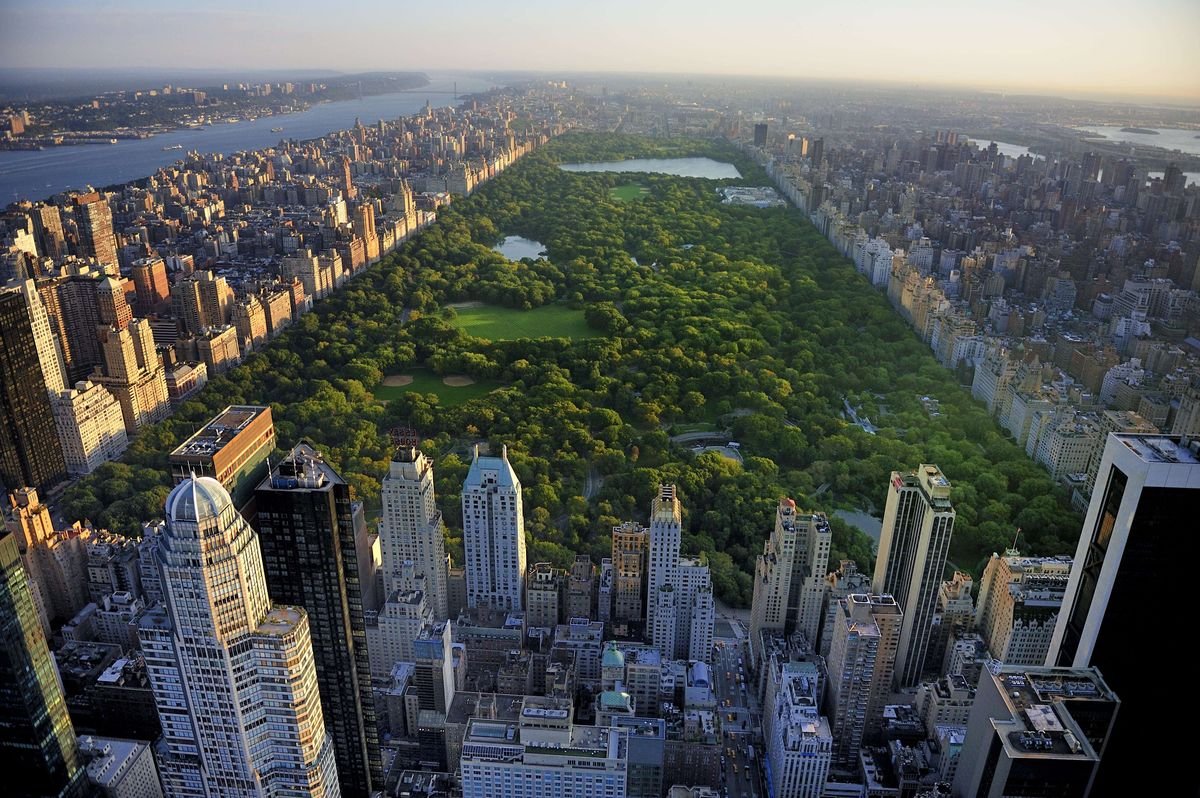
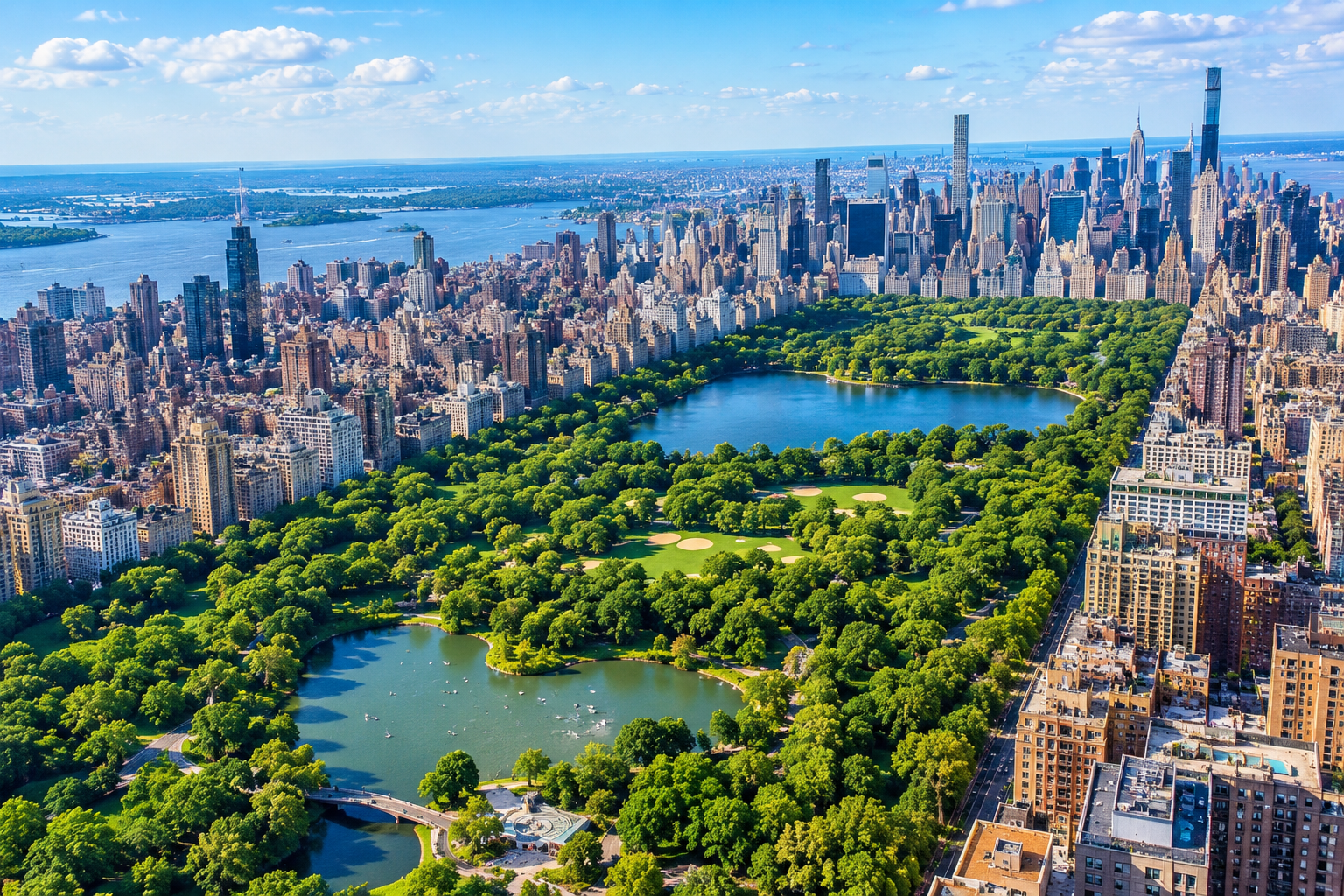
Compared with many urban attractions, Central Park gives visitors far more space to explore at their own pace. From family outings and photography opportunities to Romantic Things to Do in Central Park for Couples, the park offers experiences that suit different interests. A little preparation beforehand helps turn attention away from potential concerns and toward the memorable places that make Central Park such an iconic part of New York City.
Frequently Asked Questions
Is Central Park safe for tourists during the day?
Yes. Most areas of Central Park remain busy throughout the day, especially between approximately 10:00 AM and 4:00 PM. Popular locations such as Bethesda Terrace, The Mall, Bow Bridge, Sheep Meadow, and Conservatory Water typically have steady pedestrian activity, making navigation easier and surroundings more predictable.
Is it safe to walk through Central Park at night?
Safety conditions can vary depending on location and time. Well-lit perimeter areas near Central Park South, Columbus Circle, and Fifth Avenue generally remain more active than interior wooded sections. After dark, it is usually wise to stay on established paths, avoid isolated areas, and leave the park if navigation becomes difficult.
Are there police officers and security personnel in Central Park?
Yes. Assistance may be available from NYPD officers, park enforcement personnel, and Central Park Conservancy staff in various parts of the park. Help is often easier to find near major attractions, visitor facilities, and busy entrances such as Columbus Circle, Grand Army Plaza, and the Dairy Visitor Center.
What should I do if I get lost in Central Park?
Start by locating the nearest park map, numbered entrance marker, or recognizable landmark. Places such as Bethesda Fountain, Belvedere Castle, Conservatory Water, and Strawberry Fields can help you identify your location. If needed, use a phone map or ask park staff for directions rather than continuing to walk without a clear route.
Is Central Park safe for solo travelers?
Yes, particularly during daylight hours in well-traveled areas. Routes around Bethesda Terrace, The Mall, Conservatory Water, and Sheep Meadow generally maintain regular activity. Solo visitors can improve comfort and awareness by staying on established pathways and avoiding unfamiliar interior shortcuts.
What are the most common safety issues visitors face in Central Park?
Most concerns involve getting temporarily disoriented, misplacing belongings, weather changes, or not noticing cyclists and e-bikes on shared routes. Serious incidents are uncommon for most visitors, and many minor problems can be avoided through basic preparation and awareness.
Are valuables safe to carry inside Central Park?
Carrying essential items is generally fine, but it is best to keep valuables secured. Phones, wallets, and cameras should remain in zipped bags or secure pockets when not in use. Leaving belongings unattended on benches, lawns, or beside attractions increases the risk of loss or theft.
How can families keep children safe while visiting Central Park?
Choose a visible meeting point before exploring playgrounds or open spaces. Locations such as Heckscher Playground and the Ancient Playground can become busy during peak daytime hours. Keeping children within sight, taking a photo of their clothing for reference, and identifying nearby landmarks can make reunions quicker if anyone becomes separated.