Getting Started
Photographs taken in Central Park can look completely different even when the location stays the same. A quiet lake at sunrise may reflect soft pastel colors across still water, while the same scene at sunset can glow with warm golden tones and a busier atmosphere. Because of these changes, understanding timing is often just as important as choosing the right viewpoint.
The Central Park Conservancy encourages photographers to arrive early for popular landmarks and highlights sunrise and sunset as some of the most rewarding periods for capturing the park’s changing character.
For visitors planning a photography-focused trip, the Best Times of Day to Photograph Central Park depends on the type of images they hope to capture.
Some photographers prefer the calm conditions and softer light of Central Park sunrise photography, while others wait for the warm glow of golden hour or the atmospheric colors that appear during blue hour.
Early mornings often provide cleaner backgrounds and quieter paths, whereas sunset can create richer colors but attract larger numbers of visitors to iconic spots such as Bow Bridge and Bethesda Terrace.
Community discussions among photographers frequently highlight sunrise as the preferred choice for fewer crowds and gentler light.
Understanding How Light Changes Throughout the Day in Central Park
A photograph in Central Park is shaped as much by light as by the subject itself, and understanding how lighting changes throughout the day can help you capture stronger and more memorable images.
A scene that feels ordinary at noon can appear completely different when the angle of sunlight changes across the park.

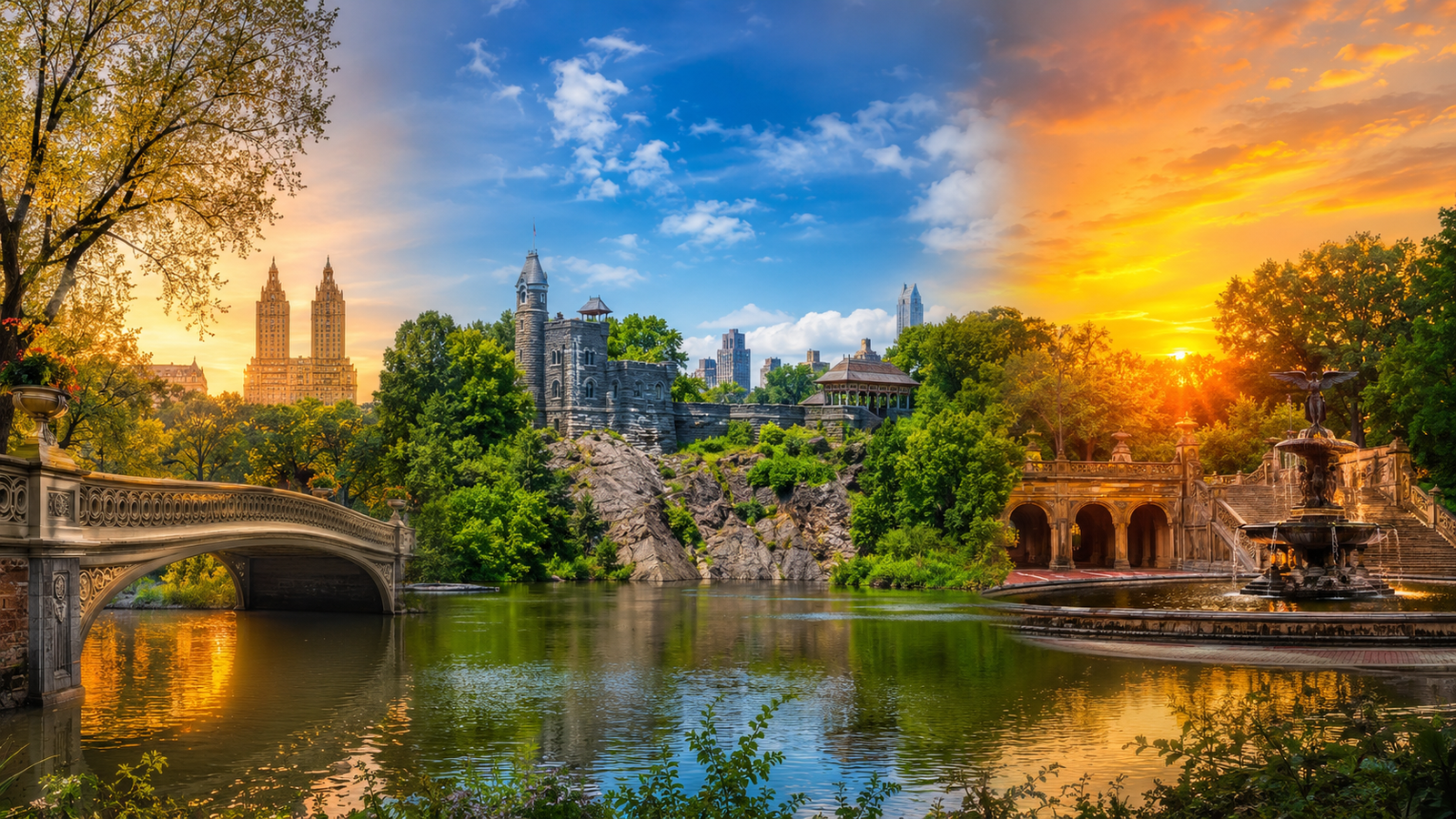
Bow Bridge illustrate sunrise, morning, afternoon, and sunset lighting
Understanding these changes helps answer a common question about when to take pictures in Central Park rather than relying only on equipment upgrades.
Soft sunlight filtering through the American elm trees along The Mall can create patterns and depth that disappear once the sun climbs higher. Timing matters.
Why Natural Light Matters More Than Camera Equipment
Even an advanced camera cannot replace the quality of good natural light, which is why many striking Central Park images are created with simple equipment used at the right time of day.

Bow Bridge compare soft golden sunrise lighting with harsh midday sunlight
Recommendation often beats technology here: arrive around 6:00–8:00 a.m. during warmer months when lower sunlight creates softer tones and gentler contrast across many popular viewpoints.
As an added benefit, these calmer hours often align with the best time to visit Central Park to avoid crowds, allowing cleaner compositions with fewer distractions in the background.
How Shadows Shape Different Areas of the Park
Location matters because shadows behave differently across Central Park’s landscapes, bridges, gardens, and open lawns.

Sunlight filters through towering elm trees, casting patterned shadows across The Mall and Literary Walk
The changing shade, combined with the distant sound of horse carriages along Central Park South, can add atmosphere that photographs sometimes capture surprisingly well.
Seasonal Changes That Affect Lighting
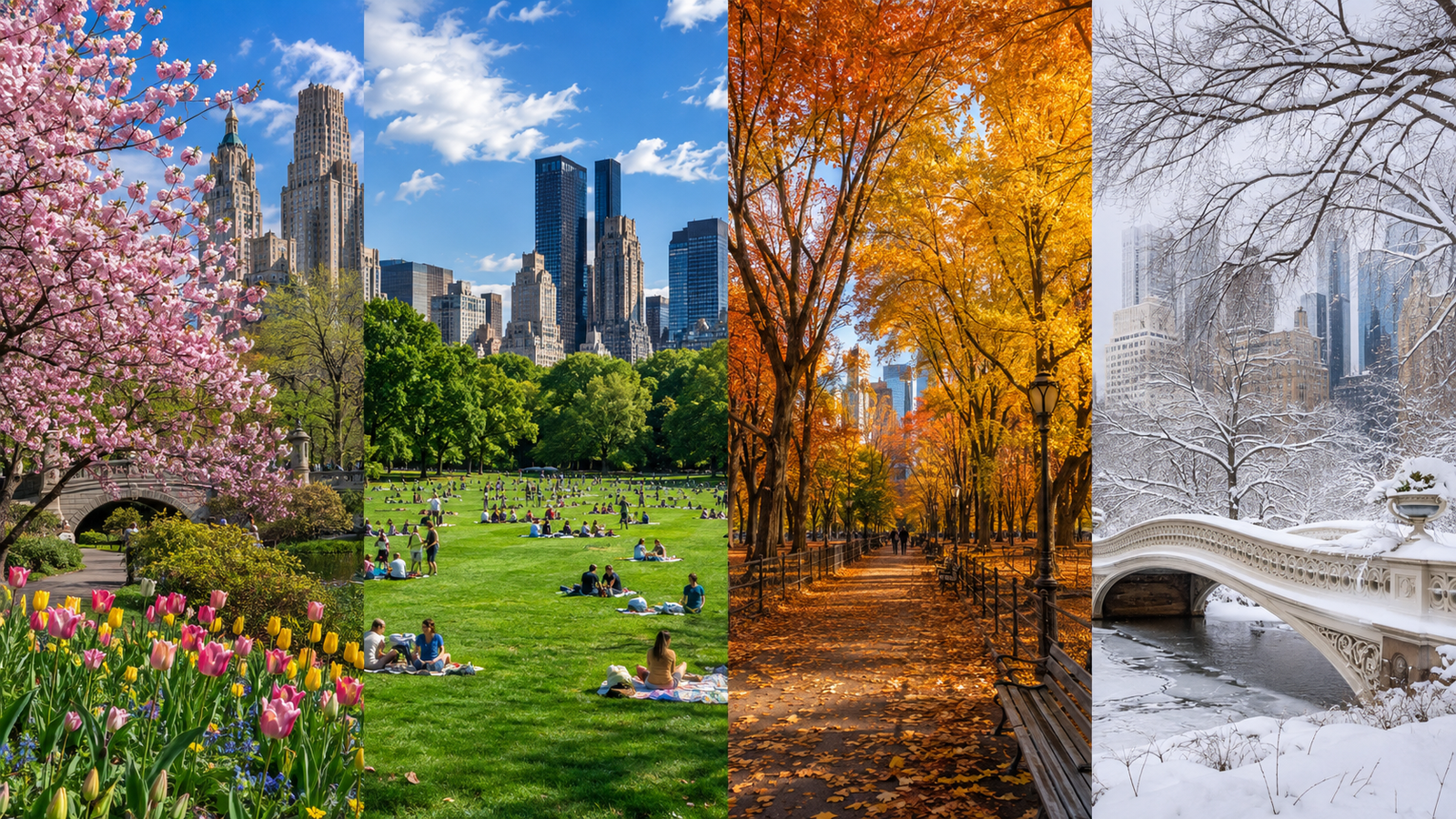
Those wondering about the best season and time to photograph Central Park may find that autumn mornings and late spring evenings consistently offer some of the park’s most photogenic lighting conditions.

Bow Bridge showing identical viewpoint through spring, summer, fall, and winter
Small seasonal details matter too; a cool breeze moving across The Lake can alter reflections within minutes and create a completely different image from the one available earlier in the day.
Cloudy Days vs Sunny Days for Photography
Many people automatically hope for bright sunshine, but overcast conditions can sometimes create better photography opportunities.

Bethesda Terrace views comparing sunny and cloudy conditions
Cloud cover acts like a giant natural diffuser, spreading light more evenly across landscapes and reducing harsh highlights on stone structures such as Bethesda Terrace.
If bright midday sunlight is unavoidable, moving toward shaded locations such as The Ramble or North Woods can help maintain more balanced exposures.
Best Central Park Locations for Sunrise Photography
Sunrise transforms many parts of Central Park into peaceful, softly lit scenes, making the early morning hours one of the most rewarding times for photographers willing to arrive before the crowds.
Compared with the stronger sunlight that reaches Sheep Meadow and Bethesda Terrace later in the day, sunrise usually brings softer illumination and quieter surroundings, creating some of the most favorable Central Park photography lighting conditions for landscape and architectural photography.
The first sunlight filtering through the trees near The Mall can quickly change an ordinary scene into something far more photogenic.
Many photographers searching for the best time to avoid crowds for photography in Central Park focus on the period between approximately 5:30 a.m. and 7:30 a.m. during late spring and summer.
The real challenge is deciding which sunrise location deserves your time first, especially when several of the park’s most photogenic viewpoints perform well under early morning light.
Bow Bridge in Early Morning Light

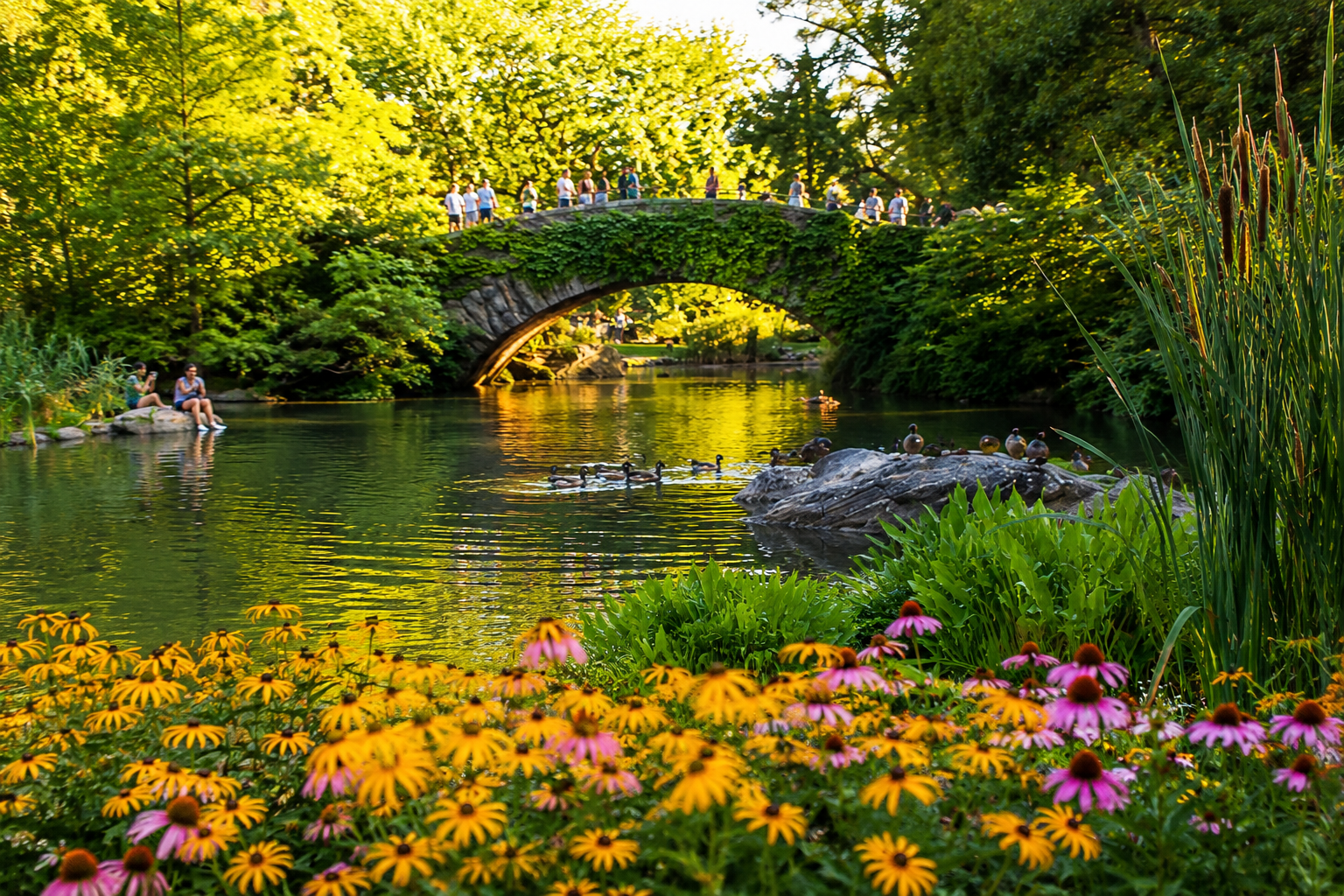
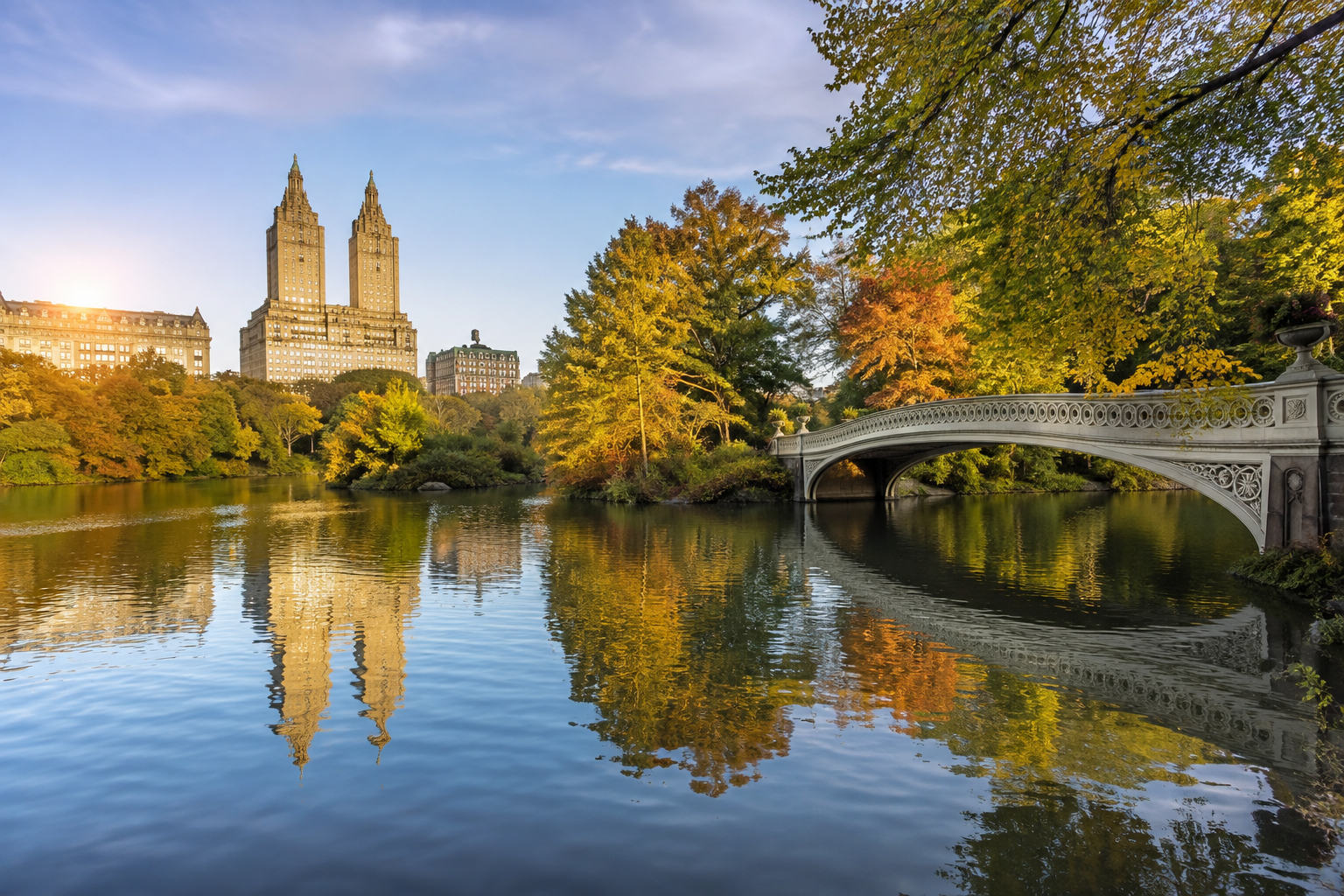
Bow Bridge at sunrise with calm mirror-like lake reflections
A light breeze across The Lake and the first rays reaching Bow Bridge between roughly 6:00 a.m. and 7:30 a.m. often create ideal conditions for photographing Central Park at sunrise, especially when the bridge and surrounding water begin reflecting the soft morning light, making it one of the most rewarding Central Park photo spots for visitors.
Belvedere Castle Before Crowds Arrive

Belvedere Castle at sunrise from Turtle Pond, warm morning light
Perched above Turtle Pond near the center of the park, Belvedere Castle is often at its quietest before 8:00 a.m., when softer morning light highlights the stone towers and viewing terraces without the heavier foot traffic seen later in the day.
Conservatory Garden at Sunrise

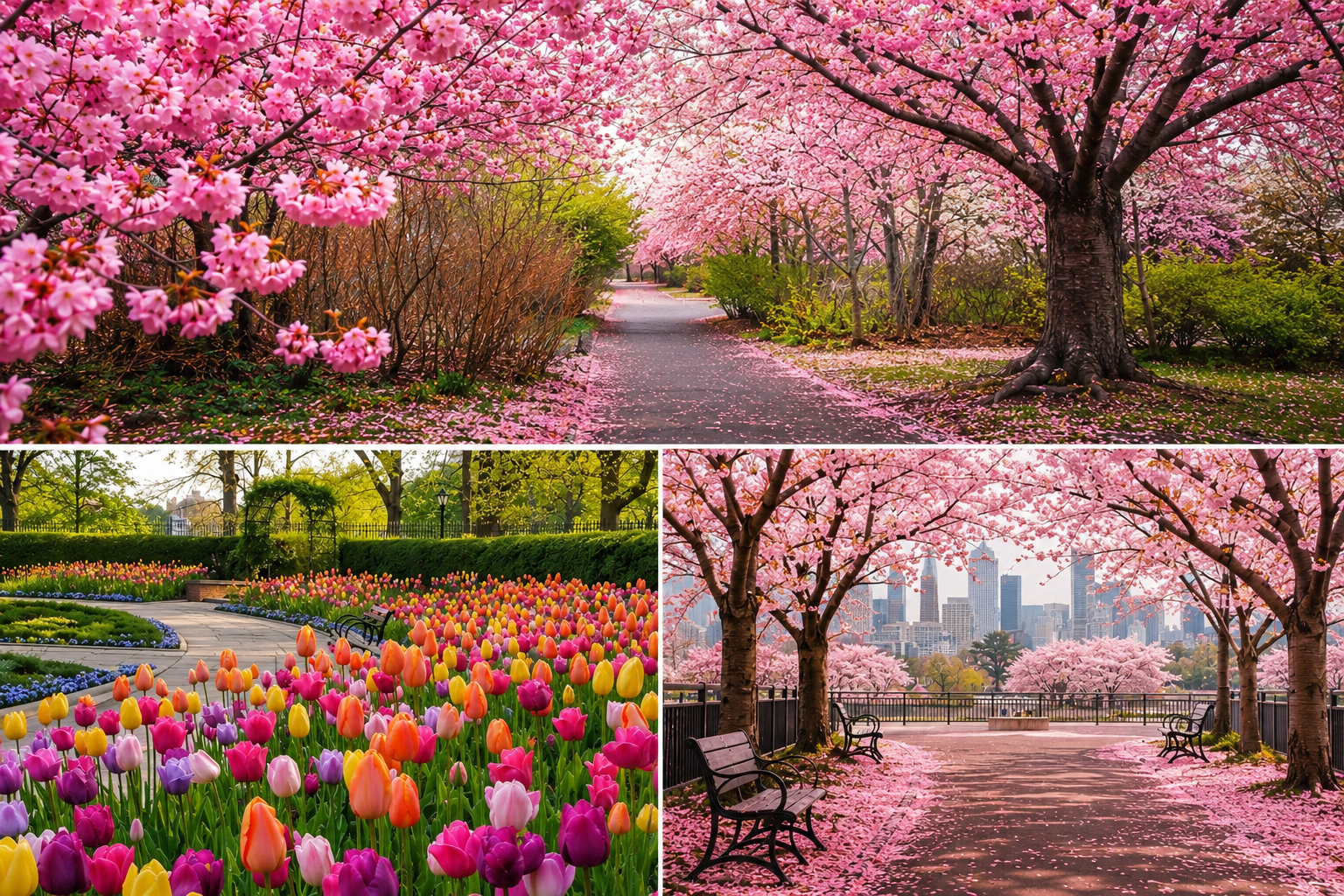
Conservatory Garden at sunrise with symmetrical pathways and vibrant spring flowers
Located near Fifth Avenue and East 105th Street, Conservatory Garden receives gentle morning light that reaches flower beds, fountains, and pathways before much of the park becomes brightly lit.
The Lake During Calm Morning Conditions

Central Park Lake at sunrise with mirror-like reflections
While many photographers head directly to famous structures, the calmer water near The Lake between about 6:00 a.m. and 8:00 a.m. can produce mirror-like reflections of surrounding trees, shoreline paths, and nearby bridges before boating activity begins to increase.
Practical Photography Tips for Different Times of Day
- Arrive 15–30 minutes before sunrise or golden hour for the best light
- Check sunrise and sunset times before planning your photography route
- Stay a little longer after sunset to capture blue hour scenes
- Watch how shadows change around landmarks throughout the day
- Use calm water reflections on The Lake whenever conditions allow
- Revisit popular locations at different times to capture different moods
- Photograph east-facing views earlier in the day and west-facing views closer to sunset
- Be patient and wait for changing light rather than rushing to the next location
- Scout photography spots before peak lighting conditions arrive
- Adjust your plans based on cloud cover and weather forecasts
- Consider weekday mornings for cleaner backgrounds and fewer people
- Carry a lens cloth to remove moisture during cool morning conditions
- Keep spare batteries available during colder months
- Avoid rushing between landmarks and focus on a few locations at the right time
- Plan seasonal visits around changing sunrise and sunset schedules
Best Times of Day for Popular Central Park Photo Locations
While some landmarks look impressive throughout the day, certain locations reach their full photographic potential only when visited at the right time and under the right lighting conditions.
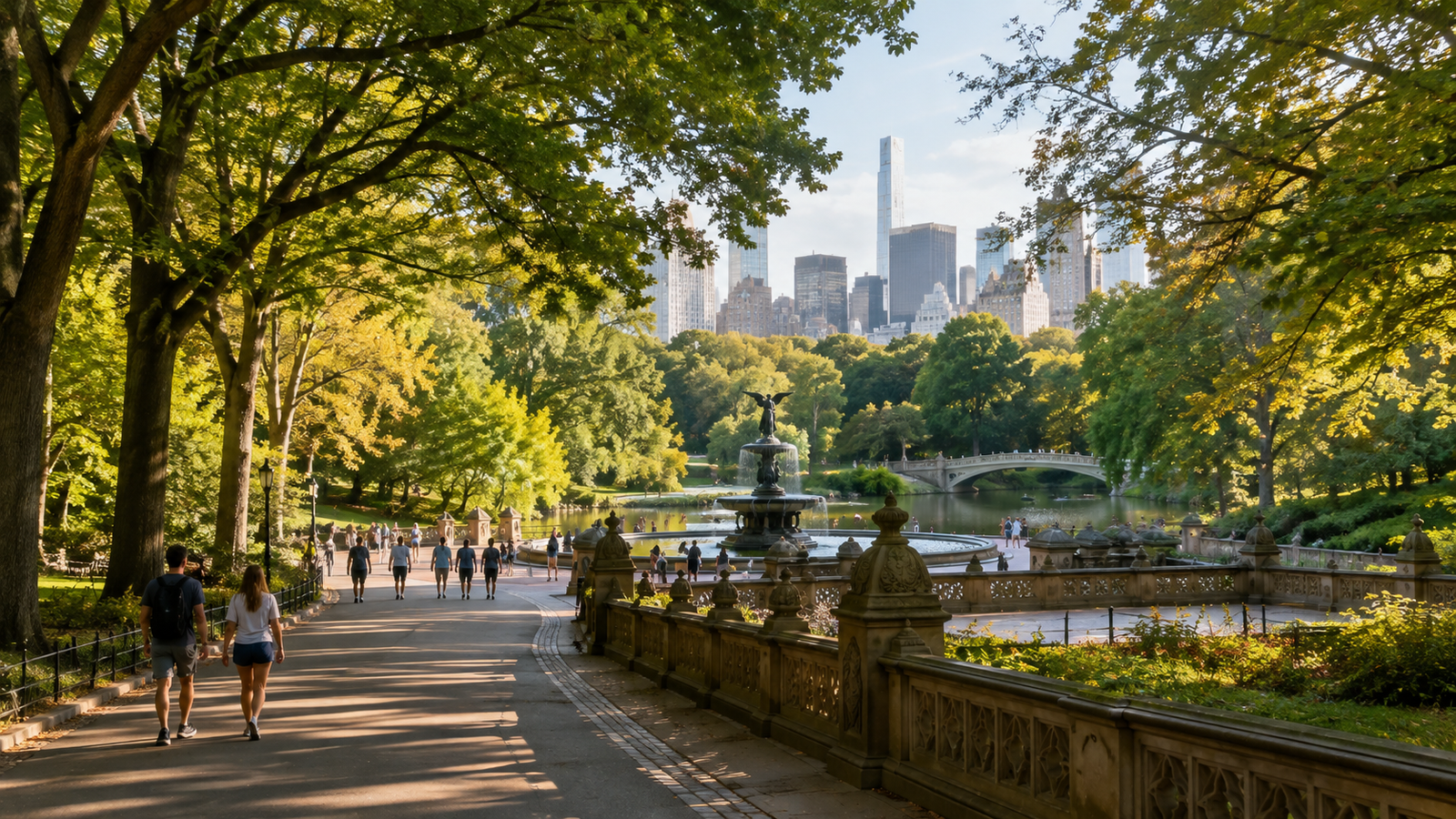
A photograph captured at Bethesda Terrace around 7:00 a.m. often shows softer stone textures and gentler shadows than one taken there during the brighter afternoon hours.
Light changes quickly in Central Park, especially around open spaces, lakeside viewpoints, and tree-lined paths.
For anyone wondering “what time should photographers visit Central Park?”, choosing the right hour for a landmark is often more important than trying to photograph five different locations in the same day.
The distant sound of horse carriages along Central Park South, changing shadows, and shifting sunlight can all influence how a scene appears from one hour to the next.
Bow Bridge may look appealing for several hours, but places such as Gapstow Bridge often have a much shorter period when the lighting and skyline background align well together.
Early Morning
- Cleaner backgrounds around Bow Bridge and Bethesda Terrace between approximately 6:00 a.m. and 8:00 a.m.
- Fewer people along The Mall, Conservatory Water, and nearby pathways.
- Softer light filtering through trees, making Central Park early morning photography particularly rewarding for landscapes and reflections.
Late Morning
- Brighter colors begin appearing across Conservatory Garden and Sheep Meadow from around 9:00 a.m. to 11:00 a.m.
- Better visibility helps reveal architectural details on Belvedere Castle’s stonework and the decorative features around Bethesda Terrace.
- This period often works well for families exploring some of the Best Family Attractions in Central Park while still having comfortable daylight for photographs.
Afternoon
- Stronger contrast develops across open spaces such as Great Lawn and Sheep Meadow after about 12:00 p.m.
- Clear visibility can improve skyline photography from areas near the Jacqueline Kennedy Onassis Reservoir and Belvedere Castle.
- However, brighter sunlight may create harsher shadows than many photographers expect.
Golden Hour
- Warm tones begin appearing roughly during the final hour before sunset.
- Golden light reaching Bow Bridge, The Lake, and Bethesda Terrace creates some of the most sought-after conditions for Central Park golden hour photography.
- Warm light often highlights the texture of Bethesda Terrace and adds a golden glow to the trees surrounding The Lake.
Blue Hour
- City lights begin appearing shortly after sunset while natural light gradually fades.
- The skyline visible from locations near Gapstow Bridge and Wollman Rink can take on a completely different mood.
- Those interested in Central Park blue hour photography often arrive shortly after sunset when illuminated buildings begin reflecting against the darker sky beyond Gapstow Bridge and Wollman Rink.
Comparing Sunrise, Midday, and Sunset Photography in Central Park
Each part of the day creates a different mood in Central Park, and comparing the strengths and challenges of each time period can help photographers decide when to visit.
The comparison below highlights how sunrise, midday, and sunset differ in terms of lighting, crowd levels, reflections, and overall photography opportunities.

Takeaway Notes
- The best photo location is not always the best photo location at every hour.
- Sunrise generally offers the quietest conditions and the cleanest backgrounds.
- Sunset often provides the warmest light and the most dramatic atmosphere.
- Different landmarks perform best at different times of day.
- Weather conditions can influence photography results just as much as timing.
- Revisiting the same location during another part of the day can produce completely different results.
- Planning your photography route around lighting conditions can help you make the most of your time in the park.
Frequently Asked Questions
What is the best time of day to photograph Central Park?
For many photographers, the best time depends on the type of images they want to capture. Early morning often provides softer light and fewer people, while late-day conditions are popular for Central Park sunset photography because of the warm colors and dramatic lighting.
Is sunrise or sunset better for photography in Central Park?
Both have advantages. Sunrise usually offers quieter pathways, calmer reflections, and cleaner compositions, while sunset brings richer colors and a more dramatic atmosphere. The choice often comes down to personal preference and the goals of your morning vs sunset photography in Central Park session.
Which Central Park landmarks look best in the morning?
Bow Bridge, Conservatory Garden, The Lake, Belvedere Castle, and Bethesda Terrace are among the landmarks that benefit from early daylight. Many photographers consider these locations ideal examples of the best lighting for photography in Central Park during the first few hours after sunrise.
Does cloudy weather affect photography in Central Park?
Yes, but not always negatively. Cloud cover can soften harsh shadows and create more balanced lighting across landscapes, gardens, and architectural details. Some photographers even prefer overcast conditions for certain subjects because they reduce strong contrast.
What time should photographers arrive to avoid crowds?
Arriving about 30 to 60 minutes after park opening and close to sunrise generally provides the quietest conditions. This approach is often included among the most useful Central Park photography tips for different times of day, especially for those hoping to photograph popular landmarks with fewer people in the frame.