What Is Bow Bridge?
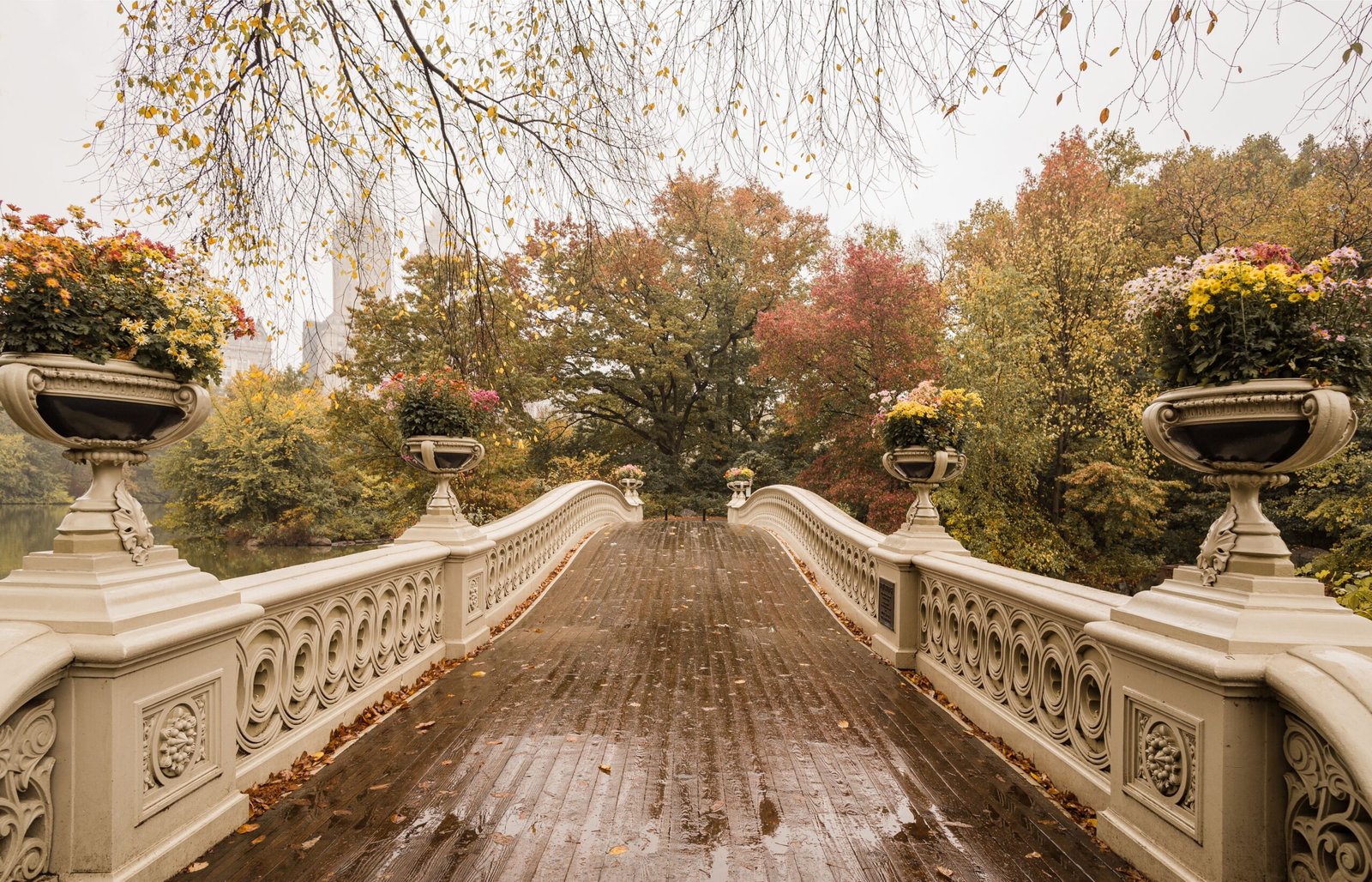
Gracefully arching over the waters of The Lake, Bow Bridge is one of the most recognizable landmarks in Central Park.
Located between Cherry Hill and the Ramble near the park’s 74th Street pathways, this elegant cast-iron bridge has been a favorite stopping point for visitors for generations. From the bridge, it is common to see rowboats drifting across The Lake while the skyline peeks through gaps in the trees. The setting feels surprisingly peaceful considering Midtown Manhattan is only a short walk away. (centralparknyc.org)
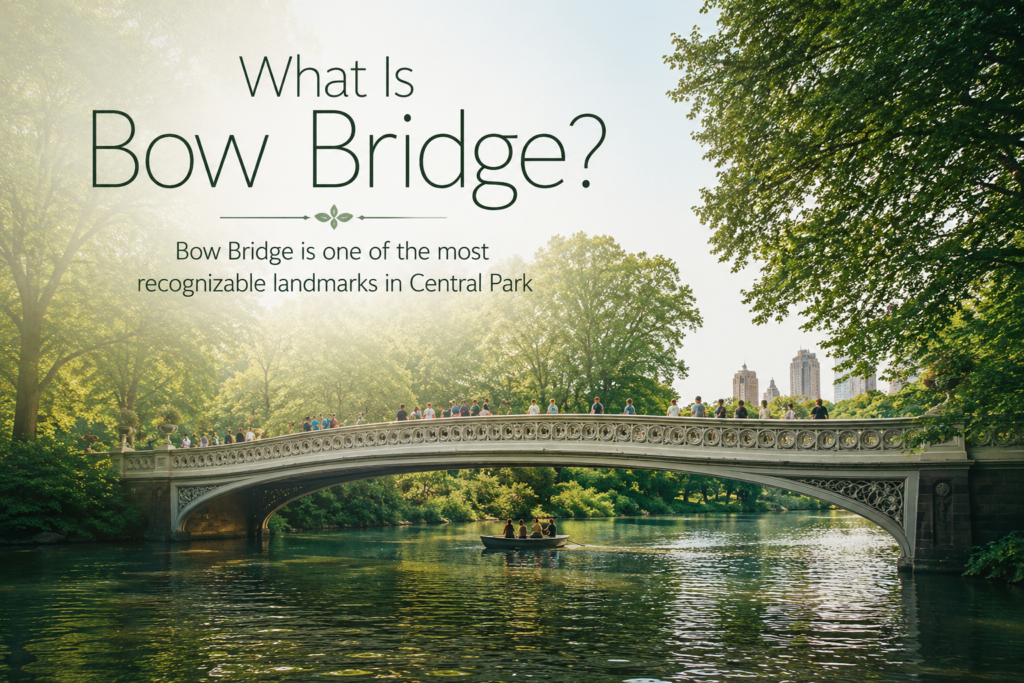
For travelers researching a Complete Guide to Bow Bridge in Central Park, one detail stands out immediately: Bow Bridge was completed in 1862 and became the first cast-iron bridge built in Central Park. Although it functions as a pedestrian crossing, most people pause here for the scenery rather than the walk itself. The famous Bow Bridge views of The Lake, nearby Cherry Hill, and the path leading toward Bethesda Terrace make it one of the park’s most photographed locations. (centralparknyc.org)
Looking beyond Bow Bridge? Many first-time visitors combine it with several nearby attractions. Our guide to best Central Park photography locations highlights other scenic spots that pair perfectly with a walk around The Lake.
History of Bow Bridge
Unlike many park crossings that were designed to blend quietly into the landscape, Bow Bridge was created to stand out. Designed by Calvert Vaux with architect Jacob Wrey Mould, the bridge was completed in 1862 during the original construction of Central Park.
A common visitor question is Why is Bow Bridge famous decades after it was built. Part of the answer lies in its cast-iron design, which was unusual for its time. On quiet mornings, the faint sound of horse carriages from nearby park drives adds a historic atmosphere that feels connected to the bridge’s 19th-century origins.
Many visitors explore Bow Bridge while discovering other iconic areas of the park. If you’re planning a wider route, our guide to affordable things to do in Central Park highlights additional attractions that can easily fit into the same day.
What Makes Bow Bridge Famous
If you only have time to visit one bridge in Central Park, Bow Bridge is usually the one most travelers choose. What makes one bridge more memorable than dozens of others across New York City? Part of the answer is its location.
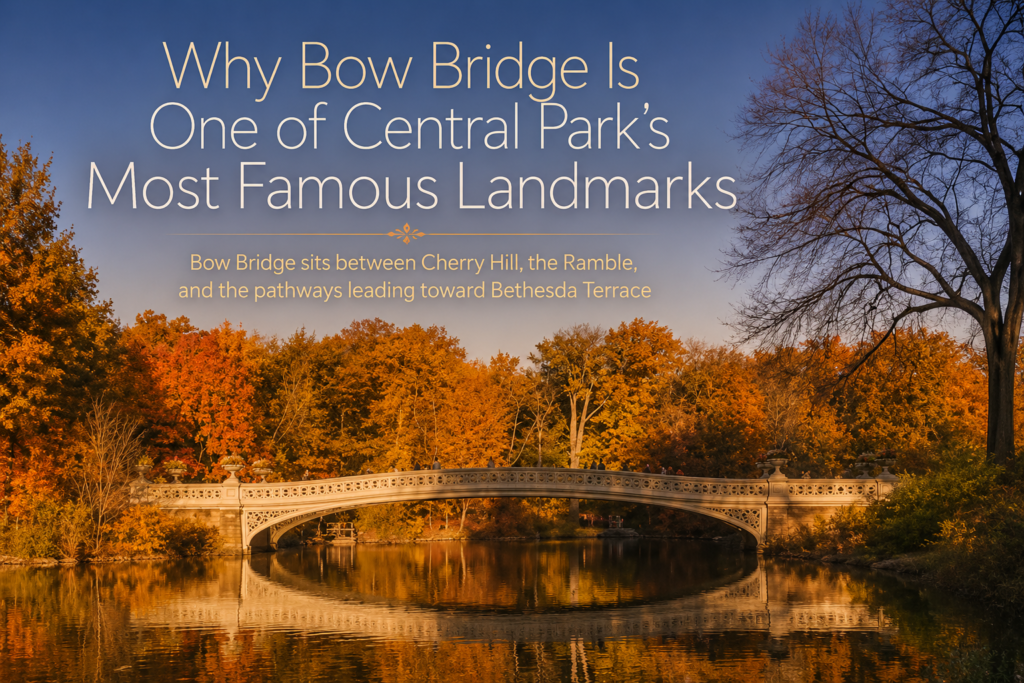
Bow Bridge sits between Cherry Hill, the Ramble, and the pathways leading toward Bethesda Terrace, placing it at the center of several of the park’s most visited landscapes. Its cast-iron railing and distinctive curved shape also make it easy to recognize in photographs. (centralparknyc.org)
Visitors often discover that the bridge offers more than a photo opportunity. During the quieter hours before 9:00 a.m., the movement of rowboats across The Lake and the sunlight filtering through surrounding trees create some of the park’s most memorable views. Those experiences help explain why Bow Bridge in Central Park remains one of the locations many travelers prioritize when planning a day in the park. (centralpark.org)
Where Is Bow Bridge Located?
Many first-time visitors underestimate how large Central Park is and are surprised when finding Bow Bridge takes longer than expected.
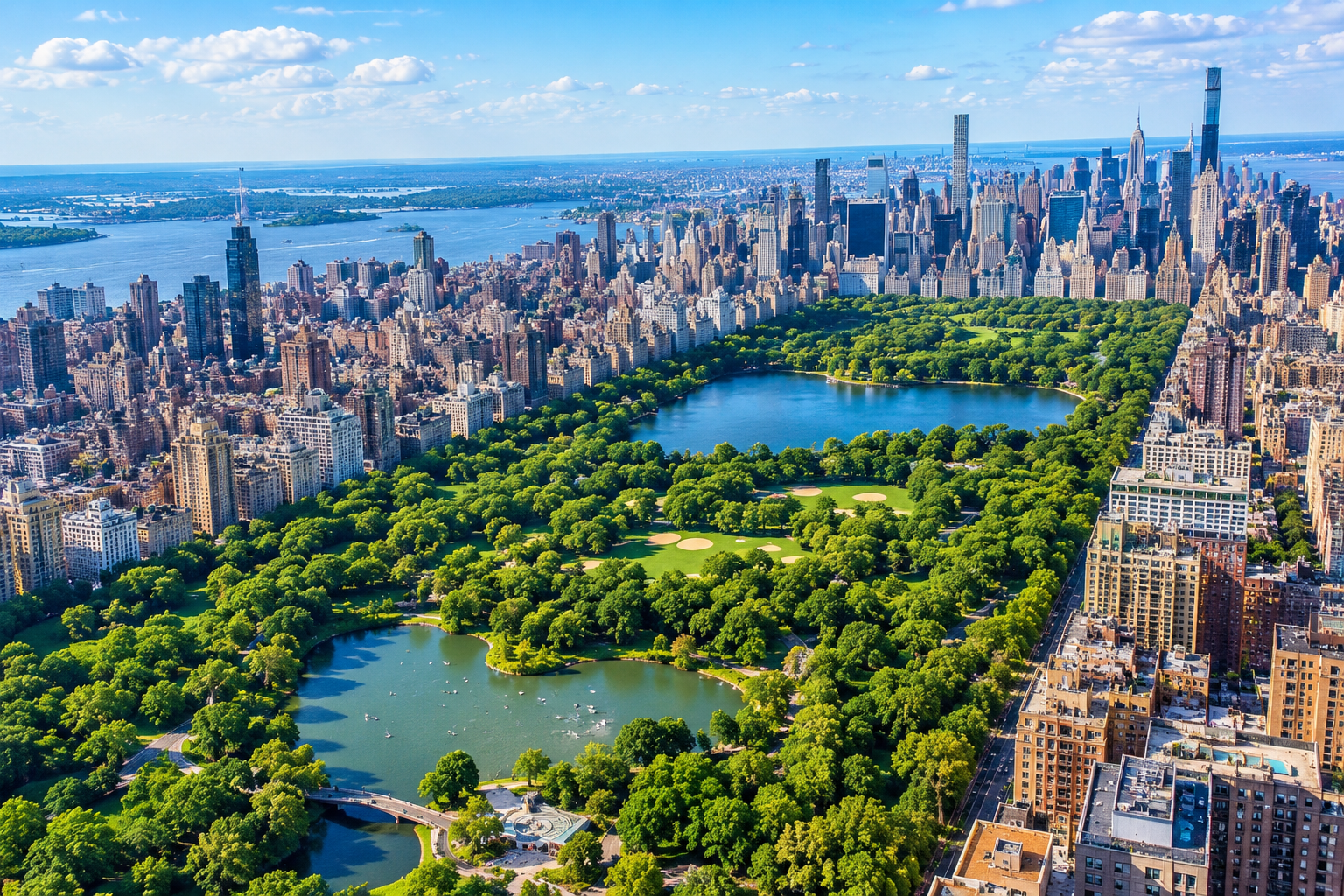
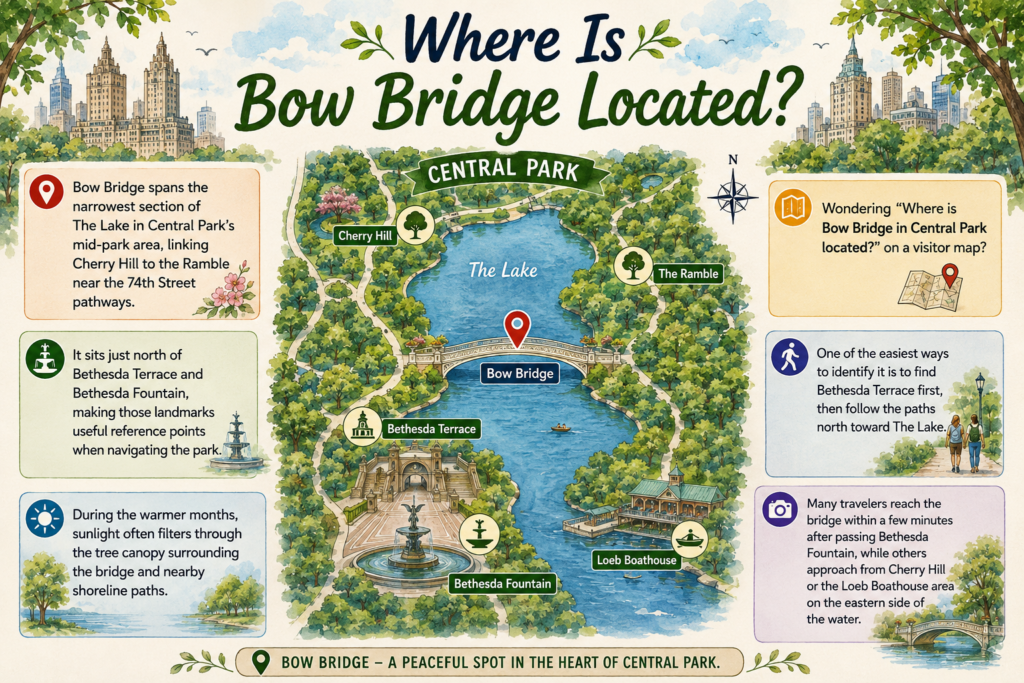
Bow Bridge spans the narrowest section of The Lake in Central Park’s mid-park area, linking Cherry Hill to the Ramble near the 74th Street pathways.
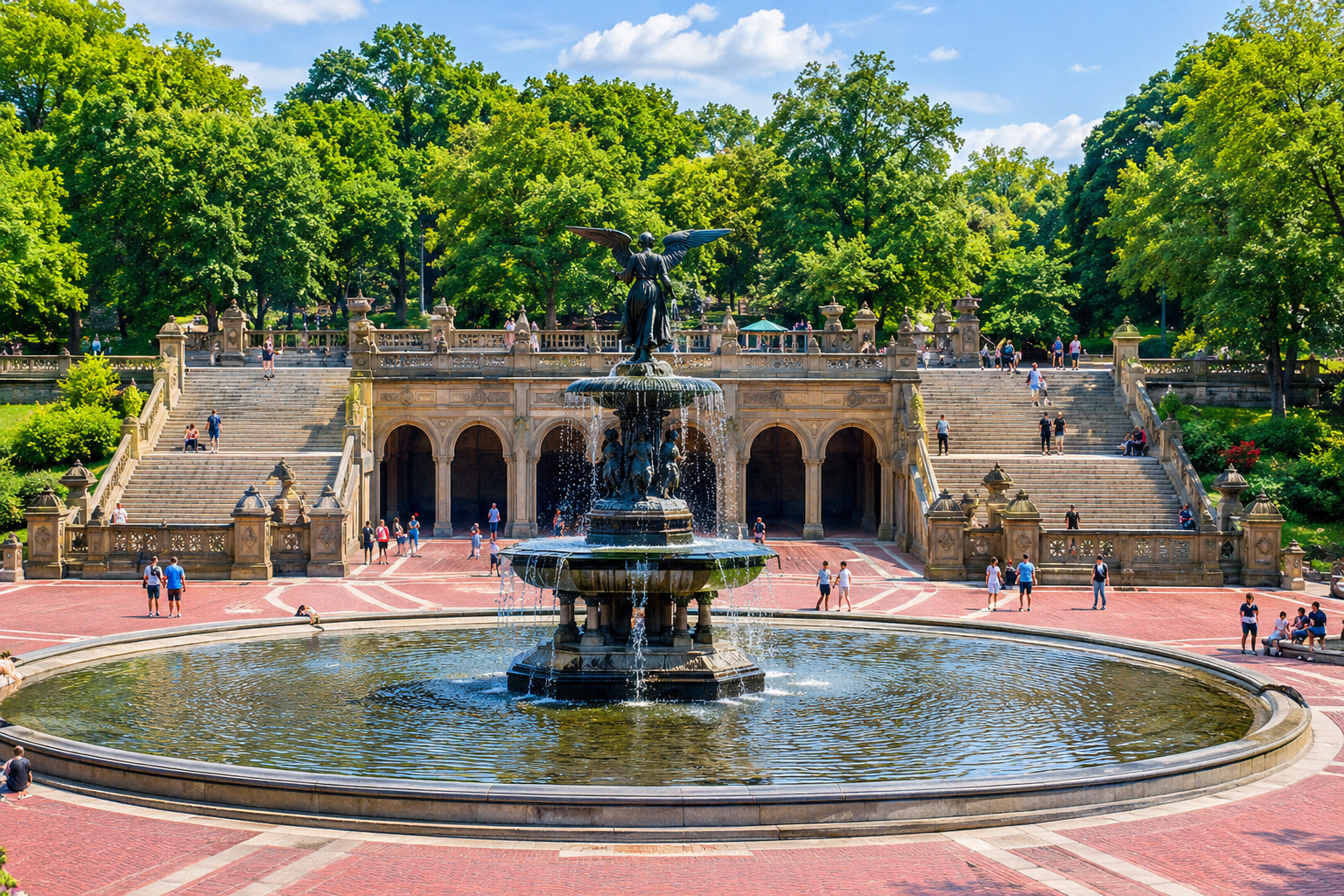
It sits just north of Bethesda Terrace and Bethesda Fountain, making those landmarks useful reference points when navigating the park. During the warmer months, sunlight often filters through the tree canopy surrounding the bridge and nearby shoreline paths. (centralparknyc.org)
Wondering “Where is Bow Bridge in Central Park located?“ on a visitor map?
One of the easiest ways to identify it is to find Bethesda Terrace first, then follow the paths north toward The Lake. Many travelers reach the bridge within a few minutes after passing Bethesda Fountain, while others approach from Cherry Hill or the Loeb Boathouse area on the eastern side of the water. (centralpark.org)
If Bow Bridge is part of a full-day park itinerary, knowing nearby attractions can save both walking time and unnecessary detours. Travelers planning routes through the park may also find our guide to Central Park travel tips for tourists useful when organizing their visit.
How to Reach Bow Bridge
Reaching Bow Bridge is straightforward once you know which pathways lead toward The Lake and the surrounding attractions.
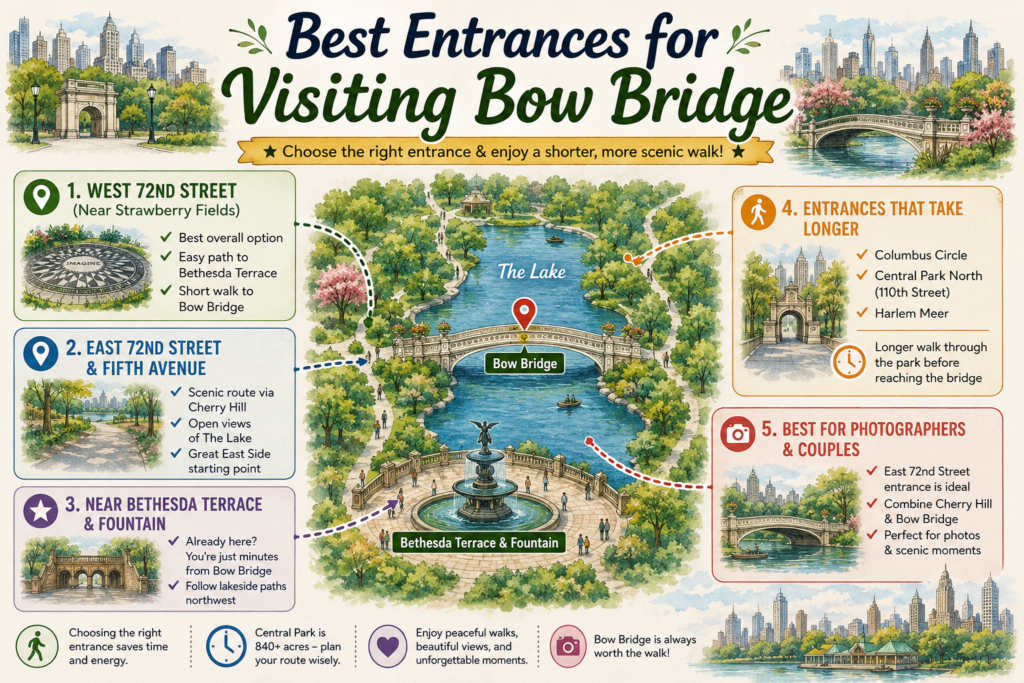
Visitors entering from West 72nd Street near Strawberry Fields can follow signs toward Bethesda Terrace and then continue north toward The Lake.
Those arriving from Fifth Avenue often use the East 72nd Street entrance before crossing through the park toward Cherry Hill. Along several of these routes, the distant sound of horse carriages from the nearby drives occasionally carries through the trees.
The area around Cherry Hill has long been connected to Central Park’s historic carriage routes, a feature highlighted by the Central Park Conservancy.
Finding the bridge becomes much easier once you stop looking for the bridge itself.
If you’re researching “How to get to Bow Bridge in Central Park?“, use Bethesda Fountain, Bethesda Terrace, or Cherry Hill as your main reference points.
Visitors arriving before 9:00 a.m. often find the pathways less crowded, making navigation simpler and allowing more time to enjoy the surrounding scenery.
This quieter period is also frequently recommended by the Central Park Conservancy for those hoping to experience the park with fewer visitors and a more relaxed atmosphere.
Once you know how to reach Bow Bridge, planning the rest of your route becomes much easier. Visitors exploring the park as a couple may also enjoy our guide to romantic spots in Central Park for couples, which includes several scenic locations near The Lake.
Best Entrances for Visiting Bow Bridge
Choosing the right entrance can save time, reduce walking distance, and make your visit to Bow Bridge much more enjoyable.
Many first-time visitors focus on finding Bow Bridge itself, but the easier approach is choosing the right starting point.
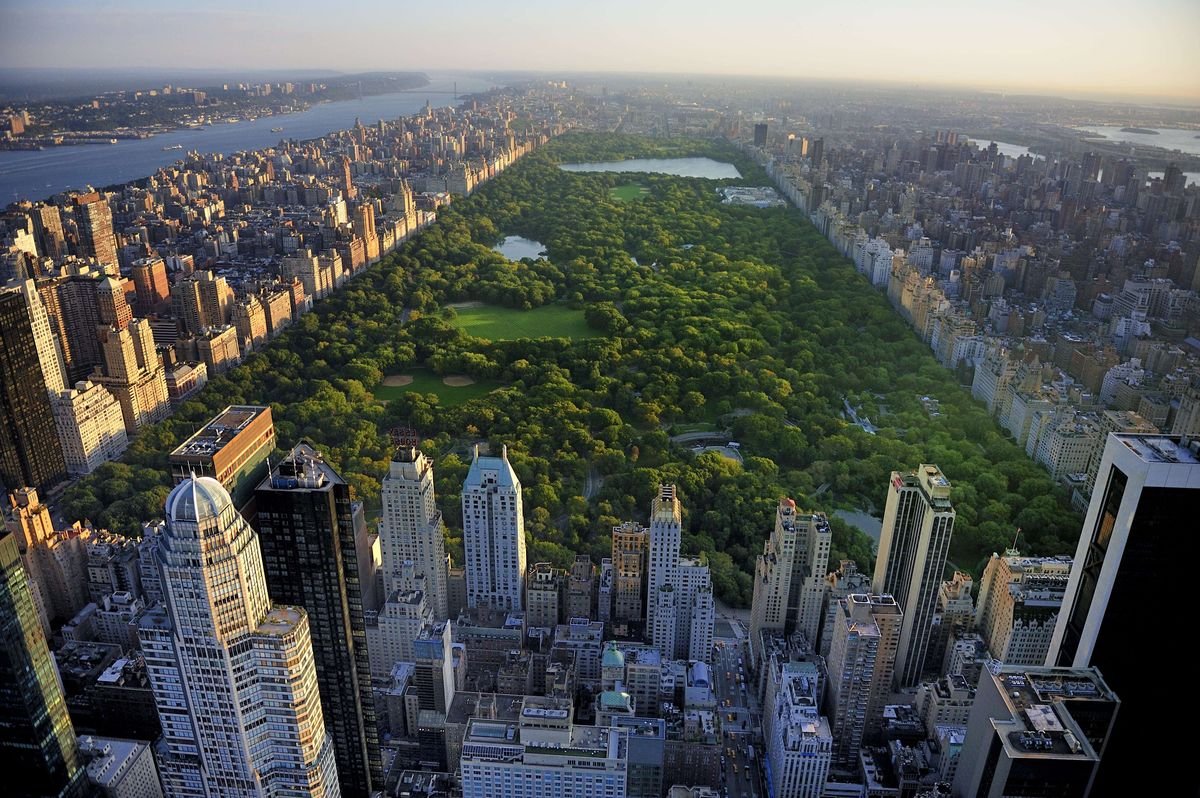
Central Park covers more than 840 acres, and entering from the wrong side can add considerable walking time before you reach The Lake.
For a straightforward route, the West 72nd Street entrance near Strawberry Fields is often the best option. The path toward Bethesda Terrace is well-used, easy to follow, and brings visitors close to Bow Bridge within a relatively short walk.
On the eastern side of the park, the entrance at East 72nd Street and Fifth Avenue is another excellent choice. This route passes Cherry Hill, where open views of The Lake begin to appear through the trees.
On calm mornings, the gentle movement of the water becomes noticeable before the bridge even comes into view.
Already exploring Bethesda Terrace or Bethesda Fountain? You’re only a few minutes away. Many visitors reach Bow Bridge by following the lakeside paths northwest from the terrace area.
Not all entrances are equally convenient. Starting from Columbus Circle, Central Park North, or Harlem Meer means a longer walk through the park before reaching the bridge.
Those entrances work better when Bow Bridge is just one stop on a broader Central Park itinerary.
Photographers, couples, and visitors interested in Best photo locations at Bow Bridge generally find the East 72nd Street entrance particularly rewarding because Cherry Hill and Bow Bridge can be visited together in a single scenic route.
Families exploring nearby attractions may also enjoy reading about the best places to visit in Central Park with kids, especially if Bow Bridge is part of a larger day in the park.
What Can You See From Bow Bridge?
Standing on Bow Bridge, visitors are treated to some of the most picturesque views in all of Central Park.
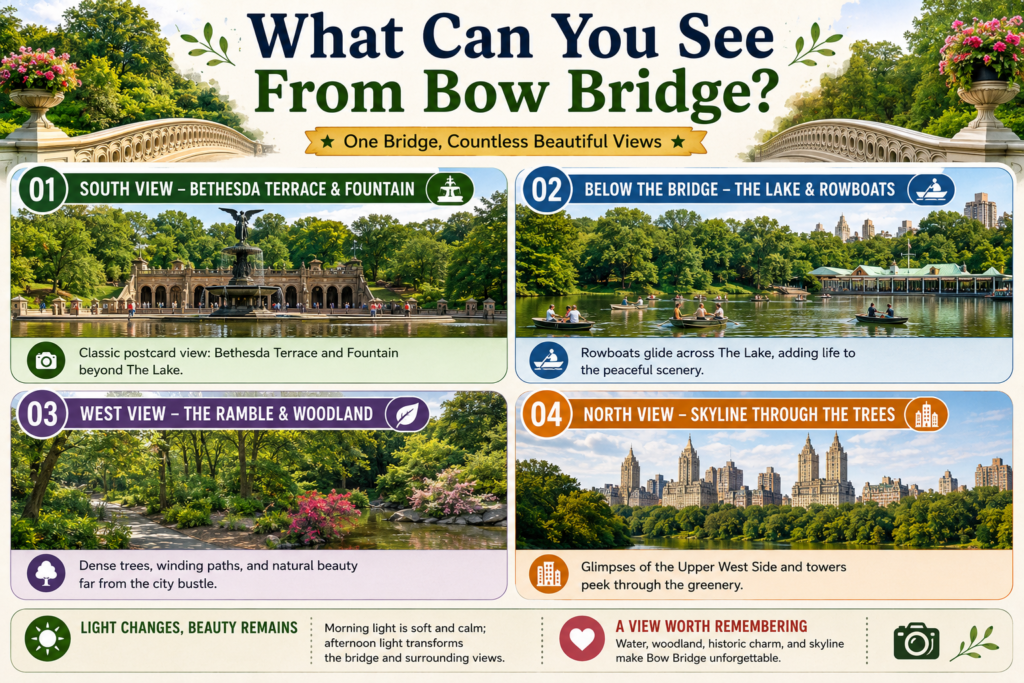
Looking south, Bethesda Terrace and Bethesda Fountain sit beyond The Lake, creating one of the classic Central Park scenes found in postcards, guidebooks, and photographs. On calm days, the water below often reflects parts of the terrace and surrounding trees.
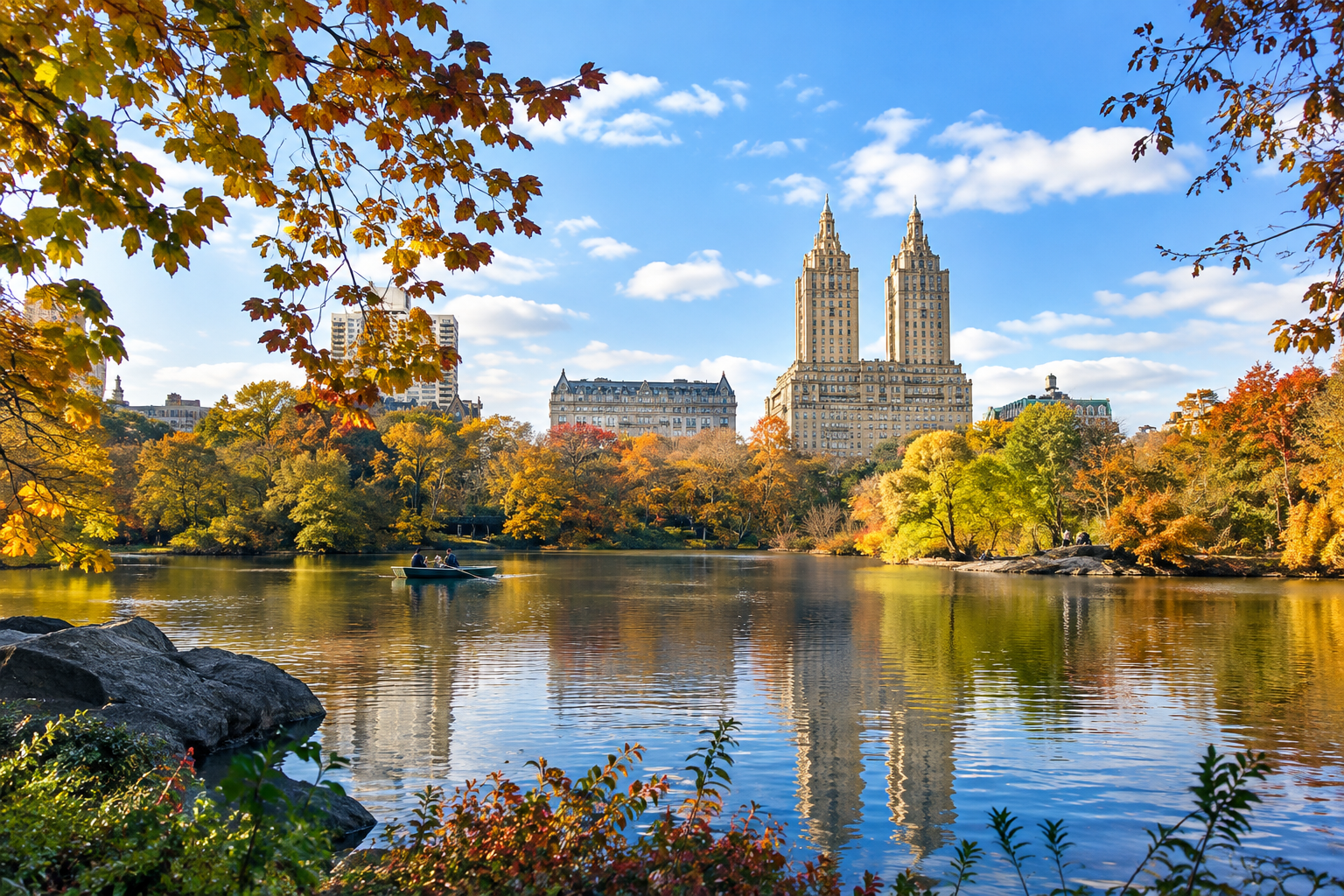
Directly beneath the bridge, rowboats from the nearby Loeb Boathouse area frequently glide across The Lake. The slow movement of the boats adds life to the view without taking away from the peaceful atmosphere.
Turn toward the west and the Ramble comes into view. Dense trees, winding pathways, and pockets of woodland create a sharp contrast with the busy streets outside the park. In late spring, layers of greenery often dominate the entire scene.
Some visitors focus on the skyline instead. Through openings in the trees, parts of the Upper West Side and several residential towers appear in the distance. Unlike viewpoints in Midtown, the buildings here feel like a backdrop rather than the main attraction.
Early in the morning, sunlight filtering through the trees along the shoreline creates softer views across the water. Later in the day, changing light conditions can completely alter how the bridge and surrounding landscape appear.
For many photographers, artists, and sightseers, this combination of water, woodland, historic design, and skyline explains why Bow Bridge remains one of the Best photo locations at Bow Bridge. Few places in Central Park bring together so many different views from a single standing point.
Visitors who enjoy scenic viewpoints may also appreciate exploring some of the best free activities in Central Park, many of which are located within walking distance of The Lake and Bow Bridge.
Best Photo Spots Around Bow Bridge
Looking for the perfect Bow Bridge photograph often involves more than simply standing in the middle of the bridge itself.
On the eastern side of The Lake, Cherry Hill offers one of the classic Bow Bridge compositions. From here, photographers can capture the full curve of the bridge with water and trees filling the foreground.
A different perspective appears from the shoreline paths below the bridge. Standing closer to the water highlights the decorative cast-iron details that many visitors overlook when crossing above.
Want the bridge and skyline together? Several points near the western shoreline of The Lake provide openings through the trees where Bow Bridge and Upper West Side buildings share the same frame.
Unlike midday photography, early morning light often produces softer images. Between roughly 7:00 a.m. and 9:00 a.m., sunlight filtering through the trees can create more balanced lighting conditions across the bridge and surrounding landscape.
Visitors focused on scenery rather than architecture frequently walk toward the Ramble side of the bridge. Here, wooded paths, overhanging branches, and reflections on the water create a completely different photographic mood.
Another overlooked option is photographing from a rowboat on The Lake. The lower angle can reveal details and reflections that are difficult to capture from land. Gentle water movement often adds texture to the scene rather than distracting from it.
Many travelers researching Bow Bridge movie locations are surprised to discover that several recognizable filming views were captured from areas surrounding the bridge rather than from the center span itself.
If photography is a major part of your Central Park visit, you may also find our guide to Central Park for solo travelers helpful, especially when planning quieter routes and scenic stops around The Lake.
Movies and TV Shows Filmed at Bow Bridge
Movie fans may recognize Bow Bridge long before they realize they are standing on it.
Unlike many Central Park locations that appear briefly on screen, Bow Bridge often becomes part of the story itself. Its curved cast-iron design, views across The Lake, and peaceful setting have made it a favorite filming location for decades.
Did that bridge look familiar? There is a good chance it appeared in a film you have already watched. Bow Bridge has been featured in Spider-Man 3, Enchanted, Manhattan, Made of Honor, Uptown Girls, and several other productions.
By the eastern railing, visitors often pause to compare real-life views with scenes they remember from movies. The gentle movement of rowboats below the bridge adds to the same cinematic backdrop seen in many productions.
Not every filming location feels recognizable once you arrive. Bow Bridge is different. The bridge, The Lake, Cherry Hill, and nearby Bethesda Terrace still create the same setting that filmmakers continue to use today.
For photography enthusiasts, early mornings between 7:00 a.m. and 9:00 a.m. usually provide clearer views before large crowds gather, making it easier to appreciate why directors repeatedly choose this location.
Many visitors combine the bridge with other Things to see near Bow Bridge Central Park, turning a simple movie-location stop into a longer walk through some of the park’s most recognizable landscapes.
A visit to Bow Bridge is not only about the bridge itself. Several nearby landmarks can easily be explored during the same walk.
Readers interested in family-friendly routes may also enjoy discovering the best places to visit in Central Park with kids, many of which are located within a short distance of Bow Bridge.
FAQs about Bow Bridge in Central Park
Where is Bow Bridge located in Central Park?
Bow Bridge in Central Park is located over The Lake in the middle section of Central Park. It connects Cherry Hill on the east side with the Ramble on the west side, roughly around 74th Street. The bridge sits between Bethesda Terrace and Strawberry Fields, making it easy to include in a Central Park sightseeing route.
What is the best way to visit Bow Bridge?
The easiest How to visit Bow Bridge in Central Park strategy is to enter from East 72nd Street or West 72nd Street and walk toward Bethesda Terrace. From there, clear pathways lead directly to the bridge through some of the park’s most scenic areas.
What is the Best time to visit Bow Bridge?
The Best time to visit Bow Bridge is usually between 7:00 a.m. and 10:00 a.m. when visitor numbers are lower and lighting conditions are ideal for photos. Sunset is also popular because the warm light reflects beautifully across The Lake.
Is Bow Bridge free to visit?
Yes. Bow Bridge is located inside Central Park, which is open to the public without an admission fee. Visitors can walk across the bridge, enjoy the views, and take photographs at no cost.
Why is Bow Bridge famous?
Bow Bridge is famous for its elegant cast-iron design, romantic setting, and appearances in movies and television shows. It is also one of the most photographed landmarks in Central Park and offers excellent views of The Lake, the Ramble, and nearby Manhattan buildings.
What attractions are close to Bow Bridge?
Popular nearby attractions include Bethesda Terrace, Bethesda Fountain, Cherry Hill, the Ramble, Conservatory Water, and Strawberry Fields. Many visitors combine these locations into a single walking route through the center of the park.
Are there any quiet places near Bow Bridge?
Yes. While Bow Bridge itself can become busy, nearby sections of the Ramble are often considered among the least crowded areas of Central Park. Early morning visits generally provide a calmer experience throughout this part of the park.
What should I bring when visiting Bow Bridge?
If Bow Bridge is part of a longer Central Park visit, consider carrying water, comfortable walking shoes, sunscreen, a portable phone charger, and weather-appropriate clothing. Travelers planning a full day in the park may also find our guide on what to pack for a day in Central Park helpful.
Is Bow Bridge suitable for families with children?
Yes. Families frequently visit Bow Bridge because it is close to open walking paths, rowboat activities on The Lake, and Bethesda Terrace. Parents looking for practical tips for visiting Central Park with kids often include Bow Bridge as one of their easiest and most rewarding stops.
How much time should I spend at Bow Bridge?
Most visitors spend 15 to 30 minutes at Bow Bridge. However, if you plan to explore nearby attractions, take photographs, watch rowboats on The Lake, or enjoy a leisurely walk through the Ramble, you may want to allow one to two hours for the surrounding area.