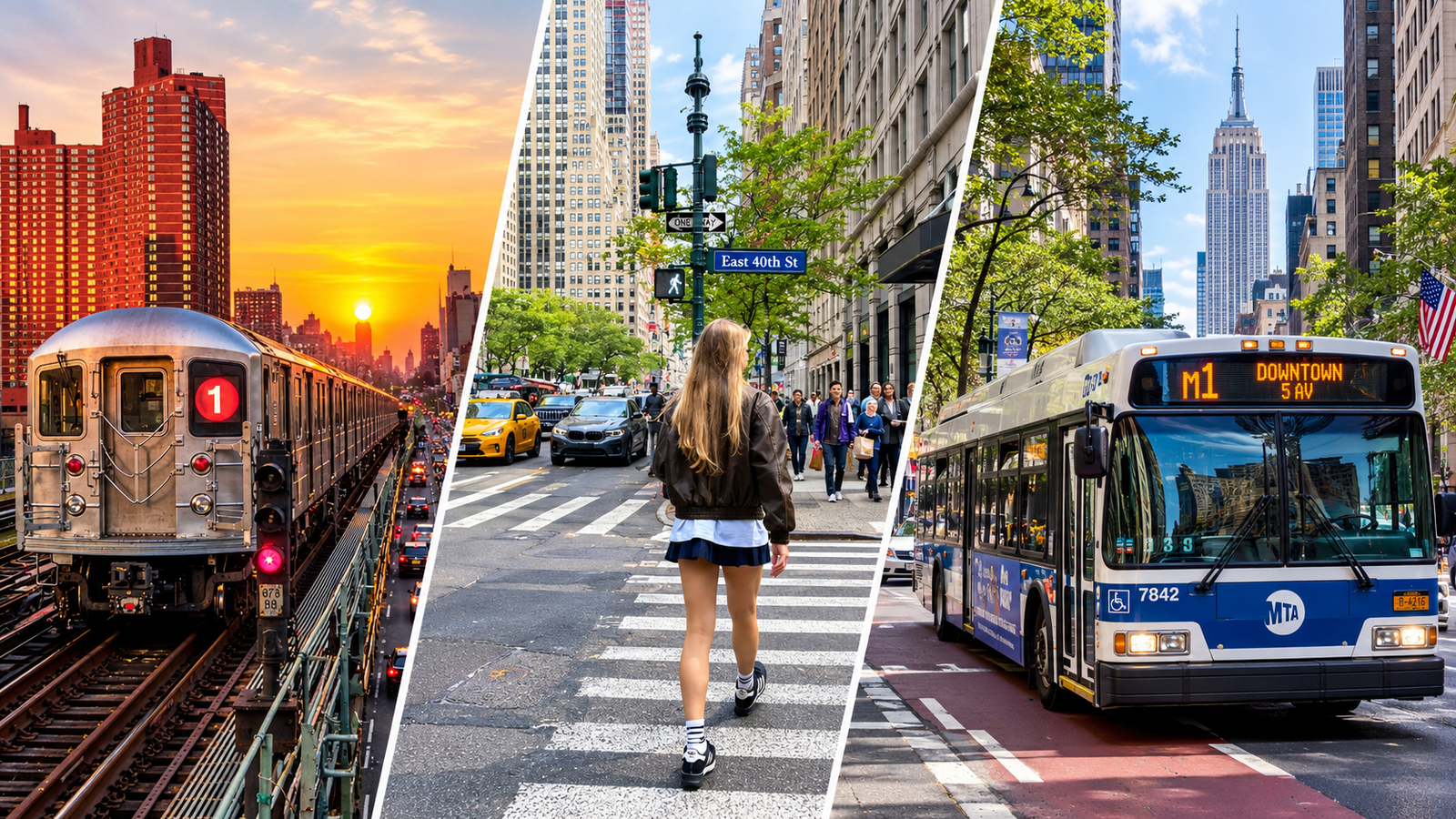
Central Park covers a large part of Manhattan, so knowing where to enter can make a real difference to your visit. If you’re staying near Times Square, arriving at Penn Station, or exploring the Upper East Side, your easiest route will depend on where you’re starting and which part of the park you want to see.
In this guide, How to Get to Central Park: Subway, Bus & Walking Routes, you’ll find directions from the north, south, east, and west sides of the park. We’ll explain which subway stations and bus routes are useful, where to enter, and when walking may be easier than taking public transportation. You’ll also find directions for popular places such as Bethesda Terrace and Fountain, Bow Bridge, Strawberry Fields, and the Central Park Zoo.
If you’re visiting for the first time, don’t worry about learning every path in advance. Start by choosing the attraction you want to see, then check the best subway and bus stations for visiting Central Park. The official Central Park Conservancy map can help you locate entrances and plan your walk inside the park.
Where Is Central Park Located in New York City?
Central Park stretches through Manhattan, with apartment buildings, museums, and busy streets along its edges.
It runs from West 59th Street to West 110th Street, between Fifth Avenue on the east and Central Park West on the west.
Central Park’s Location and Boundaries
On a map, Central Park forms a long green strip in the middle of Manhattan, covering about 843 acres. Its size matters when planning your route because reaching the park does not always mean you have reached your destination. For example, Gapstow Bridge stands near East 62nd Street at the southeast corner, while Harlem Meer is near East 107th Street at the northern end. Check the location of your chosen attraction before deciding where to enter.
Understanding Manhattan’s Streets, Avenues, and Park Entrances
Manhattan’s numbered streets generally run from east to west, while avenues run mainly from north to south. This layout makes it easier to find the side of Central Park you need: Fifth Avenue borders the east, and Central Park West borders the west. If you’re following walking directions to Central Park from Times Square, check the street address of your intended entrance before starting your walk. For instance, the West 72nd Street entrance puts you near Strawberry Fields, where the Imagine mosaic lies among the trees and paths.
Why Your Starting Point Matters When Choosing an Entrance
The closest entrance to your starting point may not be the best one for the attraction you want to see. If you’re getting to Central Park from Grand Central Terminal, decide whether you want to visit the southeast corner, walk toward Bethesda Terrace, or explore another part of the park before choosing your route. A common first-time visitor mistake in Central Park is entering without checking how far the intended landmark lies along the park’s paths. Open the official Central Park map, find your destination, and look for the nearest suitable entrance; this small check can save you a long walk in the wrong direction.
Which Entrance to Central Park Should You Use?
Best Entrance for Visitors Approaching from the South
If you’re coming from Midtown, the southern entrances can save you a long walk along the park’s boundary. At Columbus Circle, the Merchants’ Gate entrance is beside West 59th Street and Central Park West, while Grand Army Plaza is at Fifth Avenue and East 60th Street. Choose Grand Army Plaza for the southeast corner near Gapstow Bridge and The Pond; Columbus Circle is a useful starting point for the southwest side.
If you’re getting to Central Park from Penn Station, check your destination before choosing between these two entrances.
Best Entrance for Visitors Approaching from the North
For Harlem Meer, aim for the northeastern side near East 106th to 110th Street, where paths run beside the water and the Charles A. Dana Discovery Center stands nearby.
Approaching from the northwest? Look for an entrance near West 110th Street instead. This end of the park is a good choice for best places to visit in Central Park with kids, particularly if your plans include the Meer and its nearby playgrounds.
Best Entrance for Visitors Approaching from the East
Along Fifth Avenue, choose an entrance close to the street number of your first stop rather than walking along the park’s edge to a distant gate.
Near East 74th Street, you can enter close to Conservatory Water, where model sailboats cross the pond when conditions are suitable. Farther north, East 90th Street is useful for reaching the Reservoir, while the Conservatory Garden lies between East 104th and East 106th Streets.
If you want to see the garden’s flower beds, fountains, and formal paths, head toward its entrance near East 105th Street and check its seasonal closing time before setting out.
Best Entrance for Visitors Approaching from the West
From the Upper West Side, West 72nd Street is a convenient starting point for Strawberry Fields and the Imagine mosaic, with paths leading east toward the Lake.
If you’d rather explore the most famous bridges in Central Park, including Bow Bridge, check the park map before entering because the bridge lies farther inside the park, near West 74th Street.
The entrance near West 81st Street is another option for reaching the park’s western paths and nearby American Museum of Natural History.
How to Choose an Entrance Based on Your Destination
Start with the attraction you want to see, then find the closest suitable entrance on the official map. The best subway stations for visiting Central Park may not put you beside the attraction itself, so check the walking route from the station through the entrance and onward to your destination.
If you need accessible routes into Central Park for wheelchair users, consult the Conservancy’s accessibility map for path slopes, surfaces, and stairs before choosing your route. Central Park is generally open from 6:00 a.m. to 1:00 a.m., but check attraction-specific hours separately when planning an early or late visit.
How to Reach Central Park from the South
Coming from Midtown Manhattan, you can reach Central Park’s southern entrances by subway, bus, or on foot, depending on your starting point.
The main choice is between the southwest entrance at Columbus Circle and the southeast entrance near Fifth Avenue and East 60th Street. Pick the one that brings you closer to your first attraction, then plan the walk from the entrance to that spot.
▣ Step 1 — Identify Your Starting Point in Midtown Manhattan
First, check where your journey begins: Penn Station near West 34th Street, Times Square around West 42nd Street, or Grand Central Terminal at East 42nd Street. These places sit on different sides of Midtown, so the most convenient route to Central Park will vary. If you’re getting to Central Park by subway from Manhattan, use your starting station and intended park entrance to plan the trip rather than choosing a train based on its name alone.
▣ Step 2 — Choose the Best Subway Station, Bus, or Walking Route
For the southwest entrance, the 59 St–Columbus Circle station is served by the A, B, C, D, and 1 trains; check the MTA map for the line that best fits your starting point. Buses also run along nearby streets, but routes and service can change, so check the current MTA bus map before travelling. If you’re comparing which buses go to Central Park in Manhattan, look for routes serving Columbus Circle or Fifth Avenue near East 60th Street, depending on which entrance you need.
▣ Step 3 — Enter Central Park Through the Most Convenient Entrance
At Columbus Circle, cross to the park entrance at West 59th Street and Central Park West; the sound of traffic fades as the paths lead away from the busy junction. If you’re heading for Gapstow Bridge or The Pond, approach instead from Grand Army Plaza at Fifth Avenue and East 60th Street. This simple choice can help you spend more time exploring and less time walking along the park’s outer edge.
▣ Step 4 — Continue to Your Intended Attraction
Once inside, follow the park map to your first stop rather than assuming the nearest path leads directly there. For example, Gapstow Bridge is marked near East 62nd Street, while Bethesda Terrace and Fountain lie farther north near the middle of the park. If your plans include free things to do in Central Park, allow time to walk between landmarks, enjoy the paths, and stop for photographs without rushing. Families visiting Central Park with kids may also want to choose one main attraction first, leaving room for playground stops or rest breaks along the way.
Before you leave: Check the latest subway and bus service on the official MTA maps and use the Central Park Conservancy map to plan your route inside the park.
How to Reach Central Park from the North
If you are coming from Harlem, you can enter Central Park from either the west or east side of its northern boundary. The best route depends on where you start and what you want to see first: Harlem Meer, the North Woods, or the Conservatory Garden.
● Starting from Harlem: First, check which part of Harlem you are in. If you are near Broadway or Amsterdam Avenue, the West 110th Street entrance at Central Park West may be convenient; if you are closer to Fifth Avenue or Lenox Avenue, look for an entrance along East 110th Street. You do not need to cross to the other side of the park just to enter, so choose the entrance closest to your starting point and your first destination.
● Taking the Subway: Three subway stations are especially useful for reaching the northern end of Central Park. The Cathedral Parkway–110th Street station on the 1 train is at Broadway, the 110th Street station on the B and C trains is at Central Park West, and Central Park North–110th Street on the 2 and 3 trains is near Lenox Avenue.
For the west side and the North Woods, the B/C station may be the most convenient; for Harlem Meer or the Conservatory Garden, the 2/3 station can be a better starting point.
Check the official MTA subway map before travelling, as service changes may affect your route.
● Taking a Bus: A bus can save you a subway transfer if you are already travelling through Harlem. The M2, M3, and M4 serve parts of the East 110th Street area, while the M10 and M11 serve streets on the west side near the park.
If you are unsure which buses go to Central Park in Manhattan, open the official MTA maps and check the route and stop closest to your intended entrance.
Bus routes and service can change, so confirm your stop before boarding.
● Walking into the Park: If you are already in Harlem and only a few blocks away, walking straight to the park may be easier than taking public transport.
From the west, look for an entrance at West 110th Street and Central Park West; from the east, approach the entrances along East 110th Street, near Fifth Avenue or Lenox Avenue.
Once you enter, check the park map rather than assuming your destination is just a short walk away, because the paths inside the park can take you farther than expected.
You can use the official Central Park map to choose your route before setting off.
● Continuing to Attractions: Your first attraction can help you decide which northern entrance to use. Harlem Meer lies in the northeast corner between East 106th and East 110th Streets, with paths and places to sit beside the water.
The North Woods occupies the northwest part of the park, roughly between West 101st and West 110th Streets, making the western approach a sensible choice. For the Conservatory Garden, head to Fifth Avenue near East 105th Street, where the ornate Vanderbilt Gate marks the main entrance.
The garden generally opens at 8:00 a.m. and closes at dusk, with closing time changing by season, so plan this stop accordingly. These places are spread across the northern end of Central Park, so check the map and allow enough time to walk between them.
Before you leave: Check current transport service on the MTA website and plan your walk with the Central Park Conservancy’s official maps.
How to Reach Central Park from the East Side?
The east side has several entrances, and the right one depends on where you are starting and which landmark you want to see.
From the Upper East Side, Fifth Avenue runs alongside Central Park, making it a useful reference point when planning your walk or choosing public transport.
★ Reaching Central Park from the Upper East Side
On the Upper East Side, the cross streets help you work out how far you need to walk: East 72nd Street brings you near Conservatory Water, while East 79th Street and East 86th Street are useful starting points for the Reservoir area and nearby museums. If you are staying near Madison Avenue or Lexington Avenue, check the distance to Fifth Avenue before deciding whether to walk the whole way or take a bus for part of the journey. The choice is especially useful on a warm afternoon, when a shorter walk to the park may leave you more energy to explore its paths.
★ Best Subway Stations and Bus Routes for the East Side
For subway travel, the 86 St station on the 4, 5, and 6 trains at Lexington Avenue is a useful option for the Upper East Side; the 77 St station on the 6 train is another choice farther south. From either station, you will still need to walk west toward Fifth Avenue to enter the park, so check the full route rather than counting only the subway journey. The M1, M2, M3, and M4 buses run along Fifth Avenue or Madison Avenue on parts of the east side, and stops near East 72nd, 79th, and 86th Streets may suit different destinations. Confirm the direction and stop on the MTA’s current maps and bus information before boarding.
★ Walking from Fifth Avenue to the Park Entrances
Walking west from Fifth Avenue is often the simplest choice when you are already close to the park. At East 72nd Street, you can head toward Conservatory Water, where the pond’s smooth surface and small model boats make a pleasant stop; farther north, entrances near East 85th and East 90th Streets give access to other paths and the Reservoir area. If you are weighing whether it is better to walk or take the subway to Central Park, consider how far you are from Fifth Avenue and how much walking you plan to do inside the park afterward. A short walk from your hotel may be easier than going underground for one or two stops, especially if you want to take photographs along the way.
★ Choosing an Entrance for the Reservoir, Conservatory Water, or Nearby Museums
Choose the entrance based on your first stop, not simply the closest point on the park boundary. For Conservatory Water, aim for the east side near East 72nd to 75th Streets; for the Jacqueline Kennedy Onassis Reservoir, use an entrance near East 86th or East 90th Street and follow the marked paths toward the water.
If the Metropolitan Museum of Art is your main destination, its entrance is on Fifth Avenue at East 82nd Street, while the Solomon R. Guggenheim Museum is farther north at Fifth Avenue and East 88th Street.
These landmarks are useful reference points when choosing the best entrances to Central Park for first-time visitors, and they also help you plan a day around Central Park’s Most Beautiful Lakes and Ponds without crossing back and forth unnecessarily. Check the official Central Park map before leaving, especially if you want to combine a museum visit with time outdoors.
A useful final check: The Conservatory Garden is farther north, between East 104th and East 106th Streets, and opens at 8:00 a.m.; its closing time changes with the season, so check the Central Park Conservancy’s official page if you plan to include it.
How to Reach Central Park from the West Side
➤ Reaching the park from the Upper West Side: If you are staying near Broadway, Amsterdam Avenue, or Columbus Avenue, use your nearest numbered cross street to find a route east toward Central Park West. For example, from West 72nd Street, you can reach the park near Strawberry Fields, where the Imagine mosaic sits among trees and winding paths. The entrance you choose matters because the Lake and Bow Bridge are farther inside the park, not directly beside the western boundary.
➤ Using subway stations along Central Park West: If you are getting to Central Park by subway from Manhattan, the 59 St–Columbus Circle station serves the A, B, C, D, and 1 trains, while the 72 St and 81 St stations on Central Park West serve the 1 and B/C lines respectively; the 86 St station on Central Park West serves the B and C trains. The 72nd Street stop is handy for Strawberry Fields, while 81st Street is near the American Museum of Natural History and an entrance to the park. Check the official MTA subway map before leaving, particularly if you need to change trains.
➤ Finding north–south and crosstown bus services: The M10 runs along Central Park West, with stops near West 72nd, 79th, and 86th Streets; crosstown buses such as the M72, M79 SBS, and M86 SBS connect the west side with streets farther east. A crosstown bus may save you a long walk if you are starting near Broadway or Riverside Drive and want to reach a particular park entrance. Check the stop and direction using MTA Bus Time before boarding, since service changes and temporary stop closures can affect your trip.
➤ Walking through entrances near 59th, 72nd, 79th, or 86th Street: Choose Columbus Circle at West 59th Street for the southwest corner, or the entrance near West 72nd Street if Strawberry Fields is your first stop. At West 79th Street, you can enter near the American Museum of Natural History area, while an entrance near West 86th Street is useful for reaching paths toward the Reservoir. If you are deciding which free things to do in Central Park to fit into your day, start with one or two nearby places rather than choosing an entrance at one end and walking back and forth across the park.
➤ Continuing to Strawberry Fields, Bow Bridge, the Lake, or the Great Lawn: From West 72nd Street, follow the paths toward Strawberry Fields and the Imagine mosaic; Bow Bridge is farther inside the park, near West 74th Street, crossing a narrow part of the Lake. The Great Lawn lies farther north and east, around the middle of the park, so allow extra walking time if you plan to include it on the same visit. For least crowded areas of Central Park, consider visiting popular spots early in the morning and then exploring less central paths instead of staying only around the best-known landmarks. The park opens at 6:00 a.m., giving early starters time to walk before the day gets busier.
Before you go: Central Park is generally open from 6:00 a.m. to 1:00 a.m. daily, but individual attractions and facilities may have separate hours. Use the official Central Park map to check the walking route between your entrance and the first landmark you want to see
Which Subway Stations Are Best for Central Park?
Central Park stretches from 59th Street to 110th Street, so the best subway station depends on which part of the park you want to visit. Getting off at the wrong station can leave you with a longer walk than you planned. If you are researching getting to Central Park by subway from Manhattan, use the stations below as a starting point, then check the route to your chosen landmark before leaving the subway.
🚆Best Subway Stations for Southern Entrances
For the southern end of Central Park, 59 St–Columbus Circle is a useful choice. The station serves the A, B, C, D, and 1 trains and brings you to the southwest corner, near the entrance at West 59th Street and Central Park West. From here, you can walk toward Sheep Meadow, Strawberry Fields, or the Lake, although these attractions are farther inside the park.
If you are heading to the southeast corner instead, use 5 Av/59 St, served by the N, R, and W trains. It is close to Fifth Avenue and East 59th Street, making it a practical starting point for the Pond and Gapstow Bridge. The bridge is near the park’s southeast corner, so this station is often more convenient for that area than Columbus Circle.
🚆Best Subway Stations for Northern Entrances
For the northern end of the park, three stations serve different entrances:
- Cathedral Parkway–110 St (1 train): Located on Broadway, west of the park. From the station, walk east toward the entrance at West 110th Street and Central Park West.
- 110 St (B and C trains): Located on Central Park West, beside the park’s northwest corner. This is a convenient choice for the entrance near West 110th Street.
- Central Park North–110 St (2 and 3 trains): Located near Lenox Avenue, on the northeast side of the park. Use this station for the entrance at Central Park North and Lenox Avenue.
These stations are not interchangeable: the 1 train is on Broadway, the B and C trains run along Central Park West, and the 2 and 3 trains serve the east side of the northern entrance area. Choose the station closest to the entrance you intend to use.
🚆Best Subway Stations for Eastern Entrances
If you are visiting the east side of Central Park, choose your station according to the area you want to reach.
For the southeast entrance near East 59th Street, take the N, R, or W train to 5 Av/59 St. From there, the Pond and Gapstow Bridge are close to the park entrance.
For destinations farther north along Fifth Avenue, the 77 St or 86 St station on the 6 train may be useful starting points. Both are on Lexington Avenue, east of the park, so you will need to walk west to reach the entrances. Allow roughly 10–15 minutes on foot from these stations to the park, depending on your starting point and destination.
If you are visiting the Conservatory Garden near Fifth Avenue and East 105th Street, plan the final part of your journey carefully. The garden is at the northeast end of the park, and a subway station on Lexington Avenue will leave you with a walk west to Fifth Avenue. Check the current subway map and walking route before choosing a station.
🚆 Best Subway Stations for Western Entrances
The B and C trains run along Central Park West, making them useful for several western entrances.
- 72 St (B and C trains): A good choice for Strawberry Fields and the Imagine mosaic, which is near the West 72nd Street entrance. Allow about 5–10 minutes to walk from the station to the memorial, depending on your exit and route.
- 81 St–Museum of Natural History (B and C trains): Convenient for the American Museum of Natural History and the park entrance beside it. If you plan to visit the museum and Central Park on the same day, this station is especially practical.
- 86 St (B and C trains): Useful for the northwest side of the park and the Reservoir area. The Reservoir stretches from about 86th to 96th Street, so the exact walking distance depends on which part of its path you want to reach.
Bow Bridge and The Lake are farther inside the park than the entrances along Central Park West. If those are your main destinations, check the walking route from the station rather than assuming you will arrive directly beside them.
🚆 How to Choose Between Two Nearby Stations
When two subway stations seem equally convenient, compare the walk to your actual destination—not just the distance to Central Park’s boundary. For example, 72 St is a sensible choice for Strawberry Fields, while 81 St–Museum of Natural History works better if you are visiting the museum or entering the park nearby. For Gapstow Bridge, the southeast entrance near 59th Street is generally the more direct option.
Before travelling, check the current MTA subway map for train routes and service changes. Then use the Central Park Conservancy’s downloadable maps to locate the entrance, path, or landmark you want. This quick check can save you from walking several extra blocks—or crossing a large part of the park when you do not need to.
Which Buses Go to Central Park?
A bus can be a convenient way to reach Central Park, especially if you want to avoid changing subway lines or walking several blocks from a station. The important thing is to choose a route that stops near the part of the park you plan to explore, rather than simply taking the first bus heading north. The MTA’s route list and neighborhood maps are useful for checking where each bus travels.
🚍 Which Buses Run Along the East and West Sides?
Along the east side, the M1, M2, M3, and M4 run on parts of Fifth Avenue and Madison Avenue, making them useful for reaching the park’s eastern edge. On the west side, the M10 follows Central Park West, with stops near several entrances along the park’s western boundary. For example, if you want to enter near West 72nd Street, check the M10 stops around that cross street; if your plans begin near the Conservatory Garden, look for an east-side route serving Fifth Avenue near East 105th Street. Check the official MTA maps before leaving, since the best stop depends on your direction of travel and current service.
🚍 Which Buses Help You Reach Central Park from Midtown?
From Midtown, the M20 is worth checking if you are near Seventh or Eighth Avenue and want to travel toward the Lincoln Center area, while the M7 serves parts of the Columbus Avenue, Amsterdam Avenue, and Broadway corridor. If you are near Times Square, check the route and direction before boarding rather than assuming that a bus passing through Midtown will take you directly to the entrance you want. For the southern end of the park, use Columbus Circle as your reference point; for the southeast corner near Gapstow Bridge, look for a route that brings you toward Fifth Avenue and East 60th Street.
🚍 Are Crosstown Buses Useful for Reaching the Park?
Yes, particularly when you are already on the east or west side of Manhattan and want to cross toward the park without making a subway transfer. The M72 crosses at West 72nd Street, the M79 Select Bus Service follows West and East 79th Street, and the M86 Select Bus Service connects the two sides around 86th Street. These buses can be helpful if you are heading toward a particular entrance, but check the exact stop: getting off at the wrong end of a long block can add an unnecessary walk. If you are weighing is it better to walk or take the subway to Central Park, a crosstown bus may be a useful alternative when your starting point is close to one of these routes.
🚍 How to Find the Correct Bus Stop and Direction
Before boarding, check the bus number, its destination, and the direction shown on the front display. Use MTA Bus Time to search by route or street intersection and check estimated arrival times. If you are using Select Bus Service on the M79 or M86, read the payment instructions posted at the stop before boarding. Then compare the stop with the park map so you know how far you need to walk to reach the best entrances to Central Park for first-time visitors.
One last tip: If you are planning affordable things to do in Central Park, remember that getting close to the right entrance can save both time and walking effort, leaving more of your day for the park itself. Check MTA maps and MTA Bus Time on the day of your trip, then use the Central Park Conservancy’s official map to plan the final walk.
Is Walking the Best Way to Reach Central Park?
Walking is often the simpler choice if your hotel is in Midtown or close to Central Park’s southern entrance. From Columbus Circle, the busy avenue leads you toward Central Park West, where the buildings give way to trees and the park’s wide paths. You can enjoy the short journey without going down into a subway station.
The choice depends on where you are starting and how far you want to walk. If you are wondering if it is better to walk or take the subway to Central Park, consider the weather, your available time, and the entrance nearest to your destination. Central Park is open daily from 6:00 a.m. to 1:00 a.m.
🚶 When Walking Is More Convenient Than Taking the Subway
If your hotel is near West 59th Street, walking to the southwest entrance at Central Park West and West 59th Street may take only a few minutes. There is no need to find a subway entrance or wait for a train for such a short trip. On a mild morning, the walk also gives you time to settle into the city before following the park’s paths beneath the trees.
🚶 Walking from Times Square, Midtown, and Nearby Hotels
From the centre of Times Square around West 42nd Street, allow roughly 20 minutes to walk to Columbus Circle, near West 59th Street and Central Park West. Head north toward West 59th Street, checking your map as you go. These walking directions to Central Park from Times Square suit anyone who wants to arrive at the park’s southern end on foot. If your hotel is farther east or south in Midtown, your walk will be longer.
🚶Walking from the Upper East Side and Upper West Side
On the Upper West Side, walking east along West 72nd Street or West 81st Street brings you toward entrances on Central Park West. From the Upper East Side, head west toward Fifth Avenue and choose an entrance near your cross street. If you are planning free things to do in Central Park, such as exploring its paths or visiting Strawberry Fields, starting from the nearest side can save time for the places you came to see.
🚶When You Should Take Public Transportation Instead
A subway or bus is usually the better choice if you are staying well south of Midtown, carrying bags, or travelling on a hot or rainy day. A long walk along sunlit avenues can feel tiring before you even enter the park. Take public transportation to a stop closer to your chosen entrance, particularly if you are travelling with children or someone who finds long walks difficult. Check the current route and service before leaving your hotel.