New York City’s Best Free Attraction

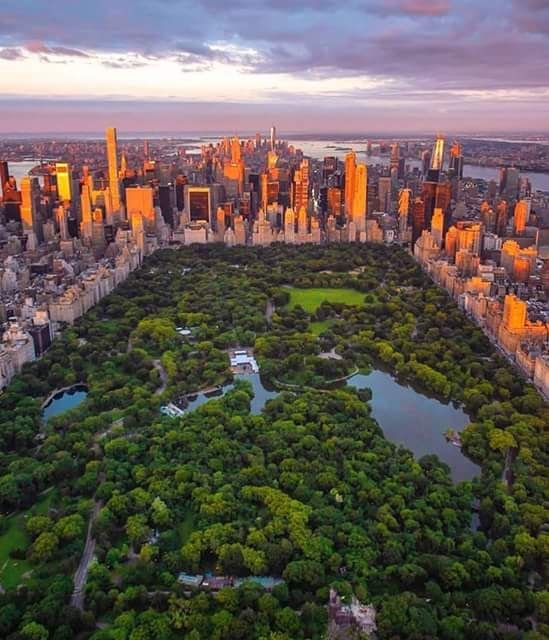
Few places in New York City offer as many free experiences as Central Park, making it one of the most accessible attractions for travelers of every budget. Open daily from 6:00 AM to 1:00 AM, the park combines famous landmarks, nature, walking routes, and scenic viewpoints without an admission fee.
A World-Class Destination With No Entry Fee
A rare feature of Central Park is that many of its most recognized locations can be explored without purchasing a ticket. From Bethesda Terrace to Strawberry Fields, visitors can walk beneath towering elm trees while hearing distant horse carriages along nearby drives.
For anyone searching for Free Things to Do in Central Park, this open-access design makes the park one of the city’s most valuable public spaces.
How Free Activities Fill an Entire Day in the Park
If spending a full day without opening your wallet sounds difficult in Manhattan, Central Park often proves otherwise.
A morning walk through The Mall, time at Bow Bridge, a visit to Belvedere Castle, and a stop at Turtle Pond can easily fill several hours.
By late afternoon, sunlight filtering through tree canopies changes the atmosphere again, creating new views without requiring another attraction ticket.
Why Travelers Include Central Park in Budget-Friendly NYC Itineraries
Unlike many major New York attractions that require advance reservations, Central Park remains freely accessible throughout the year.
That flexibility, combined with numerous free attractions in Central Park New York, helps reduce sightseeing costs while still delivering iconic city views.
If your itinerary extends beyond free experiences, exploring affordable things to do in Central Park can help you discover low-cost activities that complement the park’s no-cost attractions. It is a practical next step when planning a full day around Central Park.
Explore Famous Areas for Free

From the elegant pathways of The Mall to the iconic views at Bow Bridge, some of Central Park’s most memorable sights cost absolutely nothing to explore. These well-known locations combine history, scenery, and easy access, making them ideal stops during a no-cost visit.
Strolling Along The Mall and Literary Walk
One of the first things visitors notice at The Mall is the long canopy of American elm trees stretching overhead. During the morning hours, soft sunlight filters through the leaves, creating one of the park’s most photographed walking corridors.
Located in the southern section of the park near 66th Street, Literary Walk features statues of William Shakespeare, Robert Burns, Sir Walter Scott, and other notable writers.
For those seeking best free places to visit in Central Park, this area combines history, architecture, and shade in a single stop.
Exploring Bethesda Terrace and Bethesda Fountain
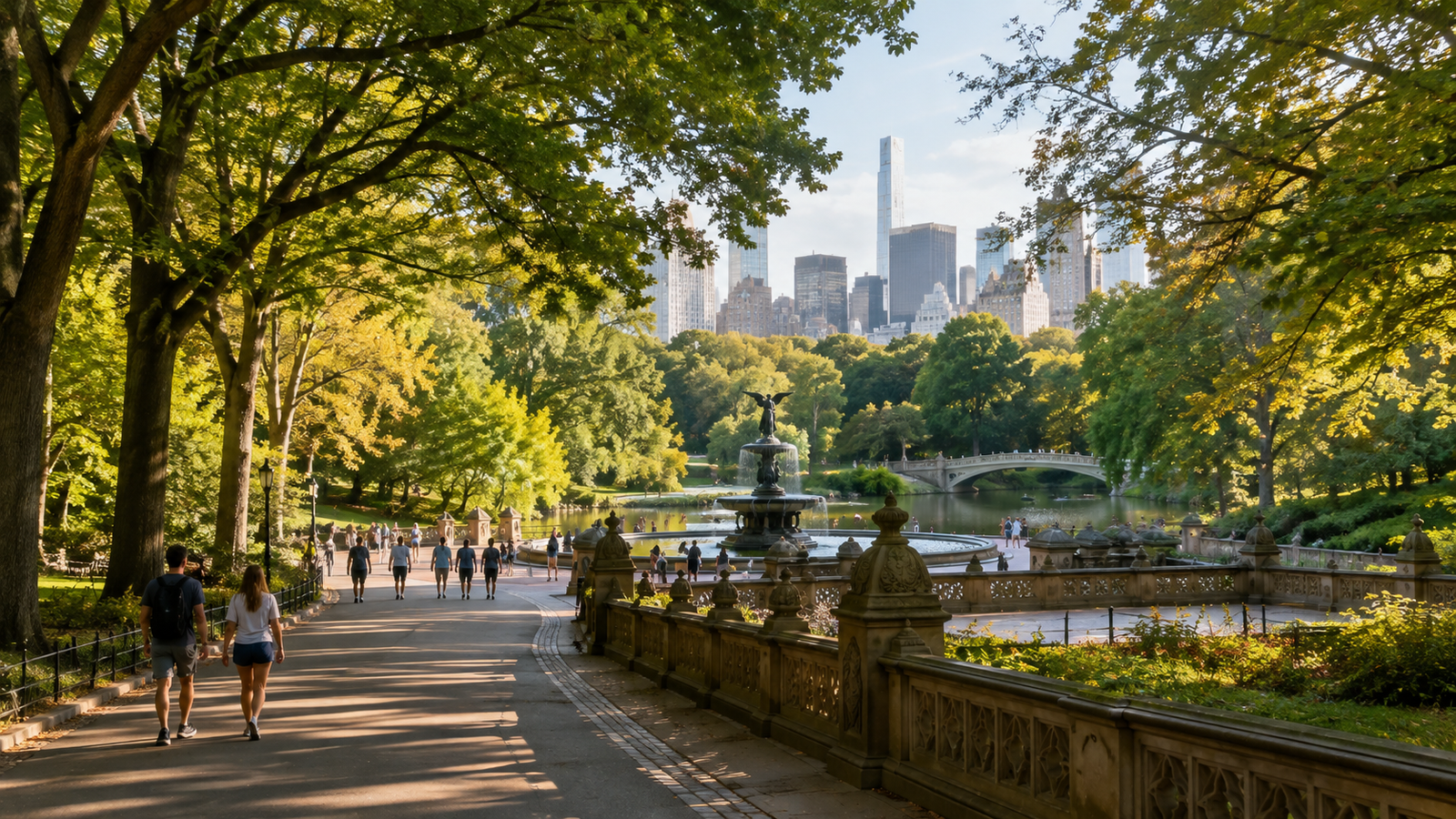
If your walking route includes only one architectural landmark, Bethesda Terrace deserves serious consideration. The arcade beneath the terrace contains intricate ceiling tiles designed by Jacob Wrey Mould, while the nearby fountain remains one of Central Park’s defining features.
Unlike many city landmarks that require tickets or reservations, Bethesda Terrace can be enjoyed at any time during park hours.
The gentle sound of water from the fountain often softens the surrounding city noise, especially during quieter weekday mornings.
Visiting Bow Bridge and Its Scenic Views
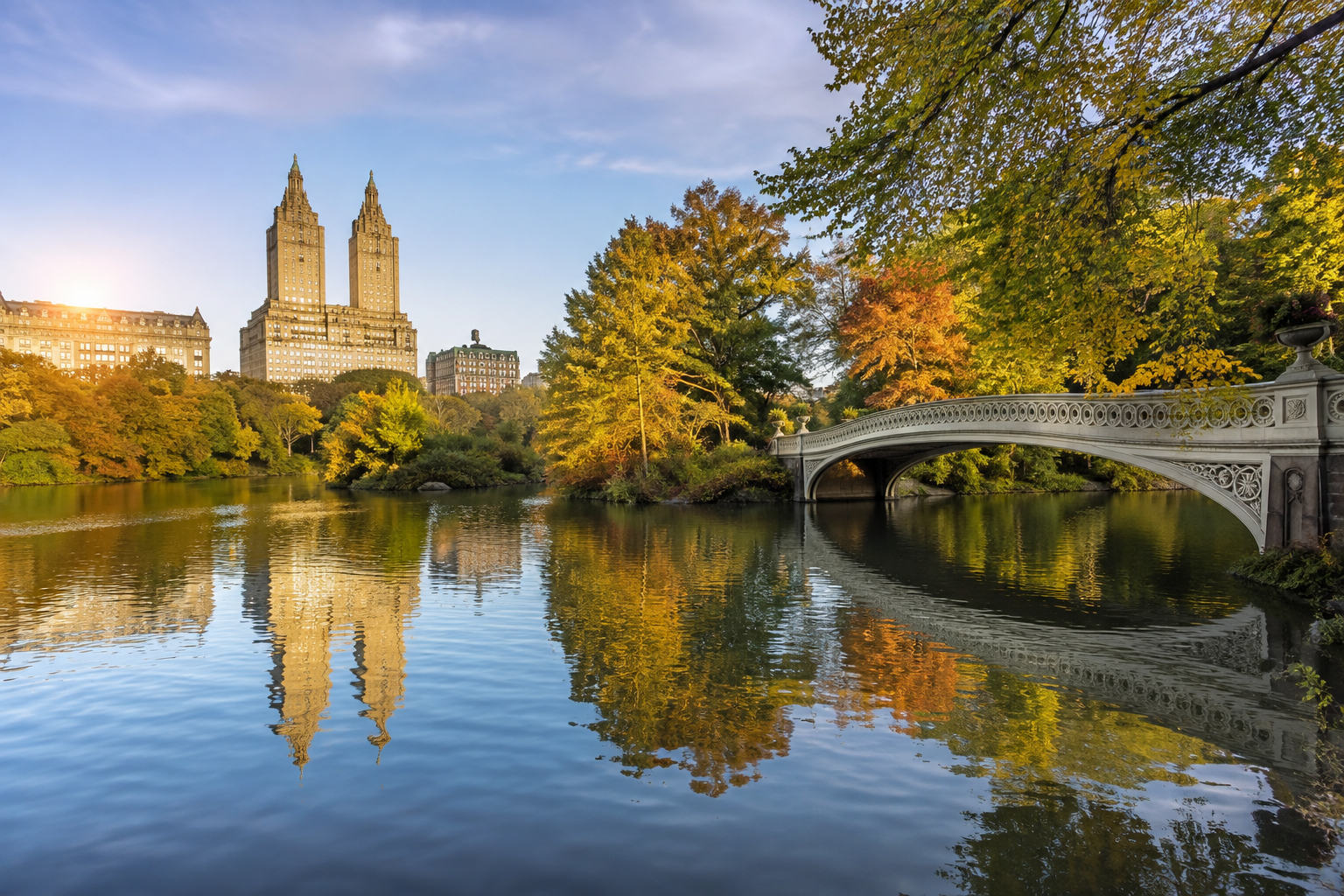
Before crossing Bow Bridge, pause for a moment and look across The Lake. The combination of calm water, surrounding trees, and distant Manhattan buildings creates a view that feels surprisingly removed from Midtown’s busy streets.
Built in 1862, Bow Bridge is one of Central Park’s most recognizable cast-iron structures.
Small movements on the water below—whether from birds or passing boats—often add life to photographs without changing the peaceful atmosphere.
Discovering the Beauty of Sheep Meadow
Compared with narrower pathways elsewhere in the park, Sheep Meadow offers a vast open lawn framed by skyscrapers and mature trees. A light breeze crossing the grass often makes this area feel cooler on warm afternoons.
Located near West 69th Street, Sheep Meadow remains one of Central Park’s most relaxing spaces and one of the easiest places to pause during a day of sightseeing.
Visitors interested in quieter routes beyond Central Park’s famous landmarks may also enjoy exploring the least crowded areas of Central Park. These lesser-known sections offer a different side of the park away from the busiest pathways and viewpoints.
Enjoy Most Beautiful Natural Landscapes

The moment city noise begins to fade behind the trees, Central Park reveals a quieter side that many first-time visitors never expect. Beyond its famous landmarks, the park contains wooded paths, peaceful ponds, and natural scenery that can be explored entirely free of charge.
Relaxing Beside The Lake
The Lake often feels calmer than many other areas of Central Park. Gentle ripples move across the water while reflections of surrounding trees shift with the light, creating a scene that changes throughout the day.
Designed during the park’s original development in the 1850s, The Lake became a centerpiece of Frederick Law Olmsted and Calvert Vaux’s landscape vision.
For the most peaceful atmosphere, arrive before 10:00 AM when pathways near Bow Bridge and the shoreline are generally less busy.
This area is also among the free outdoor activities in Central Park New York that combines scenery and relaxation without requiring a schedule.
Exploring The Ramble’s Woodland Trails
Worried that Central Park is only open lawns and famous viewpoints? The Ramble often surprises visitors who expect a more predictable city park.
Located between Bethesda Terrace and Belvedere Castle, this 36-acre woodland area contains winding paths, rocky outcrops, and dense tree cover that creates welcome shade during warmer months.
A simple tip helps here: follow marked pathways and keep a park map available on your phone. The trail network is intentionally designed to feel natural, which is part of its appeal.
Visiting Turtle Pond and Its Wildlife
Can wildlife really be found in the middle of Manhattan? Turtle Pond provides a convincing answer.
Located just south of Belvedere Castle, this habitat attracts painted turtles, red-eared sliders, water birds, and other species that gather around the shoreline.
During warmer months, quiet observation often reveals movement on logs and rocks where turtles rest in the sun, while occasional bird calls add another layer to the experience.
Early morning usually offers the best viewing conditions before larger crowds arrive near the castle grounds.
Walking Around Conservatory Water
Unlike the wooded atmosphere of The Ramble, Conservatory Water feels open and orderly. Its broad pond and surrounding pathways create a different mood within the park.
For a slower walk, follow the eastern shoreline and pause near the Kerbs Memorial Boathouse. A light breeze moving across the water often makes the area feel pleasantly cool during spring and early summer.
If possible, visit between 8:00 AM and 11:00 AM. The softer light and lighter foot traffic make the setting especially enjoyable for a quiet stroll.
After exploring Central Park’s natural landscapes, many visitors turn their attention to practical planning details that can make the day smoother. These Central Park travel tips for tourists can help with route planning, timing, entrances, and getting around the park more efficiently.
Discover Famous Statues and Monuments

Unlike traditional museums that charge admission, Central Park displays many of its most famous monuments in the open air for everyone to enjoy. These sculptures and memorials add history, storytelling, and character to a walk through the park.
Visiting the Alice in Wonderland Statue
What makes one of Central Park’s most photographed sculptures so different from the others? Near Conservatory Water on the park’s east side, the Alice in Wonderland Statue invites visitors to climb, touch, and explore its bronze figures rather than simply admire them from a distance.
Created by sculptor José de Creeft and unveiled in 1959, the monument depicts Alice alongside the Mad Hatter, the White Rabbit, and other characters from Lewis Carroll’s famous story.
By late morning, patches of sunlight move across the bronze figures while children gather around the sculpture’s climbing surfaces near Conservatory Water.
A visit before 10:00 AM generally offers more space for photographs and a quieter atmosphere around Conservatory Water.
Exploring the Balto Statue
If finding the Balto Statue seems challenging on a first visit, don’t worry. The monument stands along East Drive just north of the Tisch Children’s Zoo and can be reached easily from the East 67th Street entrance.
The bronze statue commemorates Balto, the lead sled dog associated with the final stage of the 1925 serum run to Nome, Alaska.
The monument has remained a favorite stop for families since its installation in Central Park in 1925.
A short pause to read the inscription helps bring the story into focus and makes the monument more meaningful than a quick photo stop.
Finding Literary and Historical Memorials
Unlike standalone monuments found in many city parks, Central Park’s memorials are spread across different landscapes and pathways.
Literary Walk near The Mall contains statues of William Shakespeare, Robert Burns, Sir Walter Scott, and Fitz-Greene Halleck, creating an outdoor collection that blends naturally into the surrounding scenery.
Visitors often encounter these monuments gradually rather than all at once, which adds a sense of discovery while walking beneath the elm-lined promenade.
The occasional sound of horse carriages from nearby park drives adds another layer to the setting.
For those interested in free landmarks to see in Central Park, Literary Walk remains one of the most rewarding places to begin.
Learning the Stories Behind Central Park’s Landmarks
Many visitors focus first on the appearance of a monument. The story behind it often proves just as interesting.
Rather than moving quickly between landmarks, pause at the Shakespeare Statue on Literary Walk or the Balto Monument near East Drive and read the inscriptions.
These brief texts often explain historical connections that are easy to miss during a faster walk through the park.
Between 1:00 PM and 3:00 PM, sunlight typically reaches many open sections of Literary Walk and nearby memorial areas, making inscriptions easier to read without needing to stop directly in front of them.
Central Park’s monuments reveal a different side of the park, but they are only part of the experience. Visitors interested in capturing these landmarks from their best angles may also enjoy exploring the best Central Park photography locations for viewpoints, compositions, and seasonal photo opportunities throughout the park.
Enjoy Free Wildlife

Many visitors are surprised to learn that wildlife viewing is possible in the middle of Manhattan without paying for a zoo ticket. Central Park’s ponds, woodlands, and quiet shorelines support a surprising variety of birds, turtles, and other urban wildlife.
Common Birds Found Throughout Central Park
A spring morning in Central Park can sound very different from the surrounding city streets. Birdsong often replaces traffic noise, especially in wooded sections away from major park drives.
More than 280 bird species have been recorded in Central Park over the years, making it one of North America’s most notable urban birding locations.
Common sightings include Northern Cardinals, Blue Jays, American Robins, House Sparrows, and Red-tailed Hawks.
For easier viewing, arrive early morning between 7:00 AM and 9:00 AM when bird activity is typically higher and pathways remain quieter.
Where to Spot Turtles and Waterfowl
Looking for turtles but not sure where to start? Several locations consistently offer better viewing opportunities than others.
Turtle Pond, located directly south of Belvedere Castle, remains one of the most reliable spots. Painted turtles and red-eared sliders are frequently seen resting on rocks and logs near the shoreline.
The Lake and Conservatory Water also attract ducks, geese, and other waterfowl throughout much of the year.
Gentle movement across the water often makes wildlife easier to notice, particularly during calm morning hours.
Best Areas for Nature Observation
Unlike open lawns that draw large crowds, several corners of Central Park offer a more natural setting for wildlife observation. The Ramble, North Woods, Hallett Nature Sanctuary, and Turtle Pond each provide different habitats that attract various species.
Dense vegetation, quieter pathways, and access to water create favorable conditions for both resident and migratory wildlife.
Those interested in free hidden gems in Central Park NYC often discover that these nature-focused areas reveal a side of the park that many visitors overlook.
Early weekday mornings generally provide the best balance of wildlife activity and lower foot traffic.
Tips for Respectful Wildlife Viewing
Compared with visiting a zoo, wildlife encounters in Central Park happen on nature’s schedule. Patience matters more than speed.
Keep a comfortable distance from birds, turtles, and other animals rather than moving closer for photographs. This helps reduce stress on wildlife and often leads to more natural behavior.
If possible, avoid feeding animals. Park staff and wildlife organizations consistently recommend allowing animals to find their own food sources.
A quieter approach usually produces better results anyway. Sudden movements and loud conversations can quickly end a wildlife sighting.
Wildlife watching reveals a quieter side of Central Park that many visitors never expect to find in Manhattan. For those exploring the park independently, Central Park for solo travelers offers additional ideas for enjoying these peaceful areas at your own pace.
Capture Free Stunning Photos

Central Park offers countless photography opportunities, from skyline views and historic bridges to peaceful lakeside scenes. A camera or smartphone is all that is needed to capture some of New York City’s most recognizable landscapes.
Best Free Photography Locations in Central Park
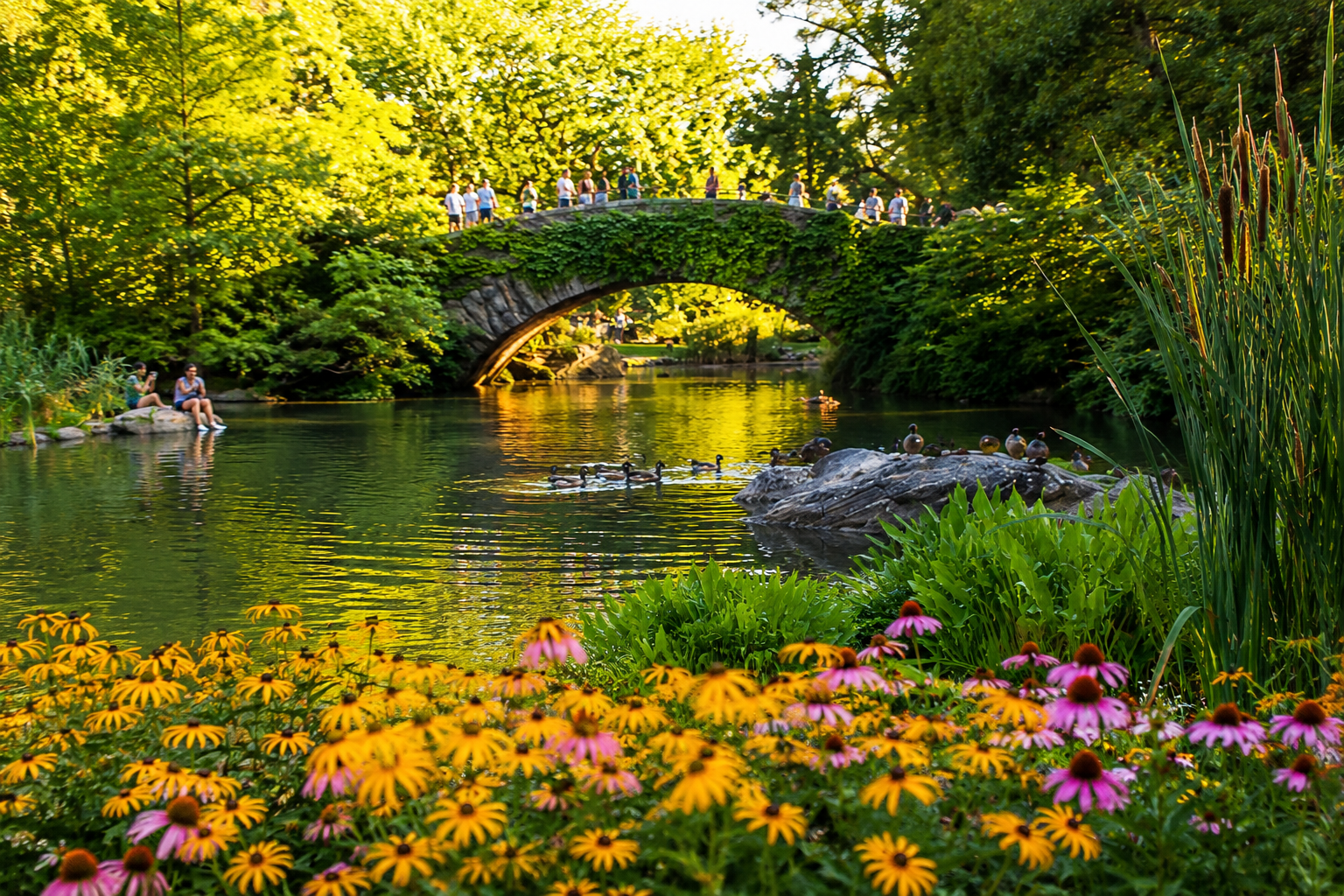
Several locations consistently appear in Central Park photo collections for good reason. Bow Bridge, Bethesda Terrace, Gapstow Bridge, Belvedere Castle, and The Mall each provide distinctly different compositions within a relatively short walking distance.
Bethesda Terrace has been a visual centerpiece of the park since the 19th century, while Bow Bridge remains one of the most recognizable cast-iron bridges in New York City.
Together, they offer architecture, water views, and surrounding greenery in a single photography route.
For visitors searching for free photo spots in Central Park, arriving between 8:00 AM and 10:00 AM often provides softer light and fewer people in popular viewpoints.
Photographing Bridges, Lakes, and Skylines
Finding a balanced skyline photograph can sometimes be difficult in a park filled with trees. Fortunately, several locations solve that problem naturally.
Gapstow Bridge near the southeast corner frames Midtown skyscrapers behind The Pond, creating one of the park’s classic city-and-nature compositions.
Further north, Bow Bridge offers reflections across The Lake, while Belvedere Castle provides elevated views toward the Great Lawn and surrounding landscapes.
A light breeze moving across the water can add texture to reflections without completely disrupting them.
Seasonal Photo Opportunities Throughout the Year
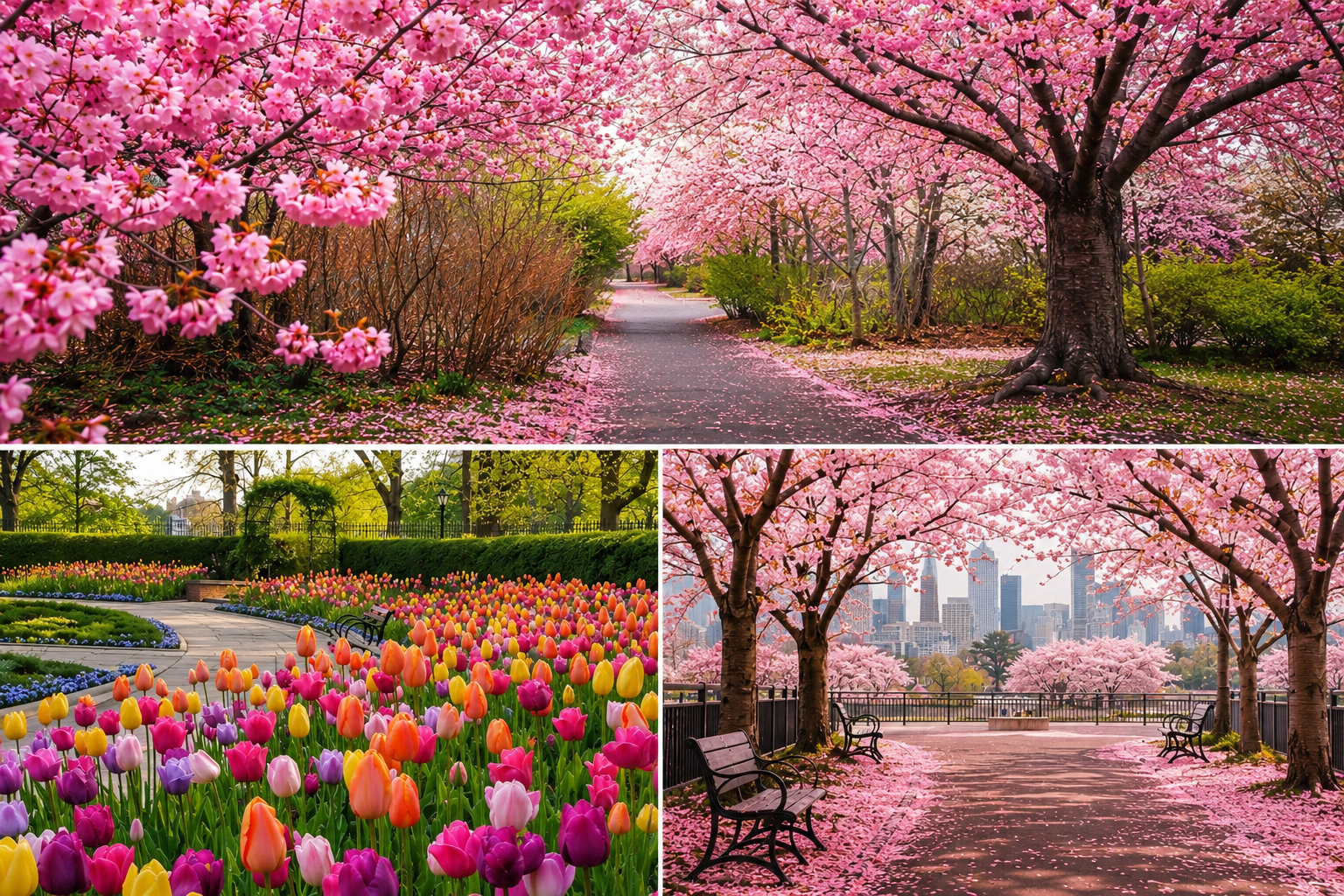
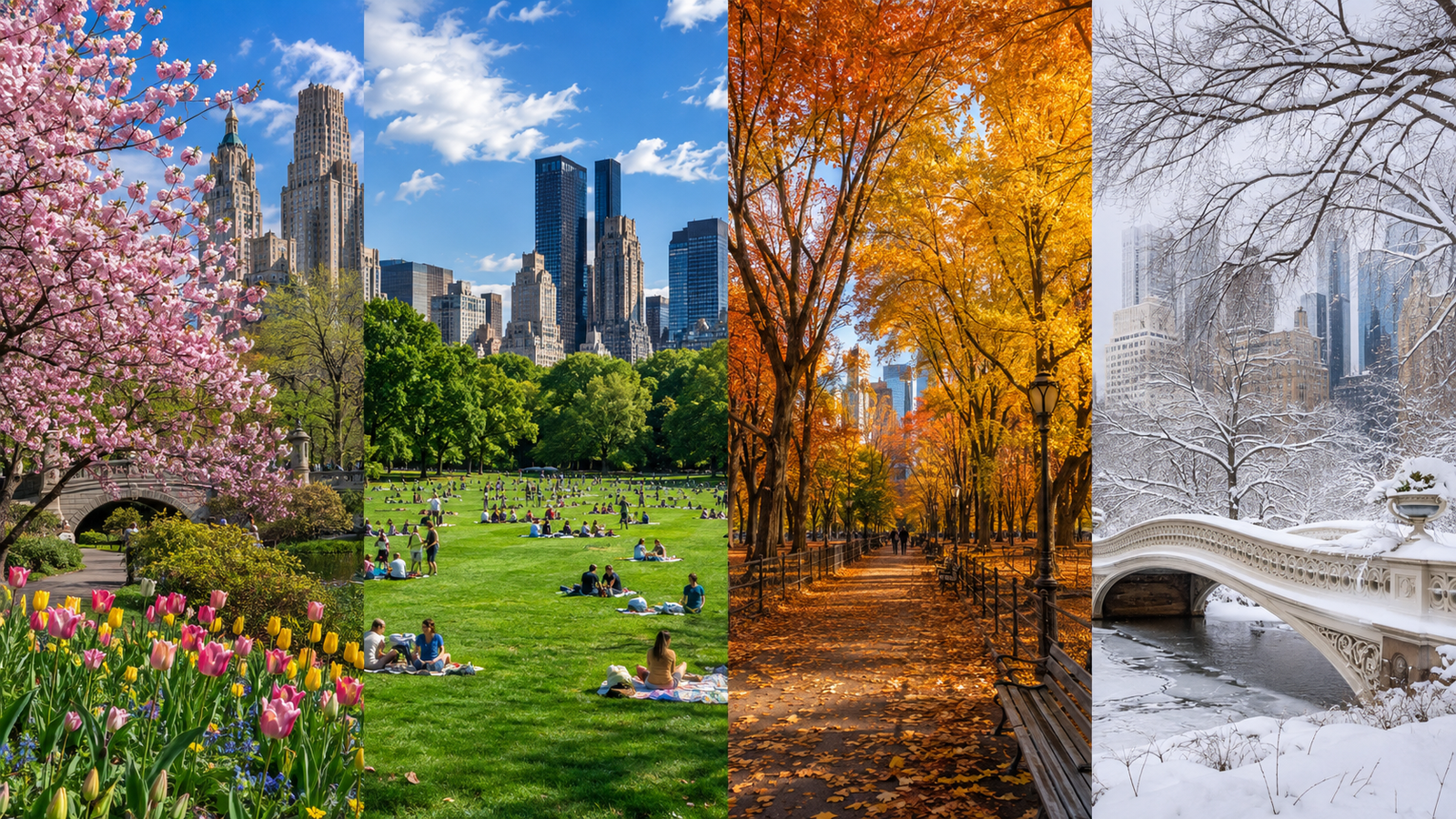
Unlike many attractions that look similar year-round, Central Park changes dramatically with each season. Spring brings cherry blossoms near the Reservoir and Pilgrim Hill. Summer fills the park with deep green canopies.
Autumn transforms The Mall and the North Woods with shades of gold, orange, and red, while winter occasionally covers pathways, bridges, and lawns with snow.
These seasonal shifts make repeat visits worthwhile because the same location can produce completely different photographs depending on the month.
Peak fall foliage generally occurs between late October and early November, although exact timing varies by weather conditions.
Sunrise and Sunset Photography Tips
Compared with midday photography, sunrise and sunset often create softer light and stronger contrast across Central Park’s landscapes. For sunrise photography, consider the east side of Jacqueline Kennedy Onassis Reservoir.
Early morning light reaches the water while many pathways remain relatively quiet.
Sunset works particularly well around Bow Bridge and The Lake, where warm light can reflect across the water surface.
During clear evenings, sunlight filtering through nearby trees often creates longer shadows and richer colors.
A practical guideline is to arrive about 30 minutes before sunrise or sunset rather than exactly at those times.
Lighting conditions often become most interesting shortly before the sun reaches the horizon.
Photography encourages visitors to slow down and notice details that might otherwise be missed. If you’re planning a visit with younger family members, these locations can also be combined with the best places to visit in Central Park with kids for a day that mixes sightseeing, recreation, and memorable photo opportunities.
Enjoy Free Activities for Families With Children

Looking for ways to keep children entertained without adding extra costs to your New York itinerary?
Central Park offers wide-open spaces, interactive landmarks, and simple outdoor experiences that can easily fill several hours without requiring paid attractions or reservations.
Exploring Open Lawns and Green Spaces
Children often need room to move after spending time in busy city streets, museums, or public transportation. Central Park provides several large open areas where families can slow down and enjoy unstructured play.
Sheep Meadow, located near West 69th Street, offers nearly 15 acres of open grass with skyline views in the distance. Further north, the Great Lawn provides even more space for running, tossing a ball, or simply relaxing under open skies.
For comfortable conditions, morning hours before 11:00 AM often provide cooler temperatures and more open space during warmer months.
Visiting Kid-Friendly Statues and Attractions
Unlike monuments designed only for viewing, some Central Park landmarks encourage curiosity and interaction. The Alice in Wonderland Statue near Conservatory Water remains one of the best examples, with bronze figures that children can safely climb and explore.
Nearby, the Balto Statue tells the story of the famous sled dog who helped transport medicine across Alaska in 1925. Reading the inscription together can turn a simple stop into a memorable part of the day.
Families looking for free Central Park activities for families often combine these two attractions into a short walk around Conservatory Water and the East Side playground areas.
Nature Walks Suitable for Young Children
What can families do when children enjoy exploring but may not be ready for long walks? Several Central Park routes provide interesting scenery without requiring significant distances.
The paths surrounding Turtle Pond and Belvedere Castle offer frequent opportunities to spot turtles, birds, and other wildlife. Nearby viewpoints keep children engaged because there is usually something different to notice around each turn. The occasional rustle of leaves overhead and sunlight filtering through the tree canopy add to the experience. Families can adjust the pace easily, making this area suitable for a wide range of ages.
A loop around Turtle Pond generally works best during morning hours when wildlife activity is often higher.
Creating a Family Scavenger Hunt
Compared with following a strict sightseeing schedule, a scavenger hunt adds a playful goal to a park visit. It also encourages children to pay closer attention to their surroundings.
A simple list might include finding a bridge, spotting a turtle, locating a fountain, identifying a statue, or counting different bird species. No special equipment is required.
For younger children, keep the list short and focused on easy-to-recognize landmarks. Older children may enjoy searching for less obvious details throughout the park.
Late morning and early afternoon usually provide enough activity throughout Central Park to keep the hunt engaging while still allowing flexibility in route planning.
Family-friendly experiences are only one side of Central Park. Visitors traveling with older children may also enjoy exploring Central Park attractions for teens, which include viewpoints, recreation areas, and locations that appeal to a different age group while remaining easy to include in the same visit.
Frequently Asked Questions
What are the best free things to do in Central Park?
Some of the best free experiences include walking through The Mall, visiting Bethesda Terrace and Bethesda Fountain, crossing Bow Bridge, relaxing at Sheep Meadow, exploring The Ramble, spotting wildlife at Turtle Pond, and enjoying views from Belvedere Castle. These attractions make free things to do in Central Park suitable for visitors with every type of travel itinerary.
Can you spend an entire day in Central Park without spending money?
Yes. Central Park offers enough free attractions, walking paths, scenic viewpoints, monuments, wildlife areas, and open green spaces to fill an entire day. Many visitors spend several hours exploring different sections of the park without purchasing tickets or activities.
Is Central Park completely free to enter?
Yes. Central Park is free to enter and open daily from 6:00 AM until 1:00 AM. Visitors can enjoy most of the park’s landscapes, walking trails, monuments, lawns, and viewpoints without paying an admission fee.
What free attractions should first-time visitors see?
First-time visitors should prioritize Bethesda Terrace, Bethesda Fountain, Bow Bridge, The Mall and Literary Walk, Sheep Meadow, Belvedere Castle, Conservatory Water, and Strawberry Fields. These locations represent some of the park’s most iconic sights and provide a good introduction to Central Park.
Are there free activities for families in Central Park?
Yes. Families can enjoy open lawns, wildlife observation, kid-friendly statues such as Alice in Wonderland and Balto, nature walks around Turtle Pond, and self-guided scavenger hunts. These activities help keep children engaged without adding extra costs to a New York City visit.
What is the best free photo spot in Central Park?
Bow Bridge is often considered one of the most photogenic locations in the park because it combines water views, surrounding trees, and the Manhattan skyline. Other excellent free photo spots in Central Park include Gapstow Bridge, Bethesda Terrace, Belvedere Castle, and the Jacqueline Kennedy Onassis Reservoir.
Are there free events held in Central Park?
Yes. Throughout the year, Central Park hosts various public events, including seasonal performances, cultural programs, outdoor activities, and community gatherings. Event schedules vary, so checking official park announcements before visiting is recommended.
What free activities are available during winter?
Winter visitors can enjoy snow-covered landscapes, scenic walks, wildlife observation, photography, monument visits, and views from Belvedere Castle. Fresh snowfall often creates a completely different atmosphere throughout the park without any admission cost.
Can I visit Belvedere Castle for free?
Yes. Belvedere Castle is free to visit. Located near Turtle Pond and the Great Lawn, it offers elevated views of Central Park and remains one of the most popular free attractions in the park.
What are the best hidden gems in Central Park that cost nothing to visit?
Some of the best free hidden gems in Central Park NYC include Hallett Nature Sanctuary, The Ramble, the North Woods, the Ravine, Turtle Pond, Conservatory Water, and lesser-visited woodland trails in the northern section of the park. These areas provide a quieter experience away from the busiest visitor routes.