Beginning of the Journey
The Statue of Liberty is one of the most recognized landmarks in the world, yet many people know only a small part of its story. Millions of visitors see the famous torch, crown, and towering figure each year, but countless details remain unnoticed. Behind the monument’s appearance are symbols, historical events, and design choices that many travelers never discover.
From hidden messages carved into the statue to surprising facts about its construction, Lady Liberty contains layers of history that go far beyond what appears in photographs. Some of these details are visible during a visit, while others are connected to the monument’s creation, transportation, and changing role throughout American history.
This guide explores Hidden Facts About the Statue of Liberty – Secrets Revealed, uncovering lesser-known stories, overlooked features, and fascinating details that make this iconic landmark even more remarkable. By the end, you may see the Statue of Liberty in a completely different way.
Why the Statue of Liberty Still Holds So Many Secrets

The Statue of Liberty has stood on Liberty Island for well over a century, yet new details continue to surprise visitors. Some are hidden in plain sight. Others become noticeable only after stepping closer to the monument, museum exhibits, or historic displays maintained by the National Park Service.
A large part of the mystery comes from how most attention focuses on the statue’s size and appearance. Smaller features often receive less notice. Broken chains, engraved dates, engineering details, and overlooked stories can easily escape attention during a busy visit. That is why many little-known Statue of Liberty facts remain unfamiliar even to those who have seen the monument before.
The Difference Between Famous Facts and Hidden Facts
Most famous facts are easy to recognize. The torch, crown, and gift from France are widely known. Hidden facts are different.
They often involve details tucked into the statue’s design, construction, or history. A visitor may walk past them without realizing their meaning. Once explained, these smaller details often become the most memorable part of the visit.
Why Many Visitors Miss These Details
Crowd patterns play a role. Ferry arrivals, security lines, and popular viewing areas naturally draw attention toward the main attraction first.
As a result, museum displays, interpretive signs, and less obvious features sometimes receive only a quick glance. Information provided by the National Park Service and Statue City Cruises often reveals details that many visitors discover only after slowing down and exploring beyond the obvious highlights.
Information provided by the National Park Service and Statue City Cruises often reveals details that many visitors discover only after slowing down and exploring beyond the obvious highlights.
The statue becomes even more interesting when the smaller details start coming into focus. If planning a visit, understanding “how much time do you need for Statue of Liberty” can make it easier to explore exhibits and historical features without feeling rushed.
Secret Meanings Hidden in the Statue’s Design
The Statue of Liberty was designed to do more than stand tall above New York Harbor. Nearly every major feature carries a specific meaning. Some details are easy to spot, while others remain unnoticed during a quick walk around Liberty Island.
A closer look reveals symbols linked to freedom, independence, and national history. Several of these details are among the things you never knew about the Statue of Liberty, even though they have been part of the monument since the day it was unveiled.
What the Seven Crown Rays Really Represent
The seven rays extending from the crown are not decorative additions. They were designed to represent seven continents and seven seas.
This detail reflects the idea that liberty should reach beyond one nation. During busy morning ferry arrivals, attention often shifts immediately toward skyline views, causing this symbolic feature to be overlooked despite being visible from several island viewpoints.
The Hidden Message Behind the Broken Chains
Near Lady Liberty’s feet are broken chains and shackles. They can be difficult to see from ground level, especially when viewing the monument from the front.
The chains symbolize the end of oppression and forced bondage. Because most photographs focus on the face, crown, and torch, this powerful detail often receives far less attention than it deserves.
Why Lady Liberty Carries a Tablet Instead of a Torch in Both Hands
One hand raises the torch high above the harbor. The other holds a tablet with a specific purpose.
The designers wanted the monument to represent both enlightenment and law. Carrying a tablet instead of a second torch connects the statue to constitutional government and the rule of law rather than simple celebration alone.
The Meaning of the Date Inscribed on the Tablet
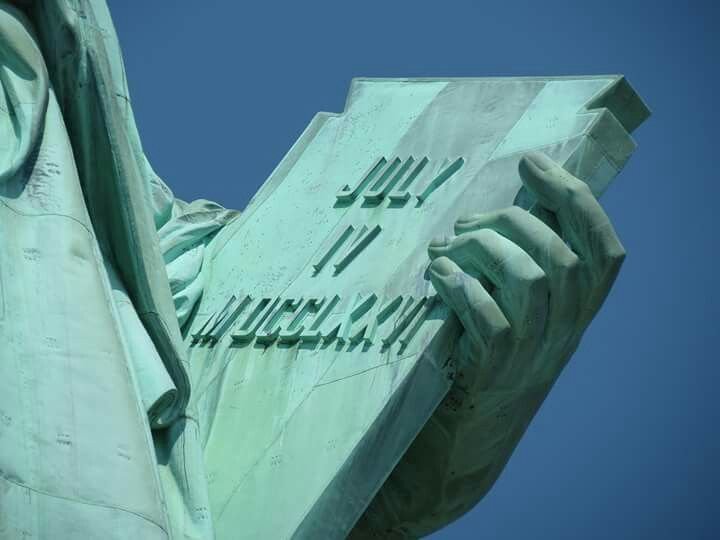
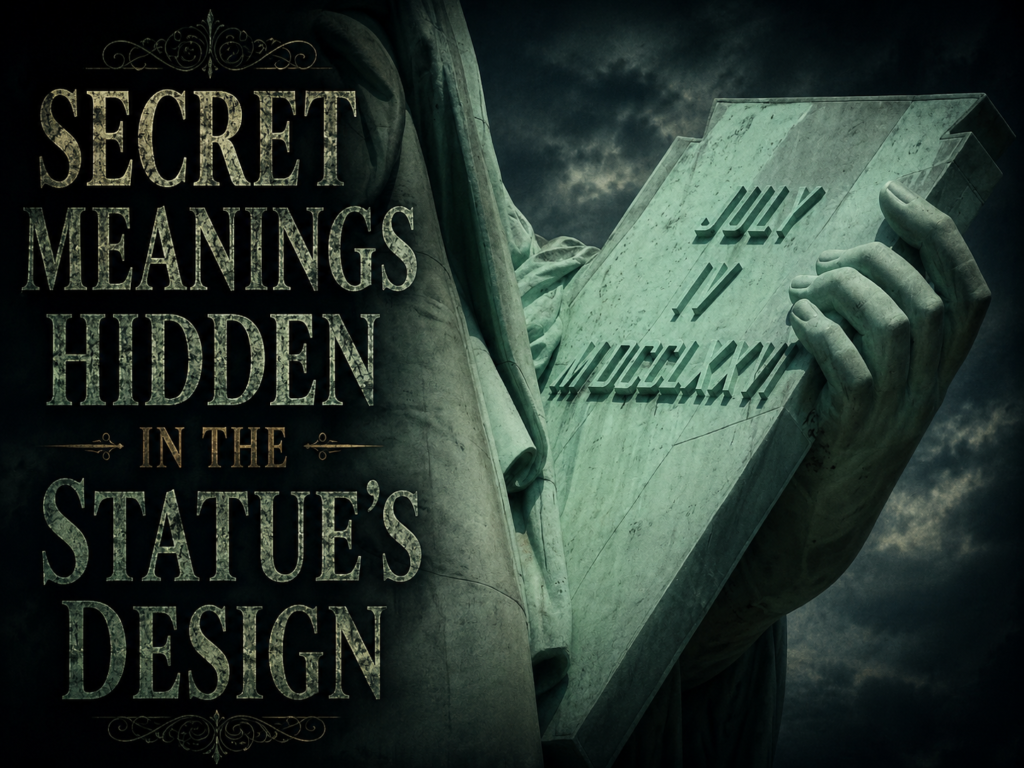
The tablet displays JULY IV MDCCLXXVI, written in Roman numerals. This translates to July 4, 1776.
That date marks the adoption of the Declaration of Independence. Some visitors first notice the inscription only after zooming into photographs later, despite standing just a short distance from the monument during their visit.
Some details become easier to appreciate once the right access level is chosen. Understanding the best Statue of Liberty ticket type for different visitors can help determine which areas provide the closest views of the monument’s most meaningful features.
Surprising Facts About How the Statue Was Built
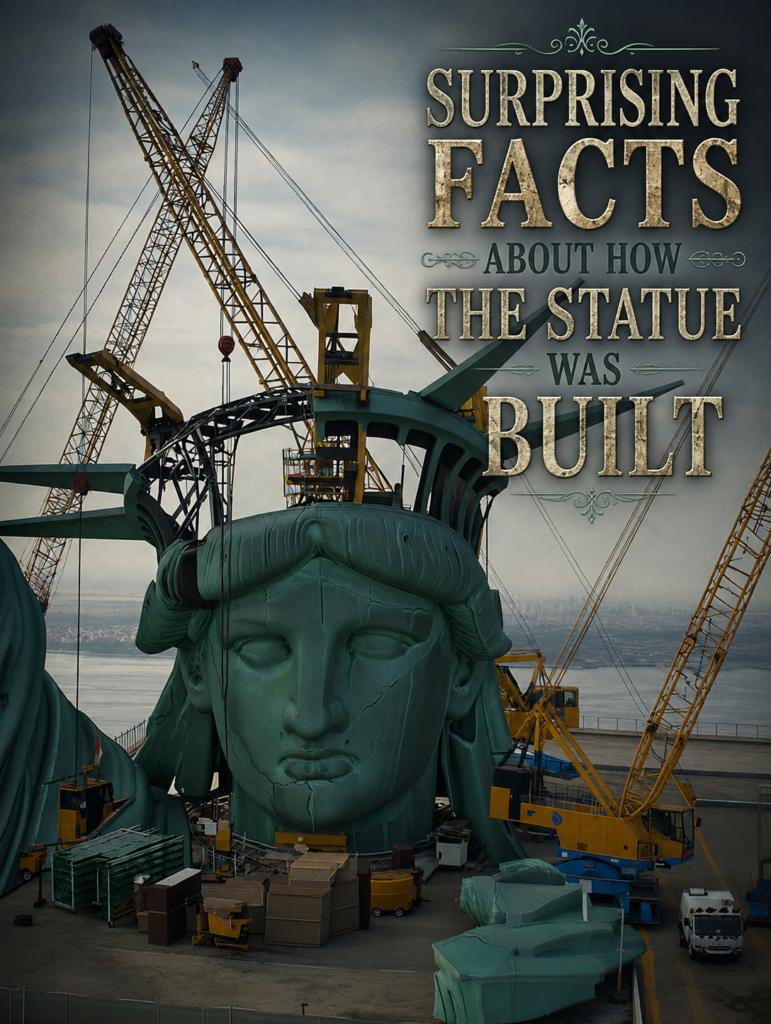
The Statue of Liberty looks like a single monument today, but its construction story is far more unusual. Long before it appeared in New York Harbor, workers assembled large sections overseas, tested components, and solved structural challenges piece by piece.
That effort created some of the most interesting Statue of Liberty secrets. The monument’s journey involved workshops, shipping crates, complex assembly work, and engineering methods that were remarkably advanced for the late nineteenth century.
The Statue Was Constructed in France First
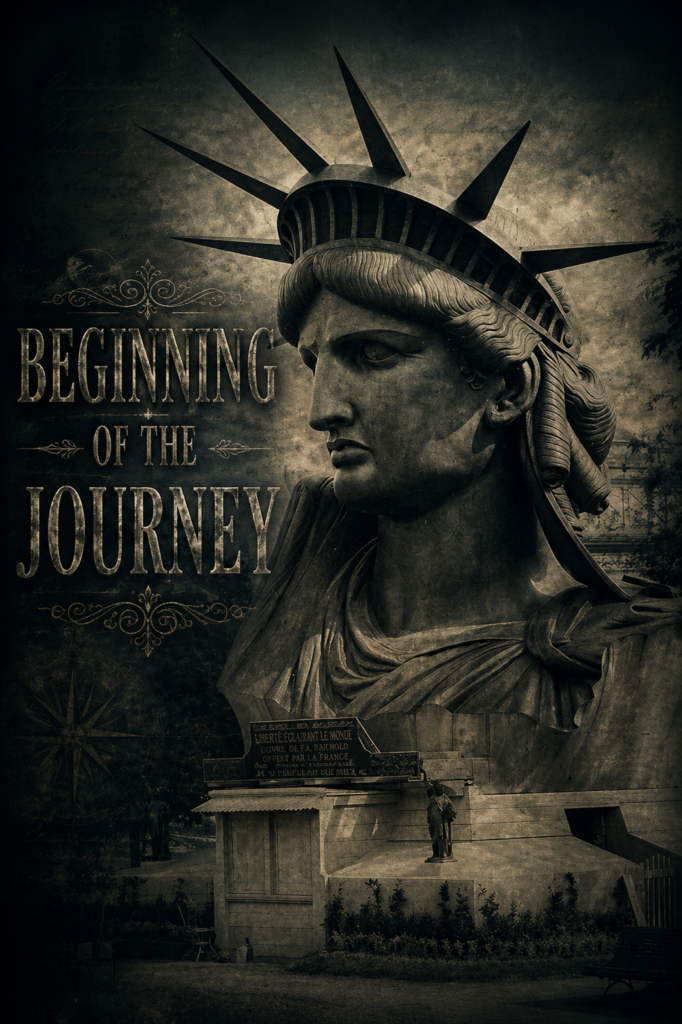
The statue was fully constructed in France before its journey to the United States. Large sections were assembled there so builders could verify that the pieces fit correctly before shipment.
Then the monument was carefully taken apart again. This step reduced transportation risks and allowed each component to be packed for the long Atlantic crossing without damaging the finished structure.
It Arrived in America in Hundreds of Pieces
Rather than arriving as a complete monument, the statue reached New York in hundreds of individual pieces packed into more than 200 crates.
From a ferry, it is easy to assume the structure was erected all at once. The reality was quite different. Every major section had to be unloaded, organized, and prepared for assembly after reaching the harbor.
The Giant Puzzle That Took Months to Reassemble
Reassembling the statue required detailed plans and careful sequencing. Workers could not simply connect pieces in any order.
Each section depended on another section already being in place. The process took months, and even small alignment errors could have created larger problems higher up the structure. Patience mattered. Precision mattered even more.
The Engineering Secret Behind Its Strength
One of the least visible achievements lies inside the monument. Beneath the copper exterior sits a metal framework designed to flex slightly rather than remain completely rigid.
Strong harbor winds place pressure on the structure throughout the year. The internal support system allows controlled movement, helping protect the outer skin from damage while keeping the monument stable above Liberty Island.
Understanding how the monument was built adds a new layer to any visit. If photography is part of the plan, knowing the best photo spots at Statue of Liberty can help capture details that reveal both the statue’s scale and its remarkable construction.
Hidden Facts About the Statue’s Appearance

The Statue of Liberty’s appearance seems familiar from a distance. Yet several details about its color and surface often surprise visitors once they learn the story behind them.
The monument seen today looks very different from the version unveiled in the nineteenth century. In fact, some of the most interesting visual changes are among the Statue of Liberty facts most tourists don’t know, even though they are visible every day.
The Statue Was Originally Copper Brown
When the statue was dedicated in 1886, it did not have the green color seen today. The outer surface was made of copper sheets, giving the monument a shiny brown appearance.
Old photographs reveal a noticeably different look. Standing near the waterfront today, it can be difficult to imagine that Lady Liberty once reflected sunlight with the warm tones of newly exposed copper.
How It Turned Green Naturally
The color change happened gradually over several decades. Exposure to moisture, sea air, and natural chemical reactions transformed the copper surface into a green outer layer.
It was not painted. That surprises many visitors. During bright midday hours, when sunlight strikes the harbor side of the monument, the green shade becomes especially noticeable against the surrounding water and skyline.
Why the Green Surface Protects the Monument
The green coating is known as a patina. Rather than damaging the statue, this layer acts as a natural shield for the copper underneath.
That protective surface helps slow further corrosion caused by weather and the marine environment. What appears to be aging is actually one reason the monument has remained standing in such good condition for well over a century.
The statue’s exterior tells only part of the story. Practical planning matters too, especially when visiting with younger family members. Understanding visiting Statue of Liberty with kids can help make the experience smoother while leaving more time to notice details that are often overlooked.
Secrets Hidden Inside the Crown
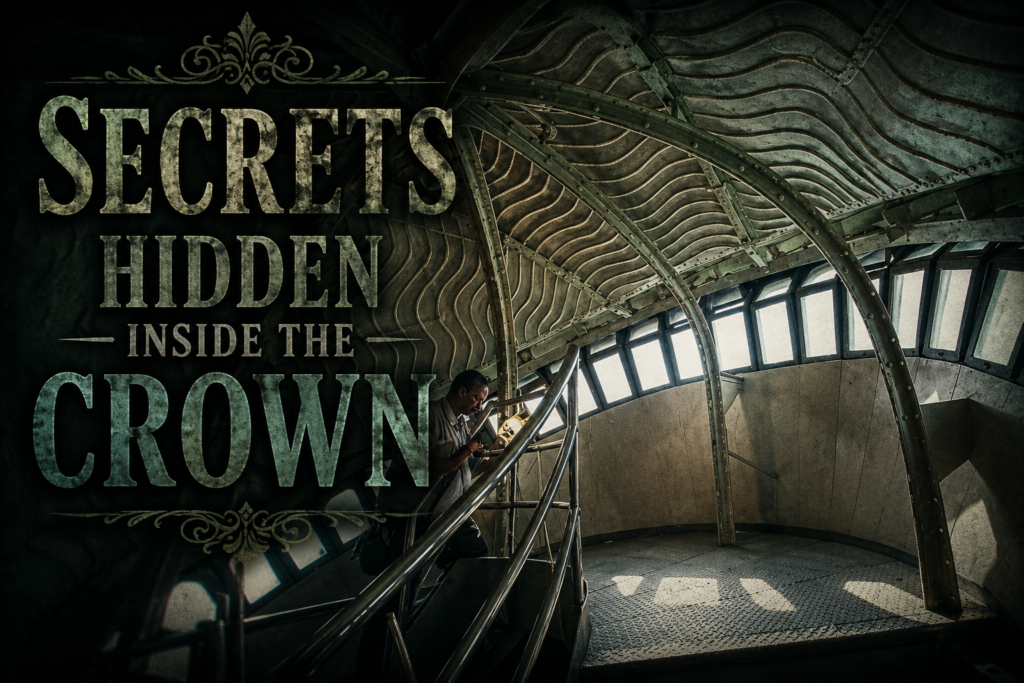
The Statue of Liberty’s crown attracts attention for its views, but several lesser-known details are hidden inside this small space. Reaching the top reveals more than windows and narrow passages.
Some of the untold stories behind the Statue of Liberty become easier to appreciate when looking closely at the crown’s design, structure, and history. These details help explain why crown access remains one of the most sought-after parts of a Liberty Island visit.
The Crown Contains 25 Windows
The crown contains 25 windows arranged around the viewing area. These openings provide elevated views of New York Harbor and the surrounding waterways.
The number was not chosen at random. Designer Frédéric Auguste Bartholdi intended the windows to represent gemstones found on Earth and the natural light shining across the world. This symbolic detail is often missed while focusing on the scenery outside.
What the Interior Structure Reveals
Inside the crown, the monument’s engineering becomes much easier to understand. Metal supports, braces, and structural elements are visible in ways that cannot be seen from outside.
The experience feels different from standing at the base. Rather than viewing a finished monument, the crown reveals part of the framework that helps support the statue’s exterior shell while allowing movement during strong harbor winds.
Why Crown Access Was Closed for Years
Crown access was closed following the September 11, 2001 attacks as security measures around major landmarks increased throughout the United States.
The area later reopened after upgrades and safety improvements were completed. Today, access remains limited, which explains why crown reservations are often secured well in advance compared with standard monument admission options.
Planning ahead becomes especially important for crown visits because availability is limited. Learning how to buy Statue of Liberty tickets online can help secure access before popular reservation dates fill and reduce the chance of missing out on restricted areas of the monument.
Little-Known Facts About the Torch
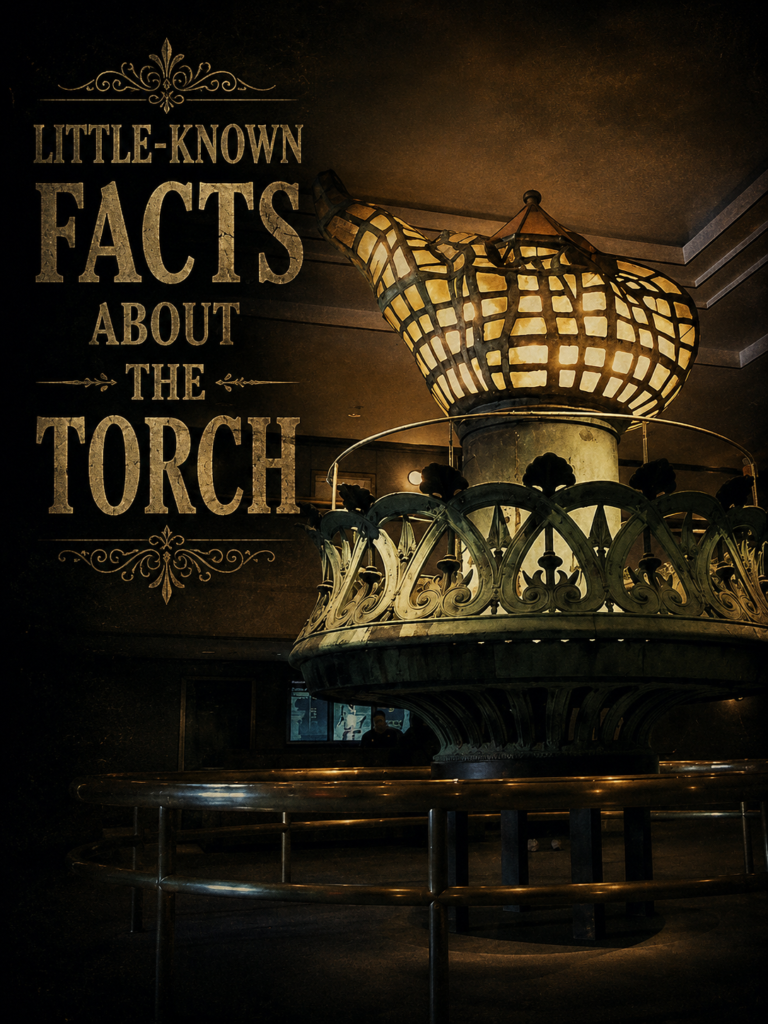
The torch is one of the most recognizable parts of the Statue of Liberty. Yet the version visible today is not exactly the same torch that visitors saw when the monument was first dedicated.
Several changes have taken place over the years. These details rank among the most surprising things about the Statue of Liberty, even though the torch appears in countless photographs, postcards, and skyline views every day.
The Original Torch Is No Longer on the Statue
Many assume the torch atop the monument is the original one installed in the nineteenth century. It is not.
The original torch was removed during a major restoration project completed in the 1980s. A replacement torch was installed using copper and gold leaf, while the historic original was preserved rather than discarded. (Source: National Park Service)
Why the Torch Had to Be Replaced
For decades, modifications made to the torch allowed water to enter areas where it should not have reached. Over time, this created damage that became increasingly difficult to repair.
Engineers determined that preserving the monument required a replacement rather than continued patchwork fixes. The new torch was designed to remain closer to the original vision while improving long-term durability. (Source: National Park Service)
Where Visitors Can See the Original Torch Today
The original torch is displayed inside the Statue of Liberty Museum on Liberty Island. It occupies a prominent exhibit space rather than being stored away from public view.
Seeing it up close often changes perspective. Details that are impossible to notice from the ferry become visible, including the size, craftsmanship, and alterations made during its long service atop the monument. (Source: National Park Service)
The torch is only one example of how small details can reshape the entire experience. Planning when to visit Statue of Liberty to avoid crowds can provide more time to explore museum exhibits and examine historic artifacts without feeling rushed through the displays.
Strange and Surprising Facts Most People Never Hear

The Statue of Liberty has been studied, photographed, and discussed for generations. Even so, a number of unusual details rarely appear in guidebooks or quick summaries.
Some of these facts sound almost unbelievable at first. Yet they are real. Together, they form some of the most amazing facts about Liberty Island and the monument that towers above it.
The Statue Sways in Strong Winds
The Statue of Liberty is not completely motionless. During periods of strong wind, the structure can sway slightly by design.
This movement helps reduce stress on the monument. The torch can shift several inches, while the upper portions of the statue move enough to absorb wind forces safely rather than resisting every gust completely. (Source: National Park Service)
Lightning Strikes the Statue Regularly
Standing high above New York Harbor makes the monument a natural target during thunderstorms. Lightning strikes occur more often than many visitors realize.
The statue was engineered to handle these events. Electrical energy is directed safely through the structure and into the ground, helping protect both the monument and surrounding facilities during severe weather conditions. (Source: National Park Service)
The Statue’s Face Was Inspired by a Real Person
The exact inspiration remains debated, but historians generally believe sculptor Frédéric Auguste Bartholdi used features associated with his mother, Charlotte Bartholdi, when designing the statue’s face.
No official document confirms every detail. Even so, the connection appears frequently in historical research about the monument’s creation and artistic development. (Source: Statue of Liberty-Ellis Island Foundation)
Was the Statue Originally Planned for Another Country?
Before designing the Statue of Liberty, Bartholdi proposed a large lighthouse-like monument for the entrance of the Suez Canal in Egypt.
The project was never built. Later, some concepts evolved into ideas that eventually influenced the Statue of Liberty, though the New York monument was designed specifically for its own purpose and location. (Source: National Park Service)
Lady Liberty Has a Shoe Size Equivalent of Hundreds
The scale of the monument becomes easier to appreciate when examining its dimensions. The length of one foot measures roughly 25 feet from heel to toe.
Using modern footwear measurements, that translates into a shoe size far beyond anything worn by a person. It is a fun detail that highlights the monument’s enormous scale in an easy-to-understand way.
A successful visit often depends on preparation as much as curiosity. Understanding common Statue of Liberty entry mistakes can help avoid delays and leave more time to discover details that many visitors overlook while rushing through the experience.
Frequently Asked Questions About Hidden Facts of the Statue of Liberty
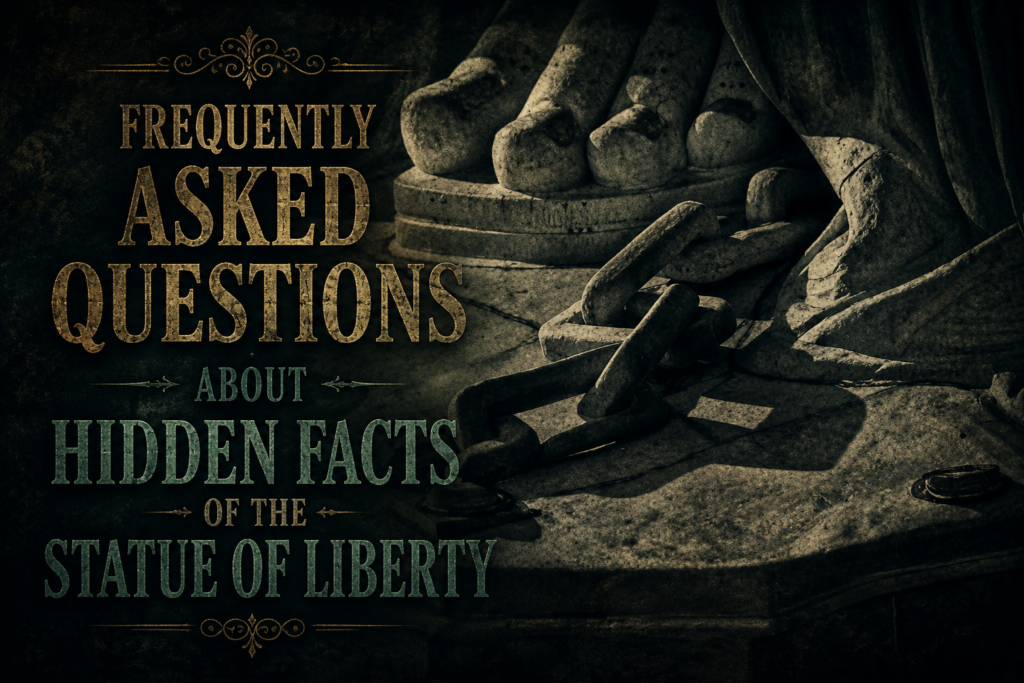
Why are there broken chains at Lady Liberty’s feet?
Broken chains and shackles appear near the statue’s feet as a symbol of freedom and liberation from oppression. Because they are positioned low on the monument, they can be difficult to see from many viewing angles. As a result, this important design feature is often overlooked during a visit.
What is the most surprising hidden fact about the Statue of Liberty?
One of the most surprising facts is that the statue was not originally green. When it was unveiled in 1886, the copper exterior had a brown metallic appearance. Over time, exposure to the elements created the green patina seen today. Many visitors are surprised to learn that this famous color developed naturally rather than being painted onto the monument.
What do the seven rays on the crown symbolize?
The seven rays represent the seven continents and seven seas. Frédéric Auguste Bartholdi included this feature to reflect the idea that liberty should extend across the world rather than belong to a single nation. The rays are among the monument’s most recognizable features, yet their meaning often goes unnoticed.
Was the Statue of Liberty always green?
No. The statue was originally copper brown when it arrived in New York Harbor. Over several decades, natural chemical reactions between the copper surface and the surrounding environment created the green patina. This protective layer now helps shield the copper beneath from further corrosion.
Did Gustave Eiffel help build the Statue of Liberty?
Yes. Gustave Eiffel, who later became famous for the Eiffel Tower, helped design the statue’s internal support structure. His engineering work allowed the copper exterior to move slightly during strong winds while maintaining overall stability. This design remains one of the monument’s greatest engineering achievements.
Where is the original torch today?
The original torch is displayed inside the Statue of Liberty Museum on Liberty Island. It was removed during the monument’s restoration in the 1980s and replaced with a new torch. The museum exhibit allows visitors to see details that would have been impossible to view when the torch was mounted high above the harbor.
How many windows are in the crown?
The crown contains 25 windows. These windows provide views of New York Harbor and the surrounding area. According to the monument’s symbolism, the windows were intended to represent gemstones found on Earth and the natural light that reaches different parts of the world.
Does the Statue of Liberty move in strong winds?
Yes. The monument is designed to sway slightly during strong winds. This movement is intentional and helps reduce structural stress. The torch and upper portions of the statue can shift by several inches, allowing the structure to handle changing weather conditions more effectively.
Was the Statue of Liberty originally built in France?
Yes. The statue was assembled in France before being taken apart and shipped across the Atlantic Ocean. After arriving in New York, the pieces were reassembled on Liberty Island. This process helped ensure that all components fit together correctly before the monument’s final installation.
What secrets can visitors discover inside the monument?
Visitors can discover several lesser-known details inside the monument and museum exhibits. These include views of the internal framework, information about the original torch, the symbolism behind the crown, and exhibits explaining the statue’s construction. Looking beyond the exterior often reveals details that are missed in photographs and quick visits.